FSIS safe food handling guide helps A Simple Gesture volunteers
One simple rule set can keep donation sorting safer: cook, clean, chill and separate. For A Simple Gesture, that means faster pickups with fewer food-safety mistakes.

A Simple Gesture’s volunteer chain only works when every bag, bin and pickup follows the same food-safety rules. The Food Safety and Inspection Service reduces that job to four words: cook, clean, chill and separate. For a green-bag program that depends on doorstep donations, route pickups and quick sorting, that plain-language framework is exactly what belongs on onboarding sheets, warehouse signs and break-room reminders.
Start with the four rules
FSIS uses cook, clean, chill and separate as its core food-handling message, and the agency is blunt about why that matters: safe steps in handling, cooking and storage are essential no matter what kind of food is involved. The agency also reminds volunteers and staff that harmful bacteria cannot be seen, smelled or tasted, which is why a bag that looks fine can still need careful handling.
For A Simple Gesture, those four rules translate cleanly into daily practice. Cook applies when donated prepared foods need a temperature check or a hold-time decision. Clean covers hands, counters, bins, coolers and any reusable tools that touch donations. Chill matters when a pickup includes milk, meat, eggs or other perishables that cannot sit out during route delays. Separate is the rule that keeps raw foods away from produce and ready-to-eat items, especially during a fast sorting shift.
What volunteers need to do first
The fastest way to reduce mistakes is to give every volunteer the same short checklist before they touch a donation. FSIS food-safety basics emphasize washing hands and surfaces often, keeping raw products apart from produce and other ready-to-eat foods, cooking to proper temperatures with a thermometer, and refrigerating promptly. That is the language a coordinator can turn into a sign by the intake table.
A practical onboarding card for A Simple Gesture can be just a few lines:
- Wash hands before and after handling donations.
- Keep raw meat, poultry and seafood away from produce and shelf-stable food.
- Put cold items back into refrigeration or a cooler quickly.
- Use a thermometer when prepared food needs a temperature check.
- If something looks spoiled, leaking or unlabeled, set it aside and escalate it.
That last step matters because volunteer-heavy systems move quickly. A simple, repeated rule keeps one person from guessing and keeps the whole line from spreading a problem from one bag to the next.
Use temperature as a hard stop, not a suggestion
The food-donation side of the rules gets more specific when items are hot or cold. FDA retail donation guidance says foods should stay away from contamination sources and should be held at 135 degrees Fahrenheit or above when hot, and 41 degrees Fahrenheit or below when cold. That temperature split is useful for any A Simple Gesture team that is sorting mixed donations from households or recovering edible food from businesses.
In practice, that means coolers, bins and timing matter as much as goodwill. If a pickup includes cold items that feel warm, they need attention immediately. If a prepared food tray arrives without clear temperature control, volunteers should not try to improvise a judgment call in the aisle or driveway. The safest habit is simple: check, separate and move questionable items out of the main flow before they reach pantry partners.
Turn the sorting table into a food-safety checkpoint
A Simple Gesture says it has made donating food easy since 2015, with dozens of local food pantries in Guilford County, a food-recovery program that rescues edible food from businesses, and a green-bag model that lets households donate on a monthly or bi-monthly doorstep schedule. That model is a strength, but it also means many people handle food at many points in the process.
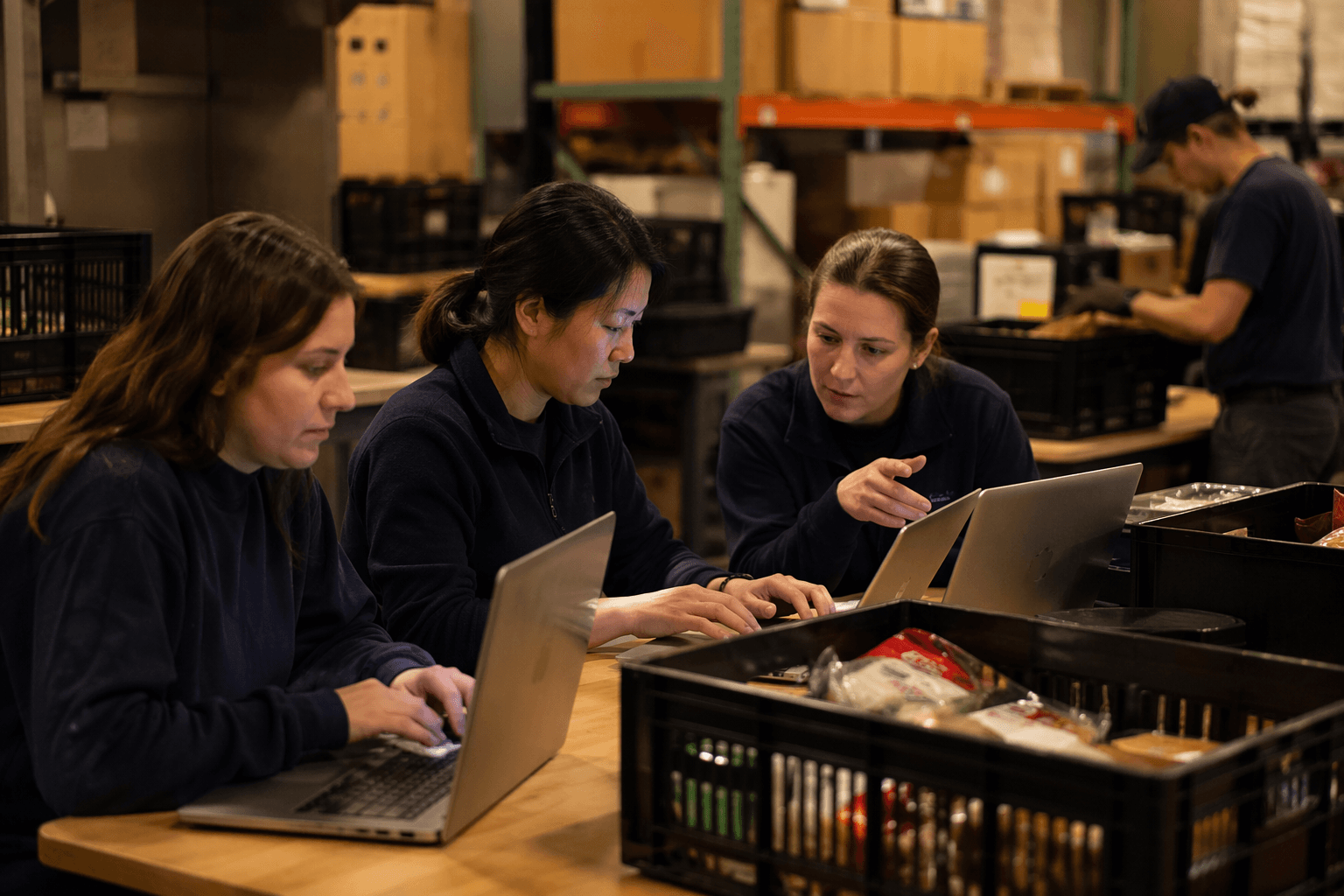
That is why the warehouse or staging area should work like a checkpoint, not just a drop zone. The clearest operational habits are the ones volunteers can follow under pressure:
- Keep spoiled, leaking, recalled or suspicious items in a separate hold area.
- Keep cleaning supplies away from food.
- Keep ready-to-eat food away from raw items.
- Label coolers and bins so cold items do not drift into the wrong stack.
- If a product’s condition is unclear, stop and ask before it moves downstream.
Those steps sound basic because they are. They are also the difference between a smooth route and a preventable food-safety problem that can slow deliveries to pantry partners.
Why this matters beyond one route
The scale behind this work is large enough that small mistakes compound quickly. USDA says over one-third of all available food in the United States goes uneaten through loss or waste. EPA says preventing food from going to waste in the first place is the best option for reducing environmental impacts, and it has updated its older Food Recovery Hierarchy into the Wasted Food Scale to reflect current science and practices.
That broader context matters for A Simple Gesture because the organization is not only collecting food, it is part of the recovery system that keeps edible food moving toward people who need it. Its mission data show the reach: as of December 2025, it had helped donate over 8,000,000 child-size meals and $13,000,000 in donated food value, with 75+ pantry partners, 3,900+ recurring food donors and 200 monthly volunteers. At that scale, a missing label or a warm cooler is not a tiny exception. It is a process failure that can ripple through a network built on trust.
Know the legal guardrails
Safety rules also sit inside a legal framework that encourages donation. North Carolina’s Department of Environmental Quality says the Food Donation Improvement Act was signed into law in 2023, and that the federal Good Samaritan law protects qualified direct donors who, in good faith, give apparently wholesome food or grocery products to people in need. The same framework gives added protection to businesses and nonprofits involved in food donation.
That protection does not replace handling discipline. It makes clear, documented food-safety practice even more important, because the goal is to move food quickly without creating avoidable risk. For A Simple Gesture, the legal backdrop supports generosity, but the warehouse sign should still say what volunteers need in plain English: keep food clean, keep it cold when it should be cold, keep raw items apart, and do not pass along food that looks unsafe.
The signage version that works best
The best training tool is the one a volunteer can read in ten seconds. For A Simple Gesture, the FSIS guidance fits that need almost perfectly because it is short, memorable and operational. A break-room poster or pickup sheet can lead with the four words, then add the donation-specific reminders that prevent the most common failures.
If the goal is fewer mistakes and faster handoffs, the rulebook does not need to be fancy. It needs to be visible, repeated and specific enough that every donor bag, every cooler and every route stop gets the same treatment. In a volunteer system this large, that consistency is what keeps the mission moving safely.
This article was produced by Prism’s automated news system from verified source data, official records, and press releases, then run through automated quality and moderation checks before publishing. The system is built and supervised by the people who set the standards it runs under. Read our full AI policy.
Know something we missed? Have a correction or additional information?
Submit a Tip