Feeding America toolkit urges food banks to prioritize nutrition and culture
Feeding America’s toolkit makes a simple case: culturally matched food is not a nice-to-have, it is how pantry systems improve uptake and cut waste.
Nutrition is now an operations question, not a side project
Feeding America’s Nutrition in Food Banking Toolkit reframes charitable food as a procurement and service design problem. The network says healthy communities need access to culturally relevant, nutritious food that reflects people’s food traditions and lifestyles, and it argues that food insecurity is bound up with housing costs, health, social isolation, low wages, and other social determinants of health.
That matters for A Simple Gesture because doorstep donations only create value when the food reaching partner pantries actually fits local demand. If a bag is full of items that look charitable on paper but do not match how families cook, store, or eat, the result is predictable: lower uptake, more sorting work for staff, and more waste for volunteers to handle.
What the toolkit is really asking food banks to do
The toolkit, published in March 2021 and updated in August 2021, was developed by Feeding America’s Nutritious Food Revisioning Task Force. Its development also drew on Healthy Eating Research, MAZON: A Jewish Response to Hunger, CDC’s Nutrition and Obesity Policy Research and Evaluation Network, Partnership for a Healthier America, the UConn Rudd Center for Food Policy and Obesity, the University of California Nutrition Policy Institute, and the Academy of Nutrition and Dietetics.
The central message is straightforward: nutrition should not be treated as an add-on. Feeding America says organizations need data, guidance, stakeholder input, and cultural competence to make sure the food they distribute is actually useful to the people they serve. For an operation like A Simple Gesture, that means thinking about food recovery the way a strong supply chain does, by matching supply to demand instead of pushing every available item through the same channel.
Why cultural relevance changes the work on the ground
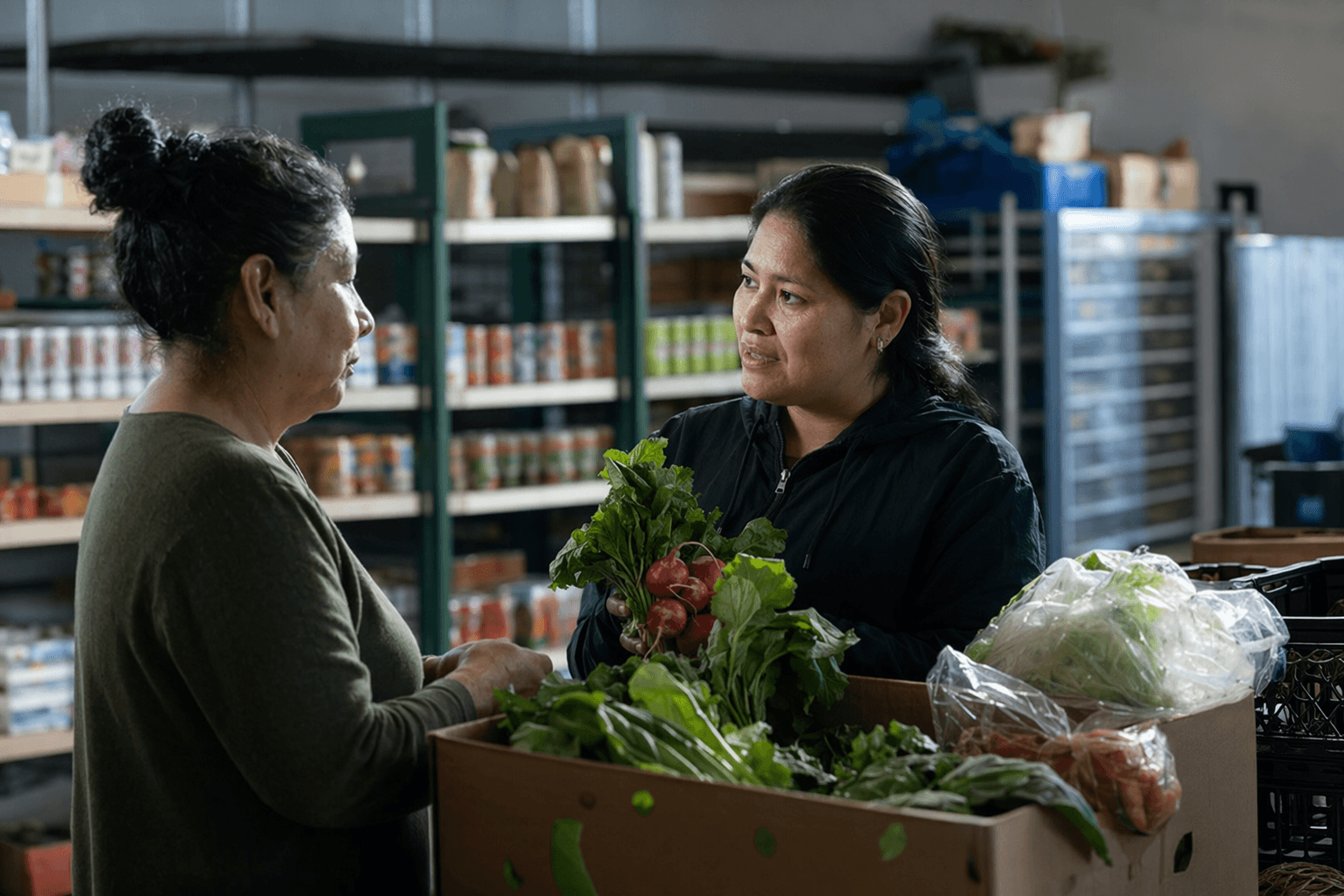
One of the toolkit’s most practical ideas is applying an intercultural competence lens. Feeding America’s materials say that many organizations lack representation from Black, Indigenous, and other communities of color, which makes it harder to build client-choice environments that reflect the people actually using them. The answer is not guesswork. It is direct engagement with community members, pantry staff, and donors to learn which foods are most useful, most welcome, and most likely to be used.
For A Simple Gesture, that can change how volunteers are recruited and trained, how route coordinators think about what should be prioritized, and how staff talk to donors about what belongs in the green bag. A pantry serving immigrant families may need different staples than one serving more multigenerational households or families managing specific medical diets. When the organization learns those patterns, it can steer more of the right food into the right channels and reduce the amount of product that needs to be re-sorted or discarded later.
The evidence points to measurable payoff
Feeding America is clear that this is not only a values statement. Its companion evidence review says studies have examined the nutritional quality of food distributed by food banks and the food placed in pantry bags. The same review reports that 71% of pounds distributed nationally in FY21 met criteria for Foods to Encourage across 31 food categories.
That number is important for staff because it shows nutrition can be measured, not just discussed. It also gives food recovery groups a benchmark for internal decisions about what to source, what to request from donors, and what to phase out. For a neighborhood model like A Simple Gesture, that kind of tracking can help leaders judge whether the green bag program is bringing in items that partner pantries can actually use or simply increasing volume without improving utility.
Donor education is part of the job
Feeding America’s guidance on working with food donors says the goal is to increase access to nutritious, including culturally inclusive, food for neighbors facing food insecurity. That changes donor messaging from a generic plea for any nonperishable item into a more deliberate conversation about quality, relevance, and fit.
For A Simple Gesture, that can mean giving volunteers and donor-facing staff a tighter script around what the pantry network actually needs. If chapters know which foods move quickly and which sit on shelves, they can be more precise about outreach, collections, and partner expectations. That helps the organization do two things at once: strengthen pantry relationships and make the donation stream less wasteful.
Why health and food recovery are increasingly linked
Feeding America’s broader nutrition materials connect food banking to health equity and medical outcomes. The organization says more than 145,000 neighbors have accessed healthy food prescriptions through its Food as Medicine work, and those meals can include culturally relevant foods matched to both tastes and medical needs.
That matters because it shows the field is moving beyond calories toward outcomes. A pantry bag that better reflects a household’s food traditions is more likely to be used, and food that is actually eaten is more likely to support health. For A Simple Gesture, the implication is that stronger pantry fit is not just a dignity issue, it is an operational one that can support better service, better retention of donated product, and stronger trust with local partners.
What A Simple Gesture staff can take from this
The practical lesson for A Simple Gesture is to treat cultural relevance as part of the distribution workflow, not an extra project. That means building feedback loops with pantry partners, asking where donated items are helping and where they are not, and using those answers to shape volunteer guidance and donor asks.
- Use pantry feedback to identify the staples that move fastest by client population.
- Train volunteers to recognize that usefulness, not just volume, is the goal of recovery.
- Adjust donor messaging so green bag collections align with local eating patterns and storage realities.
- Treat representation and community input as part of procurement, not just outreach.
Feeding America’s toolkit makes the case that charitable food works better when it is matched to the people receiving it. For A Simple Gesture, that is not a philosophical shift. It is a practical way to improve uptake, reduce waste, and make every pickup route and pantry drop-off count a little more.
This article was produced by Prism’s automated news system from verified source data, official records, and press releases, then run through automated quality and moderation checks before publishing. The system is built and supervised by the people who set the standards it runs under. Read our full AI policy.
Did this article answer your question?