Food Rescue US model shows logistics drive local food recovery
Food Rescue US treats food recovery like dispatch work, and that is the lesson for A Simple Gesture: tighter routing and faster handoffs protect food, volunteer time, and pantry supply.
Logistics is the mission
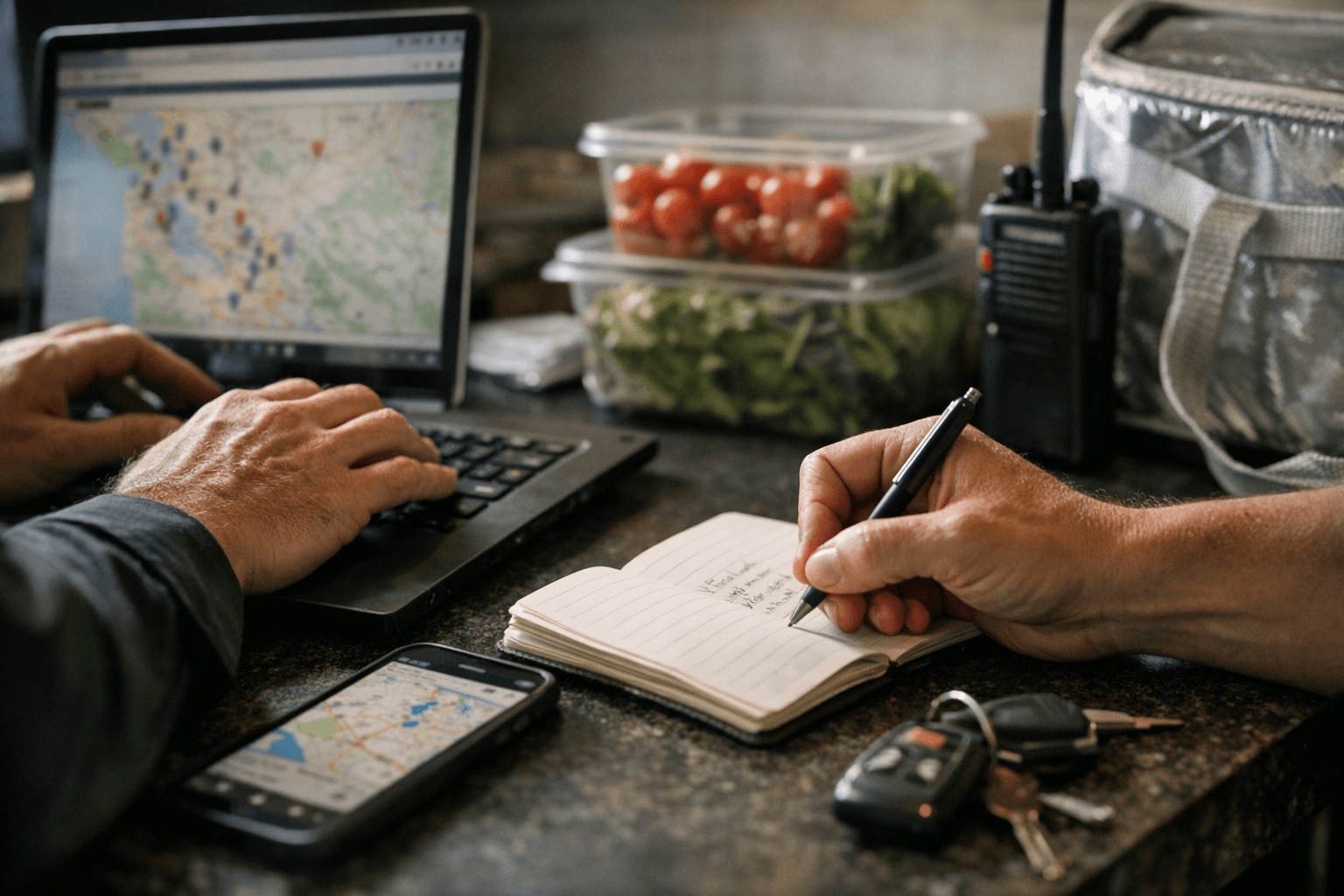
Food recovery breaks down when the handoff breaks down. Food Rescue US puts that reality at the center of its model, using a web-based app to connect donors, volunteers, and receiving agencies while keeping local site directors in the loop. That structure matters because food recovery is not just about generosity; it is about matching the right food with the right person at the right time before quality slips.
For A Simple Gesture, that same lesson lands close to home. The green bag program depends on doorstep donations, volunteer pickup routes, and pantry partnerships that only work if the chain stays tight from curb to agency shelf. When a system like that runs well, it looks simple from the outside. Inside the operation, it is a constant exercise in coordination.
What the Food Rescue US model makes visible
The strongest thing about the Food Rescue US setup is that it makes coordination visible instead of invisible. The app is not presented as a flashy feature layered on top of a mission. It is the operating system for the mission, built to move information fast enough that food can be rescued, routed, and delivered without unnecessary delay.
That matters for staff and coordinators because it reframes the work. Clear routing, simple instructions, and real-time communication are not administrative extras. They are the core labor of food recovery, especially when the goal is to keep nutritious food out of landfills and get it to communities in need. The model also shows that scale does not have to mean losing local control, because it still relies on site directors and local relationships rather than software alone.
Why that logic fits A Simple Gesture
A Simple Gesture already sits on the kind of operational foundation that can benefit from dispatch-style thinking. The organization’s green bag model depends on volunteers showing up at the right time, knowing where to go, and understanding what happens after a pickup. It also depends on pantry partners being ready to receive food in a way that keeps the flow steady instead of chaotic.
That is where the Food Rescue US approach offers a practical lesson. A local food recovery system does not need more abstraction; it needs fewer points of confusion. If pickup timing, delivery instructions, and recipient handoffs are easy to understand, volunteers can spend less time sorting out logistics and more time moving food. For a nonprofit that relies on neighborhood participation, that difference can determine whether collections feel dependable or improvised.
The same goes for retention. Volunteers are more likely to stay engaged when the work feels organized and their time is respected. A system that makes the next task obvious, the route predictable, and the handoff clear can reduce the low-grade friction that quietly drives people away.
The bottleneck an app-based model can remove
The clearest bottleneck an app-based model could remove is the missed or delayed pickup. In a doorstep donation network, one missed handoff can ripple through the rest of the route, leaving food sitting too long and making the rest of the day harder to salvage. An app that updates pickup instructions, timing, and driver status in real time can reduce that failure point before it spreads.
That same tool can also support same-day rerouting when plans change. If a volunteer cancels, a donor is unavailable, or a receiving agency needs food sooner than expected, the system can move the task to someone else without waiting for a chain of phone calls or messages to catch up. In food recovery, that kind of flexibility is not a convenience. It is how quality is preserved.
For A Simple Gesture staff, that means one of the most valuable uses of a digital platform is not glamour or scale for its own sake. It is reliability. A simple interface that shows who is assigned, what food is available, where it should go, and when it must move can turn volunteer labor into predictable volume instead of one-off bursts of generosity.
What documentation does for donors and partners
The Food Rescue US model also underscores another quiet but important part of the job: documentation. Food recovery organizations need to show donors, pantry partners, and grantmakers that collections are consistent and impact is measurable. Good records do more than satisfy reporting requirements. They make the work legible to the people who keep it going.
For A Simple Gesture, that matters because the organization sits at the intersection of volunteer coordination and community trust. Documentation can help show which routes are working, where donations are flowing, and how often pantry partners are receiving food. That makes it easier to explain value without relying on vague mission language. It also helps staff spot weak points before they become recurring problems.
A digital workflow can support that by capturing the basics as the work happens. Which volunteer picked up the bag, when it moved, where it was delivered, and whether the handoff was completed are not small details. They are the operational record of whether the system is working as designed.
What staff and volunteers should take from this model
The practical takeaway is straightforward: keep the workflow simple, make handoffs dependable, and treat volunteers as part of the logistics system, not as an afterthought. That mindset changes how coordinators plan routes, how staff communicate with pantry partners, and how volunteers understand their role. It also helps a neighborhood recovery effort behave less like a loose network of good intentions and more like an organized service.
For A Simple Gesture, the point is not to copy another organization’s software one-to-one. The point is to borrow the operating discipline behind it. The best food recovery systems do not just inspire participation; they organize it. When the logistics are clear, the mission becomes harder to miss and easier to sustain.
This article was produced by Prism’s automated news system from verified source data, official records, and press releases, then run through automated quality and moderation checks before publishing. The system is built and supervised by the people who set the standards it runs under. Read our full AI policy.
Did this article answer your question?