USDA grant program supports community food recovery, long-term hunger solutions
USDA’s food recovery grant favors coalitions, not solo programs, so A Simple Gesture is strongest when it brings pantries, schools, farms and gleaners into one plan.
A grant that rewards systems, not slogans
The Community Food Projects Competitive Grants Program is built for organizations that can show how local food recovery fits into a wider system. USDA’s National Institute of Food and Agriculture says the program is meant to bring together stakeholders from different parts of the food system, improve local food systems, and tackle food and nutrition insecurity by involving food-insecure community members in planning, design, implementation, and evaluation. It is not designed as a short-term giveaway; the agency says projects should address the underlying causes of hunger and be built to become self-sustaining after one federal investment.
For A Simple Gesture, that matters because the strongest application is unlikely to be a polished description of doorstep donations alone. The program rewards projects that can explain how green bag pickups, pantry deliveries, community feedback, and partner coordination work together to change access over time. That pushes the organization to present itself as a functioning system with scale, rules, and expansion points, not just as a mission-driven nonprofit with good intentions.
Who belongs in the coalition
The eligibility rules make the coalition question even more important. NIFA says eligible applicants include public food program service providers, tribal organizations, and private nonprofit entities, including gleaners; individuals and for-profit entities are not eligible. The agency also says a 501(c)(3) designation is not required, which widens the field for community-based nonprofits that may have a different structure.
That eligibility map points to the kind of local alliance A Simple Gesture would need to assemble to look competitive. Schools can help identify need and connect families to food access efforts. Farms can supply surplus or recoverable produce. Gleaners can turn wasted harvest into usable food. Public agencies can connect data, benefits, and referral pathways. Food pantries can receive recovered food and turn it into reliable distribution. The grant’s logic favors partners who can show a shared infrastructure rather than separate one-off activities.
Why the program fits food recovery nonprofits
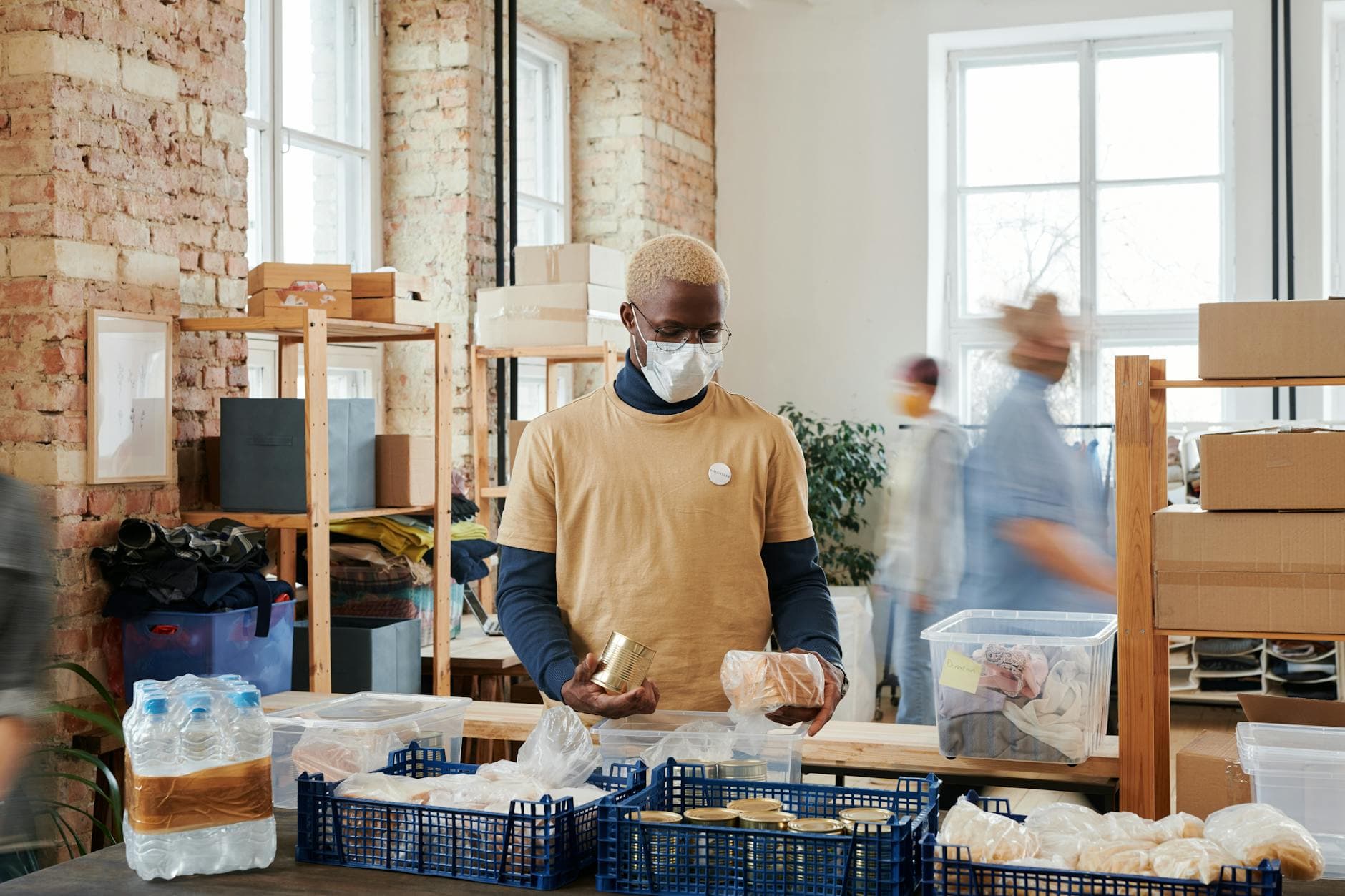
NIFA’s framing makes this program unusually relevant to food recovery groups. A Simple Gesture already sits at the intersection of volunteer pickup routes, pantry logistics, and neighborhood trust, which is exactly the kind of cross-sector work CFPCGP is built to support. The agency says projects should include food-insecure community members in the full arc of the work and should address broader hunger drivers, which means recovery groups have to show more than pounds collected or bags moved. They need to show how the system becomes more durable, more participatory, and less dependent on constant emergency response.
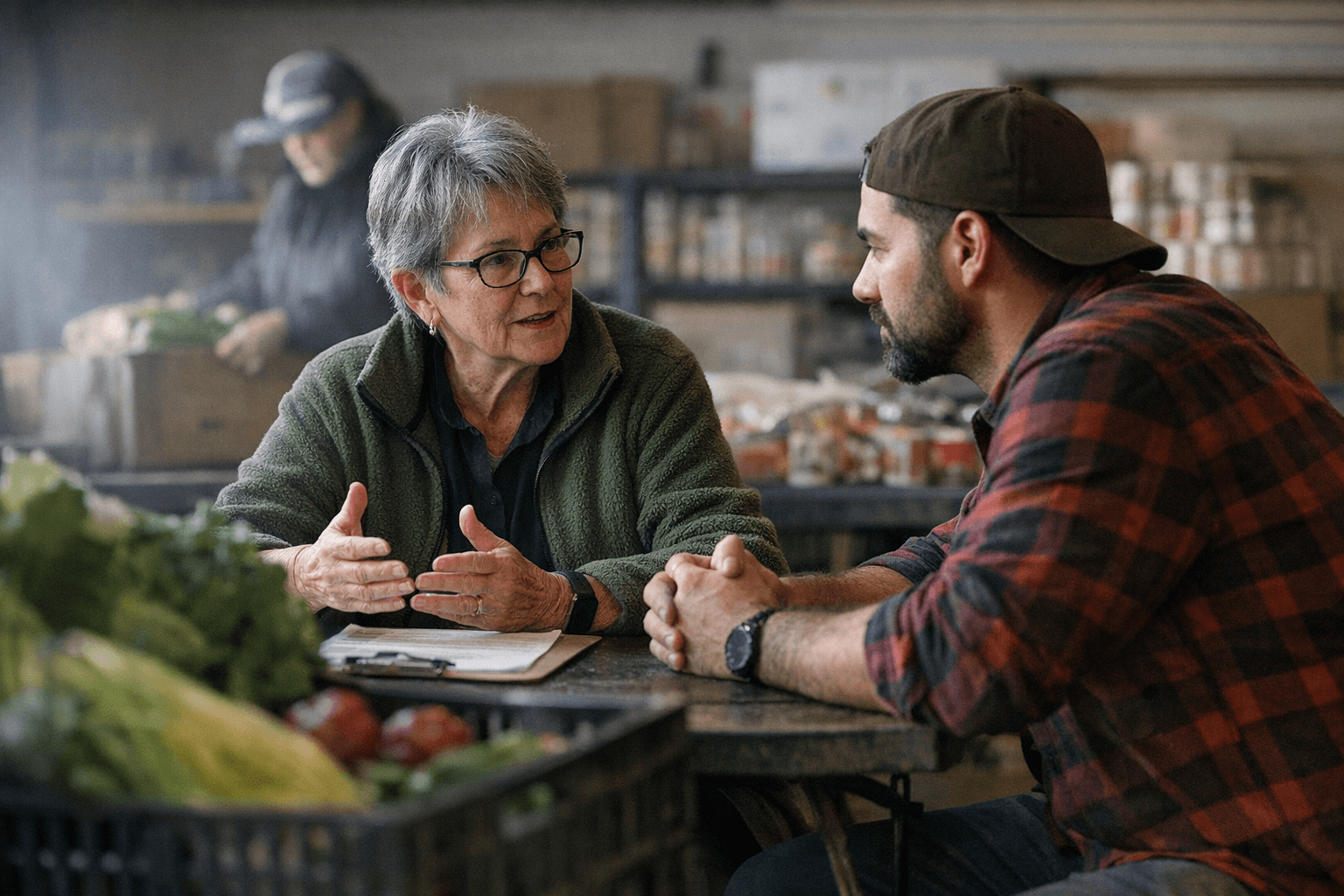
That is where coalition design becomes the real test. If a proposal is centered only on collection, it can look like a service program. If it shows how schools help with outreach, how farms and gleaners feed the supply side, how pantries manage distribution, and how residents with lived experience shape the plan, it starts to look like the kind of community food project the USDA is trying to fund. That shift from volume to structure is the difference between a grant narrative and a credible long-term strategy.
What a competitive proposal would have to prove
The grant framework asks applicants to address two or more of the program’s goals and to present a “comprehensive and sustainable” approach. NIFA also says the project should be designed so that one-time federal support helps it become self-sustaining. For A Simple Gesture staff, that means the proposal has to answer a practical question: what keeps working after the grant dollars are spent?
A strong answer would likely include measurable outcomes tied to shared systems. That could mean documenting how many households are reached through pantry partners, how much food is recovered through the green bag network, how many schools are involved in outreach, or how many farms and gleaning operations are feeding the pipeline. The important part is not just the numbers themselves, but the way they show coordination across organizations that already touch different points of food insecurity.
The USDA’s recent award pattern also shows that this is an active, competitive space. NIFA announced $2.8 million for 13 projects under the program in January 2026, underscoring that the grant is being used to back projects with local reach and cross-sector design. For A Simple Gesture, that means the bar is not simply being a good neighbor. The bar is building a coalition that can demonstrate lasting change.
What staff and volunteers should take from it
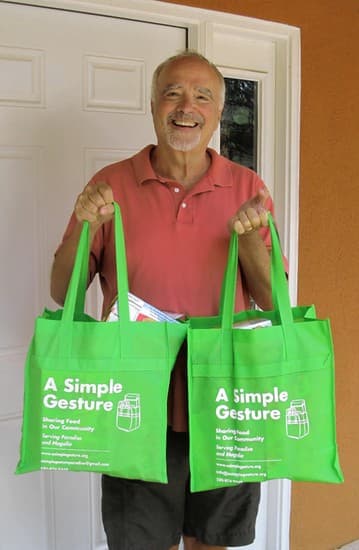
The most useful lesson for A Simple Gesture is that the grant logic matches the best version of community food recovery: coordinated, local, and built to outlast a single funding cycle. Volunteers make the green bag system visible, but the grant case depends on the less visible work, route coordination, partner management, pantry scheduling, and the organizing needed to keep the network moving. That is where the organization can show it is not just redistributing food, but helping build the local food system around it.
If A Simple Gesture ever pursues this program directly, the application process itself would need planning. NIFA says applicants must register through SAM, obtain a Unique Entity Identifier, and submit online through Grants.gov, a process that can take weeks. In other words, the coalition, the data, and the paperwork all have to move together. That is exactly how a competitive federal proposal works: the story of community hunger has to be matched by the machinery to do something about it.
This article was produced by Prism’s automated news system from verified source data, official records, and press releases, then run through automated quality and moderation checks before publishing. The system is built and supervised by the people who set the standards it runs under. Read our full AI policy.
Did this article answer your question?