Report urges nonprofits to fund volunteer systems as essential infrastructure
A new Points of Light report says volunteer systems are not a nice extra, but the infrastructure that keeps food recovery moving. For A Simple Gesture, that means routes, training, and supervision are as mission-critical as the food itself.
Volunteers are the operating system
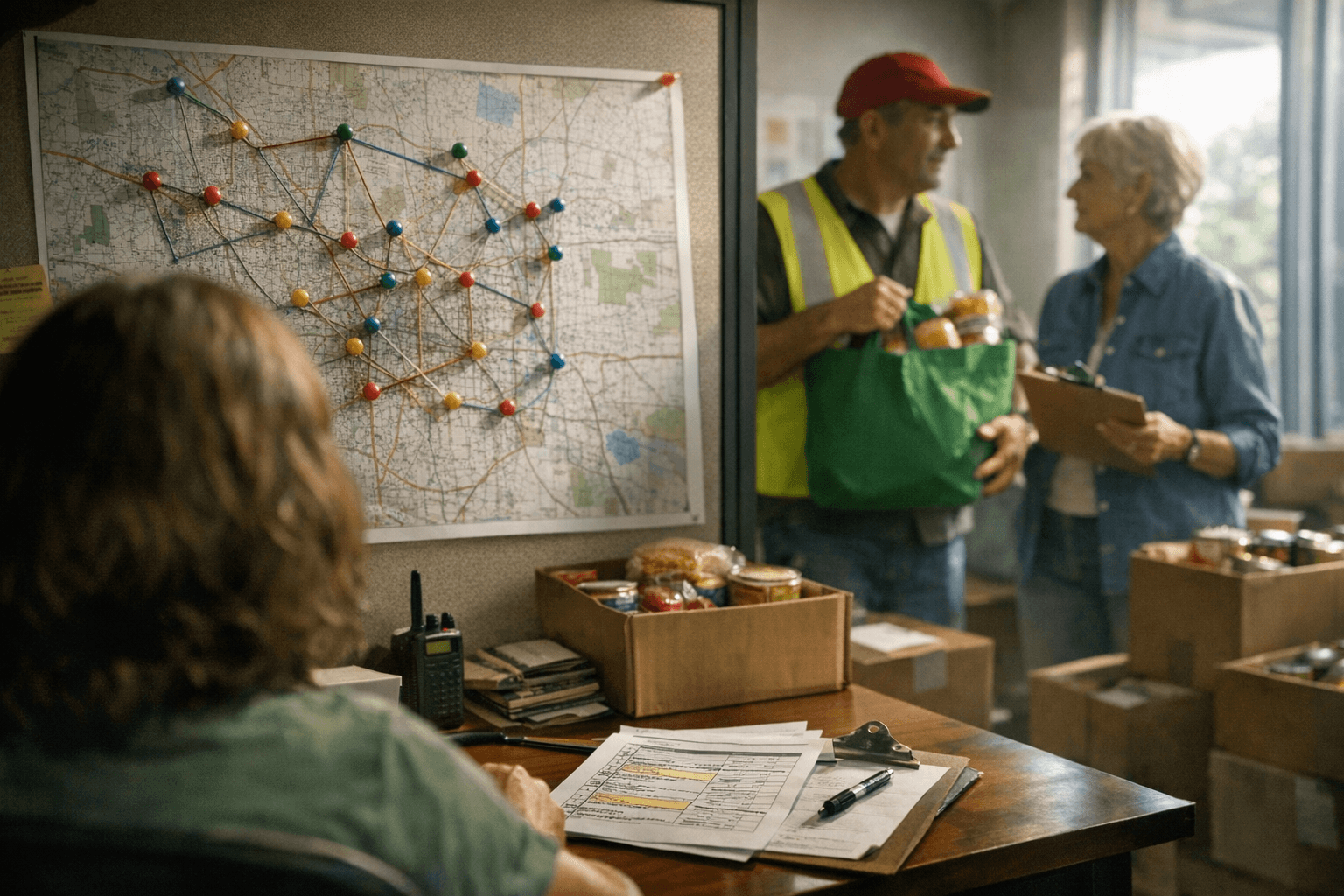
A Simple Gesture runs on more than goodwill. It runs on route schedules, donor reminders, pantry drop-offs, school refrigerator restocking, and the steady discipline of people who show up when the bag is on the porch and the pantry is waiting at the other end. That is exactly why the new Points of Light report lands so hard for food recovery nonprofits: it argues that volunteering should be treated as essential infrastructure, not a pleasant add-on.
The report’s core message is straightforward. Volunteers are not just helping with a mission, they are delivering the mission in many nonprofits, from food distribution and disaster response to youth mentoring and community organizing. Points of Light says that without sustained investment in volunteer systems, many community services become unavailable or unsustainable. For an organization like A Simple Gesture, that is not abstract theory. If the volunteer network is unreliable, the whole chain starts to fray.
Why the infrastructure argument matters
Points of Light released From Nice to Necessary on April 21, 2025, with research informed by The Bridgespan Group. Its larger point is that too many funders still treat volunteer engagement as a soft benefit instead of a line item with measurable output. The report says recruiting, training, deploying, recognizing, and retaining volunteers takes significant effort, yet many nonprofits lack the resources to measure those costs or justify them.
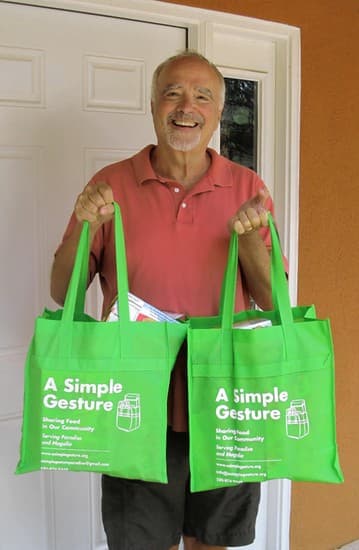
That gap matters because A Simple Gesture is not merely collecting food. It is operating a volunteer logistics system. The organization depends on volunteer donors and volunteer drivers, and its model is built to turn neighborhood participation into repeatable food movement. In practical terms, that means volunteer coordination should be discussed the same way staff talk about trucks, storage, and pantry partnerships: as a core operating expense that produces output.
Points of Light also says there is a mismatch between the value organizations assign to volunteers and the value funders assign to volunteer engagement. For a chapter like A Simple Gesture, the strongest case for support may not be a sentimental appeal to civic spirit. It is the operational proof that volunteer systems create meal recovery, route coverage, donor conversion, and pantry throughput.
What the numbers say
The national picture explains why this debate matters now. Points of Light says formal volunteering in the United States has stagnated between 20% and 30% for decades, and that 28% of the U.S. population is currently engaged in formal volunteering. The organization also says volunteers make up one-third of the nonprofit workforce, while only 0.19% of foundation giving over the last decade has supported volunteer development.
The scale of volunteerism is still large, even if the participation rate has stalled. National data released by the U.S. Census Bureau and AmeriCorps found that 75.7 million Americans age 16 and up, or 28.3%, formally volunteered between September 2022 and September 2023. Those volunteers contributed more than 4.99 billion hours of service valued at $167.2 billion.
A later Points of Light executive summary sharpened the warning for nonprofits. It said nearly half struggle to fill volunteer roles, 29% face funding cuts that affect program delivery, and volunteer infrastructure still receives only 0.19% of foundation giving. Points of Light says it wants to help lead a national coalition aimed at doubling formal volunteering rates by 2035, with a goal of reaching 150 million volunteers. That is a big national ambition, but it starts with small local systems that can absorb, train, and keep people active.
How A Simple Gesture turns volunteers into capacity
A Simple Gesture-Guilford County was established as a 501(c)(3) nonprofit in 2015, but the food-collection model itself dates to founder Jonathan Trivers in 2011. The organization says Trivers continues to spend time helping other communities start chapters, with the goal of seeing hundreds of towns adopt the model. BackPack Beginnings says the Greensboro effort started in April 2015, with Westminster Presbyterian Church as the first sponsor, a reminder that this was built as a church-backed community model before it became a broader network.
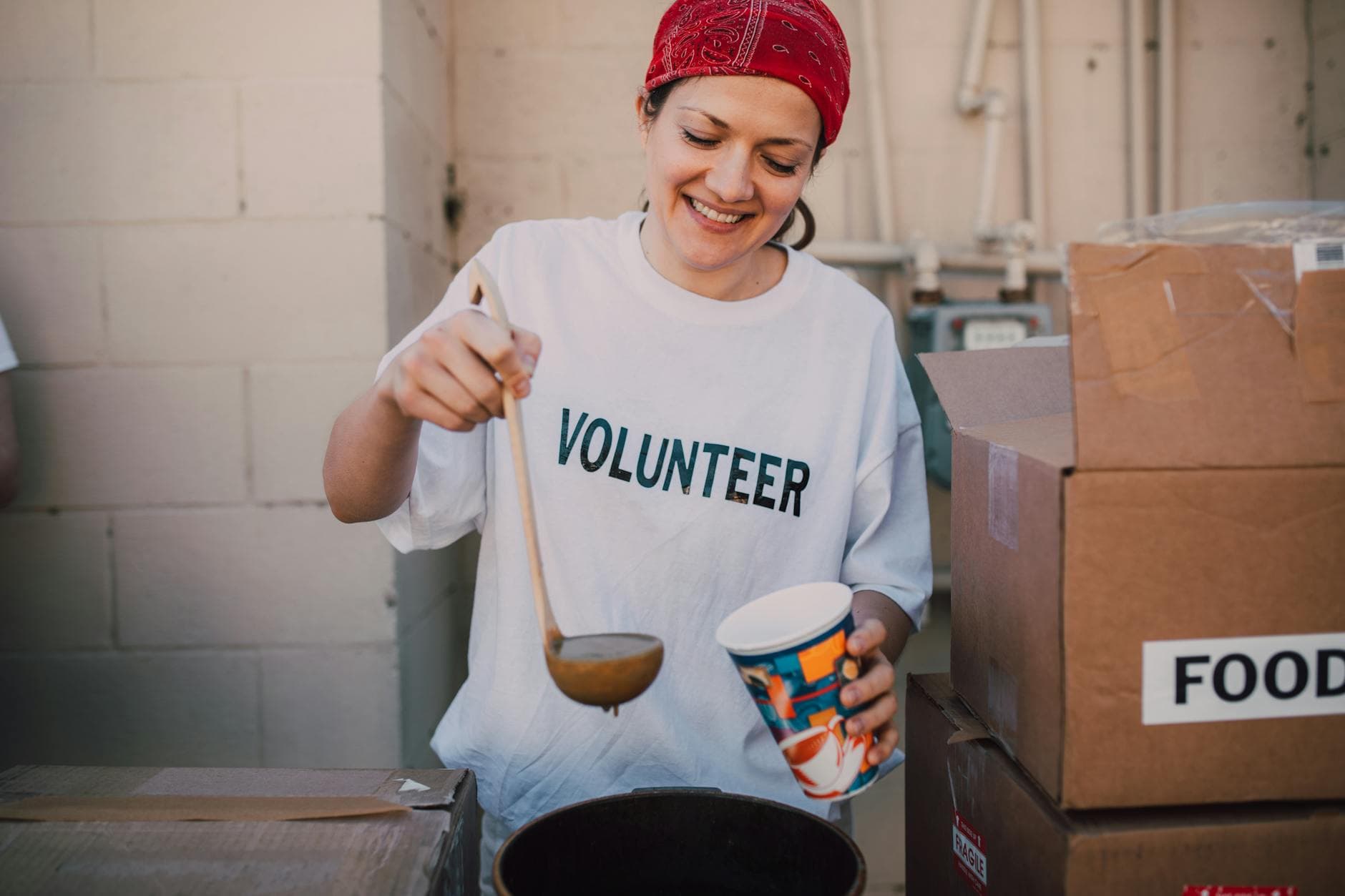
GuideStar says the Greensboro chapter runs three programs: Green Bag Food Donor, Food Recovery, and SHARE school refrigerators. Together, those programs show why the work is really about systems. Green Bag depends on donor behavior and pickup timing. Food Recovery depends on coordination with grocery stores and school cafeterias. SHARE school refrigerators depend on reliable replenishment and close local relationships so food can move quickly to where it is needed.
A Simple Gesture-Guilford County says it partners with dozens of local food pantries, which makes volunteer reliability even more important. A pantry cannot plan around uncertainty. If volunteers miss routes or arrive late, food sits too long, pickups get rescheduled, and downstream partners lose confidence in the process. In a food recovery operation, the volunteer schedule is not an administrative detail. It is the delivery network.
What breaks when volunteer systems are underfunded
The report’s argument is strongest when you apply it to day-to-day operations. Underinvestment does not just mean fewer thank-you emails or thinner orientation materials. It means weaker route coverage, slower onboarding, more dropped handoffs, and less predictable pantry supply. It can also mean a heavier burden on a small staff that has to cover gaps, troubleshoot no-shows, and keep partner organizations from absorbing the failure.
For A Simple Gesture, the likely pressure points are clear:
- recruitment that does not keep pace with route demand
- training that is too thin to prepare new drivers and coordinators
- scheduling systems that cannot handle absences or neighborhood changes
- recognition and retention efforts that fail to keep repeat volunteers engaged
- data collection that is not strong enough to prove impact to funders
Those are not side issues. They are the difference between a program that looks good in a brochure and one that can move food every week without interruption. That is why the report’s framing is useful for staff: volunteer coordination is program delivery, not a support function hidden in the background.
Scale gives the model its credibility
The A Simple Gesture model has grown because it can be replicated, but replication only works when the volunteer engine is stable. GuideStar says the Greensboro chapter has collected more than 5 million pounds of food since 2015 from about 5,000 donors and more than 100 local businesses. HandsOn NWNC says A Simple Gesture now has more than 60 chapters across the country and has provided over 7 million meals.
Those numbers help explain why this is more than a neighborhood effort. It is a network built to convert small acts into large, measurable food recovery. The broader the footprint, the more important it becomes to manage volunteer systems like serious infrastructure. Chapters that can document route coverage, donor retention, pantry throughput, and school refrigerator replenishment will be better positioned to argue for recurring support.
That is the real takeaway from the Points of Light report: volunteer labor is not free, and it is not automatic. It becomes reliable only when organizations invest in the systems that make it work. For A Simple Gesture, that is the difference between a well-meaning food drive and a durable community supply chain.
This article was produced by Prism’s automated news system from verified source data, official records, and press releases, then run through automated quality and moderation checks before publishing. The system is built and supervised by the people who set the standards it runs under. Read our full AI policy.
Did this article answer your question?