UC Berkeley study finds how to keep food-recovery volunteers engaged
Food-recovery routes fail when drivers stop showing up. A Berkeley study found older volunteers stick longer, while route design and flexibility can keep pickups covered.
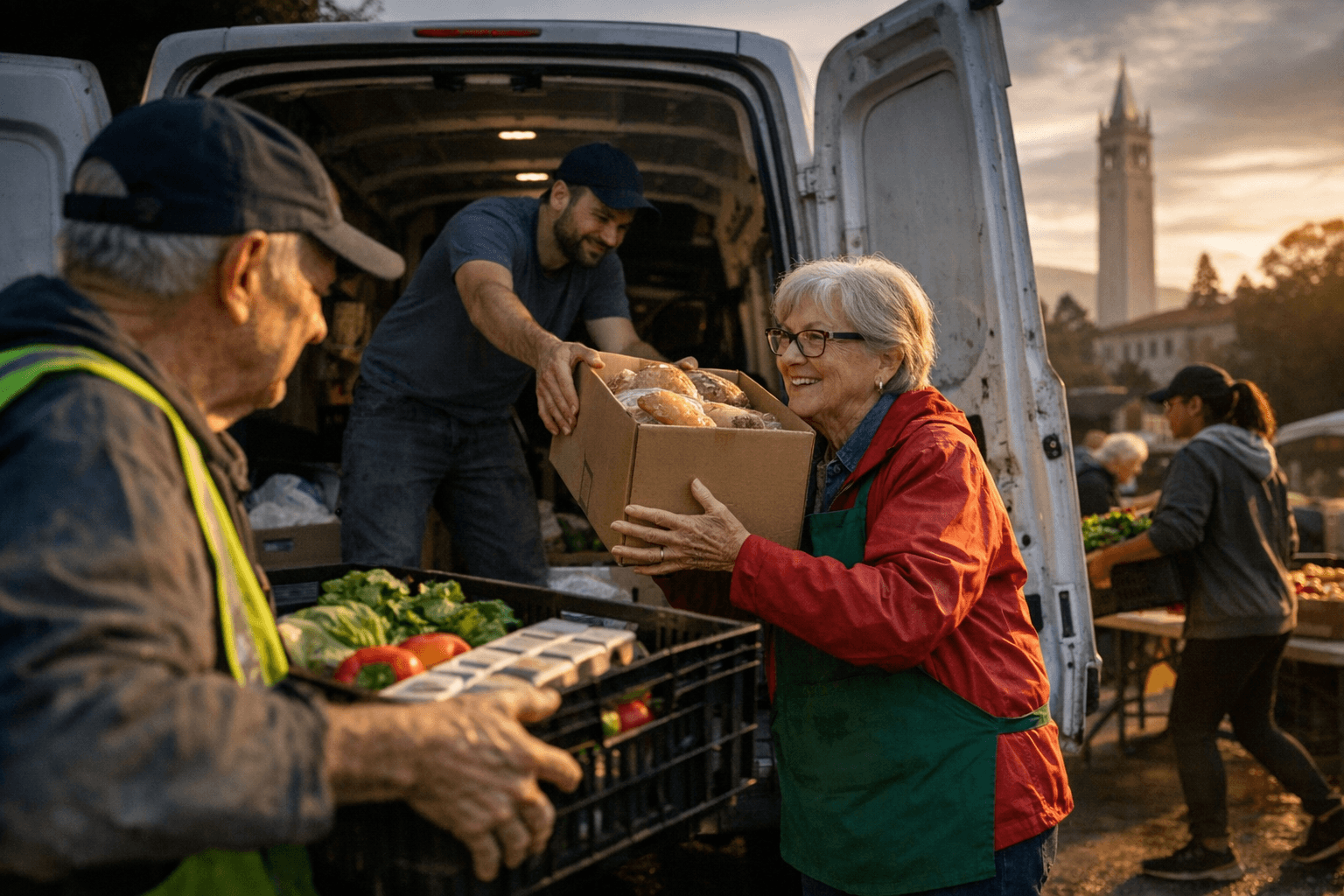
Food-recovery routes do not fail first on food. They fail when a driver stops showing up, and a UC Berkeley seminar treated that problem as an operations question as much as a volunteer one.
At the Institute of Transportation Studies, Morgan State University professor Celeste Chavis presented research on how to keep volunteers engaged in food recovery operations. The project looked at active and inactive volunteers from 25 locations run by two food recovery organizations, using a modeling framework that examined demographics, attitudes and perceptions to explain who stays with the work and for how long.
The findings carry a direct message for chapters that depend on recurring pickups. Among active volunteers, older people tended to stay longer, while women and full-time employees were less likely to volunteer frequently. That matters for route coverage, because a volunteer network only works when drivers can be counted on week after week, not just when enthusiasm is high at signup.
The study also sits inside a much larger waste problem. The U.S. Department of Agriculture estimates that 30% to 40% of the U.S. food supply is wasted. The Environmental Protection Agency estimates that 66 million tons of wasted food were generated in 2019 across retail, food service and residential sectors, with most of it sent to landfills. In that context, every missed pickup is not just a scheduling headache. It is a lost opportunity to move edible food before it becomes trash.
For A Simple Gesture, the lesson lands close to home. The Guilford County chapter says it works with dozens of local food pantries, rescues edible food from businesses and relies on volunteer drivers for door-to-door pickups, corporate pickups and timely food recovery runs. Its materials emphasize scheduled routes, including weekday and planned driver shifts, because the organization’s model depends on predictable coverage.
The chapter’s scale shows why retention is an operations issue, not a side concern. As of December 2025, A Simple Gesture said its Guilford County work had helped deliver more than 8,000,000 child-size meals valued at $13,000,000 through 75-plus pantry partners, 3,900-plus recurring food donors and 200 monthly volunteers. A strain in the volunteer pipeline would ripple quickly through pantry deliveries and green bag pickups.
The research team is also simulating routing scenarios that match volunteer trips with routine travel, while measuring emissions and the economic value of volunteer labor. For food-recovery leaders, that points to the same practical conclusion: the best retention strategy is not just asking for more help. It is making the route easier to fit into a real life, then keeping it reliable enough that donors, pantries and drivers all know what happens next.
This article was produced by Prism’s automated news system from verified source data, official records, and press releases, then run through automated quality and moderation checks before publishing. The system is built and supervised by the people who set the standards it runs under. Read our full AI policy.
Did this article answer your question?