Big Lots workers urged to protect sleep amid irregular shift fatigue
Big Lots’ uneven schedules can do more than wear people out. OSHA and NIOSH say fatigue can hurt safety, accuracy, and alertness, which makes sleep a work issue.
Sleep is part of the job at Big Lots
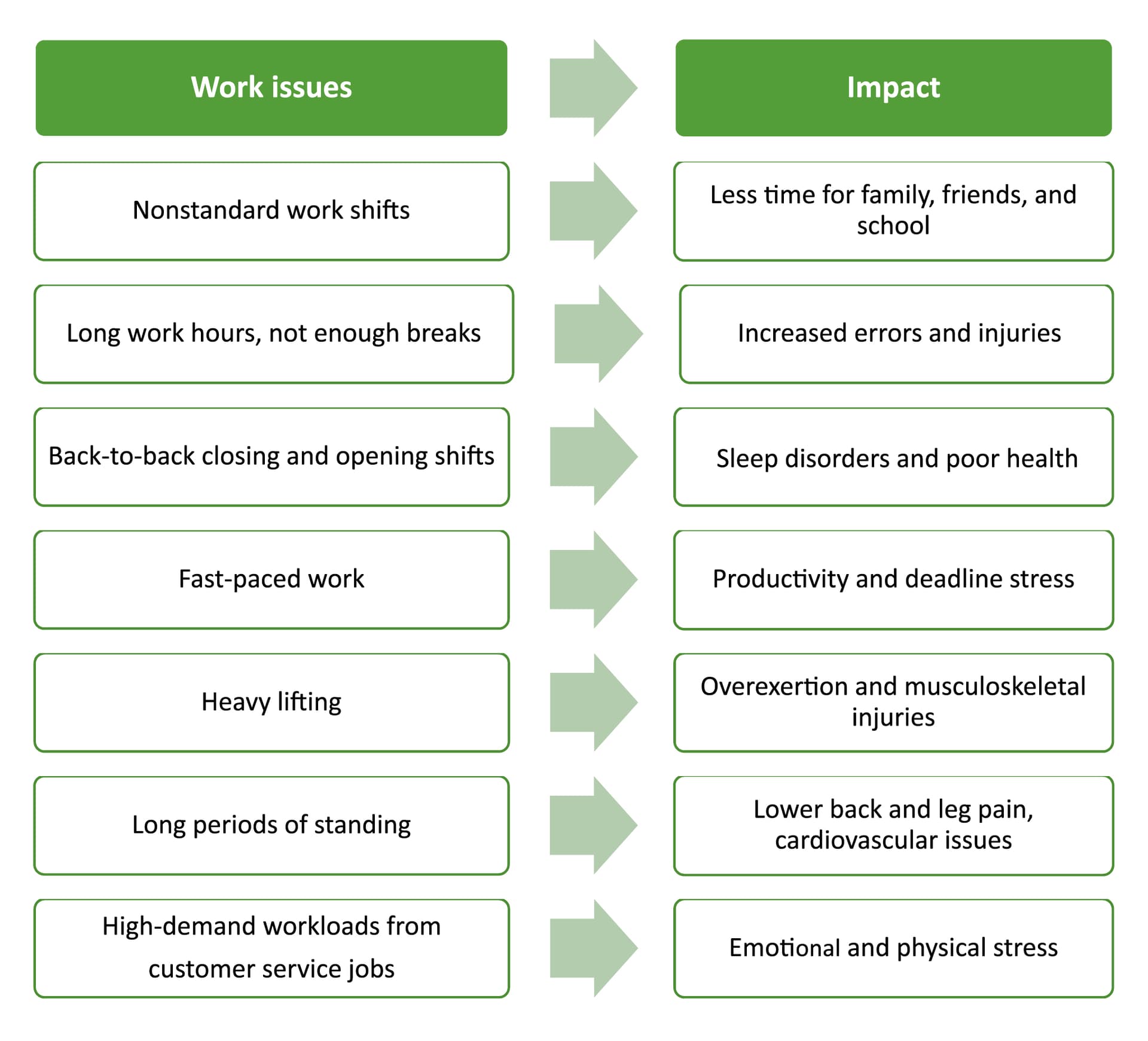
When a store mixes early freight, late closes, callouts, and weekend coverage, sleep stops being a personal preference and becomes a work issue. OSHA says long work hours can raise stress, worsen eating habits, reduce physical activity, and contribute to illness, while NIOSH ties shift work to shorter sleep and poorer sleep quality.
That matters on the sales floor and in the stockroom. Fatigue can slow concentration, reaction time, and patience, which shows up in customer interactions, stock handling, cash accuracy, and the drive home after a shift ends.
Why retail schedules hit harder than they look
Big Lots workers know the rhythm: unload when the truck shows up, stay late to finish recovery, come back early when staffing is thin, and cover weekends when the store is busiest. That pattern can create the exact kind of irregular work that NIOSH says is linked to the most trouble sleeping, especially for night and rotating shift workers.
NIOSH also says working at night conflicts with the body’s circadian clock and the sun’s light-dark cycle. Put simply, the body is built to sleep when the schedule may be asking for work, and the combination of sleep loss and the body’s low point can bring on excessive fatigue and sleepiness.
That is one reason a closing shift followed by a truck call the next morning can feel so punishing. The schedule does not just shorten rest; it can make the next shift feel slower, less precise, and more stressful from the first hour.
What fatigue changes on the floor
Fatigue is easy to dismiss until it starts affecting the parts of the job that customers and managers notice. A tired worker is more likely to miss details during recovery, make mistakes at the register, overlook a safety hazard in the stockroom, or sound less patient with a shopper asking for help.
OSHA’s fatigue guidance puts some of the broader health stakes in view: long work hours can contribute to stress, poor eating habits, less physical activity, and illness. Those problems build on one another, which is why a rough schedule can ripple beyond a single bad day and affect performance across a whole week.
For Big Lots, the issue is sharper because the company has been through a major reset. Former BL Stores, Inc., formerly Big Lots, Inc., filed voluntary Chapter 11 proceedings on September 9, 2024, in the U.S. Bankruptcy Court for the District of Delaware. In 2025, Variety Wholesalers said it would operate 219 Big Lots stores in 15 states after buying the chain out of bankruptcy, and Big Lots’ current store locator also lists 219 locations.
That smaller footprint and the churn that came with closure, reopening, and shifting operations can create more uncertainty for workers already dealing with irregular hours. Uncertainty itself is a fatigue problem, because it makes it harder to build a routine that protects sleep.
What the science-backed advice actually says
NIOSH does not treat sleep as a soft wellness topic. Its shift-work training says people on night shifts usually get less sleep overall, and its broader guidance says shift workers and people working long hours often have shorter sleep duration and poorer sleep quality.
- Spend as much time in bed as possible after a shift.
- Take planned naps before work, and during night work when possible, to counter sleepiness.
- Use a sleep space that is very dark, quiet, cool, and comfortable.
- Aim for a 15- to 20-minute daytime nap when you can, since NIOSH cites that window as helpful for alertness.
The practical advice is straightforward:
These are not luxury tips. They are small countermeasures against a schedule that may be pulling sleep in the wrong direction.
How to protect sleep when you do not control the schedule
For Big Lots workers, protecting sleep is less about perfect habits than about reducing the damage from a schedule you did not choose. The goal is to make the most of the sleep time you do have, especially when you are bouncing between early freight, late closes, and weekend coverage.
- Block out daylight after a late shift with curtains, shades, or anything that makes the room darker.
- Use earplugs or white noise if daytime noise keeps cutting sleep short.
- Put the phone on silent or out of reach so calls, alerts, and messages do not break the sleep window.
- Skip errands and extra stops when you should be resting, because one more task can be the difference between a usable nap and a ruined sleep block.
- If possible, nap before returning to work after a night or extended shift, since NIOSH says planned naps can improve alertness.
A few tactics are practical and realistic:
The point is not to build a perfect lifestyle. It is to keep fatigue from snowballing into mistakes, arguments, or unsafe work.
When exhaustion becomes a store issue
There is a line between being tired and being too tired to work safely. If a schedule leaves you exhausted enough to make mistakes, move slowly around equipment, or struggle to stay alert on the drive home, that is not just a personal inconvenience. It can become a store problem.
That is especially true in retail, where one tired worker can affect more than one task. A fatigued associate can miss details in receiving, struggle through customer service, or lose the patience needed for a difficult interaction, and those problems do not stay hidden for long.
Speaking up before burnout becomes an incident is part of the job. The best workers are not always the ones who push hardest; they are often the ones who protect their sleep enough to be reliable tomorrow.
The bigger lesson for Big Lots now
Big Lots’ restructuring makes sleep even more relevant, not less. A chain operating on a much smaller footprint, with 219 locations across 15 states, depends heavily on people who can stay sharp through uneven staffing and unpredictable timing.
That is why the fatigue guidance from OSHA and NIOSH belongs in any conversation about Big Lots schedules. In a store where one week can include freight, closing, and early reopening, sleep is not a side issue. It is part of performance, part of safety, and part of whether the job can be done well the next day.
This article was produced by Prism’s automated news system from verified source data, official records, and press releases, then run through automated quality and moderation checks before publishing. The system is built and supervised by the people who set the standards it runs under. Read our full AI policy.
Did this article answer your question?