OSHA urges Big Lots to plan for workplace violence risks
Big Lots’ front-end disputes, closing shifts, and theft interventions are exactly the kind of risk points OSHA says stores should plan for.
A tense return at the register, a theft confrontation near the front doors, or a closing shift in a half-empty store can turn an ordinary Big Lots day into a workplace violence risk OSHA has warned about for years. The agency defines workplace violence broadly, covering threats, verbal abuse, intimidation and physical assaults, and says workers who exchange money with the public, work alone or are isolated, or work late at night face higher exposure.
That lines up with retail reality. Registers, back rooms, parking lots and after-hours freight all create moments when a customer argument can escalate fast. For Big Lots, that matters now in a company that says its new business operates 219 stores in 15 states after being purchased out of bankruptcy in 2025 by Variety Wholesalers, which says it brings more than 70 years of discount retail experience to the brand. The chain’s footprint across the Midwest, Southeast and Mid-Atlantic puts frontline associates in the same everyday situations OSHA has long singled out.

OSHA’s late-night retail guidance dates to 1998, and the current advisory publication on the topic dates to 2009. It is informational, not a regulation, but its core message is blunt: employers need a zero-tolerance policy, a workplace assessment and a prevention program that combines engineering controls, administrative controls and training. In practice, that means stores need more than a reminder to “be careful.” They need working phones and radios, clear paths to exits, better sight lines, enough staff on vulnerable shifts and a plan for who responds when a situation feels off.
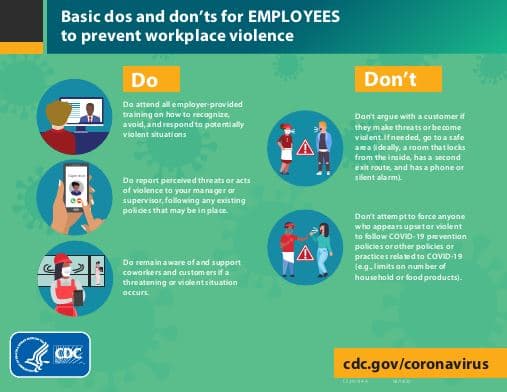
For frontline workers, the first move in a heated interaction is not to win the argument. It is to create distance, get support and keep the situation from escalating. Good practice also means using a buddy system when closing or counting cash, and reporting every incident or near miss so managers can see patterns before one bad encounter becomes a serious injury. OSHA’s message is that violence prevention is a management responsibility, but it only works if workers use the tools they are given and speak up early.
The broader retail numbers show why this is not a rare-crisis issue. In the National Retail Federation’s 2024 study, surveyed retailers reported a 26% increase in average shoplifting incidents from 2022 to 2023, and 42% said shoplifting events involved the threat or act of violence. The study covered 164 retail brands representing $1.52 trillion in annual sales in 2023. The Bureau of Labor Statistics reported 740 fatal work injuries from violent acts in 2023, including 458 homicides, and said about 30% of retail trade fatalities were homicides, 94 deaths. The Centers for Disease Control and Prevention’s National Institute for Occupational Safety and Health says workplace violence can range from verbal abuse to physical assault and can cause psychological harm, injury or death. For retail, the risk is built into the shift, which is why the safest stores treat prevention as part of the daily operating model.
This article was produced by Prism’s automated news system from verified source data, official records, and press releases, then run through automated quality and moderation checks before publishing. The system is built and supervised by the people who set the standards it runs under. Read our full AI policy.
Know something we missed? Have a correction or additional information?
Submit a Tip