Dollar General ESG report highlights mission, workers and communities
Dollar General’s ESG language promises respect, opportunity and community support, but its safety settlement and store realities give workers a tougher test.

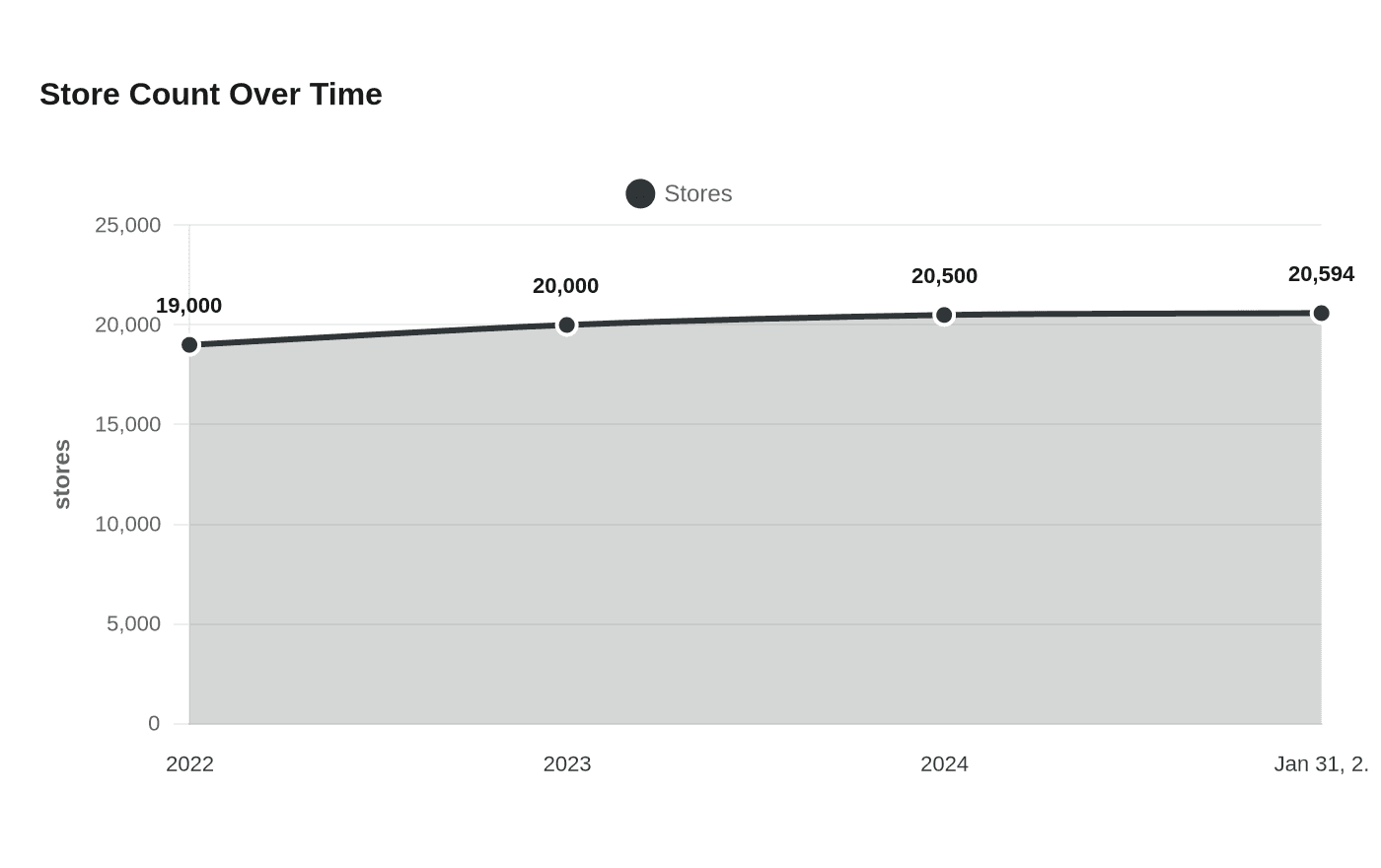
Dollar General’s ESG materials read like a company defining its own scorecard. The retailer says it was founded in 1939, built around the mission of “Serving Others,” and it now operates 20,594 stores under the Dollar General, DG Market, DGX, pOpshelf and Mi Súper Dollar General banners as of Jan. 31, 2025. For store workers, that scale matters because the company’s promises about employees, safety and local support have to hold up across thousands of locations, not just in corporate language.
What Dollar General says it stands for
The clearest statement of the company’s values appears in its 2022 Code of Business Conduct and Ethics, effective Nov. 1, 2022. In that code, Dollar General says Serving Others means giving customers convenience, quality and great prices, employees “respect and opportunity,” shareholders “a superior return” and communities “a better life.” That wording matters because it lays out the company’s own hierarchy of responsibility, with employees and communities named alongside profits rather than after them.
Dollar General’s broader corporate materials reinforce that identity. The company says it wants to make shopping “affordable and hassle-free,” and it presents itself as America’s neighborhood general store. It also says its literacy foundation was established 30 years ago by the founding family, tying the brand to education and community support as part of its long-term public image.
The store count tells its own story
The most concrete evidence of Dollar General’s growth is the pace of its store expansion. Its 2022 ESG report said the company had more than 19,000 stores in 47 states. The 2023 ESG report raised that to nearly 20,000 stores across 48 states. By the 2024 sustainability report, Dollar General said it provided access to more than 20,500 stores across 48 U.S. states and five cities in Mexico. Its 2025 annual report and proxy statement then put the total at 20,594 stores as of Jan. 31, 2025.
For employees, that growth is not just a branding point. A footprint that large means more isolated stores, more different district conditions and more variation in whether a promise like “respect and opportunity” shows up in daily scheduling, training and supervision. In rural and suburban communities where Dollar General often fills gaps left by other retailers, the store count is part of the company’s leverage and part of the pressure on workers to keep each location running with limited labor.
Why workers should read the ESG report as an accountability test
The ESG report is useful because it shows what Dollar General wants to be judged on over time. That makes it a comparison tool for store associates and district managers who deal with understaffing, burnout, safety issues or limited advancement. If the company says it values employees, workers can ask whether that is visible in staffing levels, training, pay progression and enforcement of basic safety rules. If the company says it values communities, the question becomes whether stores are maintained, staffed and supported in ways that match the neighborhood-store image.
That gap between language and day-to-day reality is where the report becomes most useful. A polished ESG document can describe purpose, governance and responsibility; the store floor shows whether that purpose survives the shift schedule, the backroom workload and the pressure to cover too much with too few people. That is the central question for anyone working under the Dollar General model: whether “Serving Others” applies inside the store as much as it does on the page.
Safety is where the message ran into hard reality
Dollar General’s labor and safety record gives workers a concrete way to measure the company’s claims. In July 2024, the company reached a corporate-wide settlement with the U.S. Department of Labor over workplace safety violations. The deal included $12 million in penalties, required future safety corrections and allowed fines of up to $500,000 per future violation for certain unresolved hazards. NPR said the settlement required Dollar General to correct problems involving blocked exits and access to fire extinguishers and electrical panels.
That settlement did not come out of nowhere. A 2023 WBAL-TV report said Dollar General shareholders voted to review safety policies after 49 deaths in a decade. For employees, that kind of scrutiny turns the ESG language into a practical question: if the company says it values people and communities, how quickly does it fix basic hazards in stores where workers are expected to open, stock, run registers and close with limited backup?
What the report can and cannot tell you
Dollar General’s ESG reporting does not answer every workplace question. It does not settle debates over pay, scheduling, promotions or the experience of working a shift with too few people on hand. It does, however, show exactly how the company wants to frame itself: as a mission-driven retailer with a community role, a literacy legacy and a growing national footprint.
That makes the report useful for both associates and managers. Workers can use it as a baseline when judging whether the company’s values show up in staffing, safety and support. Managers can use it as a reminder that the company’s own words tie employee treatment to the brand itself. At a chain that now spans more than 20,000 stores, the distance between corporate mission and store reality is not abstract. It is the job.
This article was produced by Prism’s automated news system from verified source data, official records, and press releases, then run through automated quality and moderation checks before publishing. The system is built and supervised by the people who set the standards it runs under. Read our full AI policy.
Did this article answer your question?