Payscale page gives Dollar General workers a pay benchmark
Payscale lists Dollar General’s average base hourly rate at $12.59, but workers should test it against local listings, role level, and minimum wage rules before negotiating.
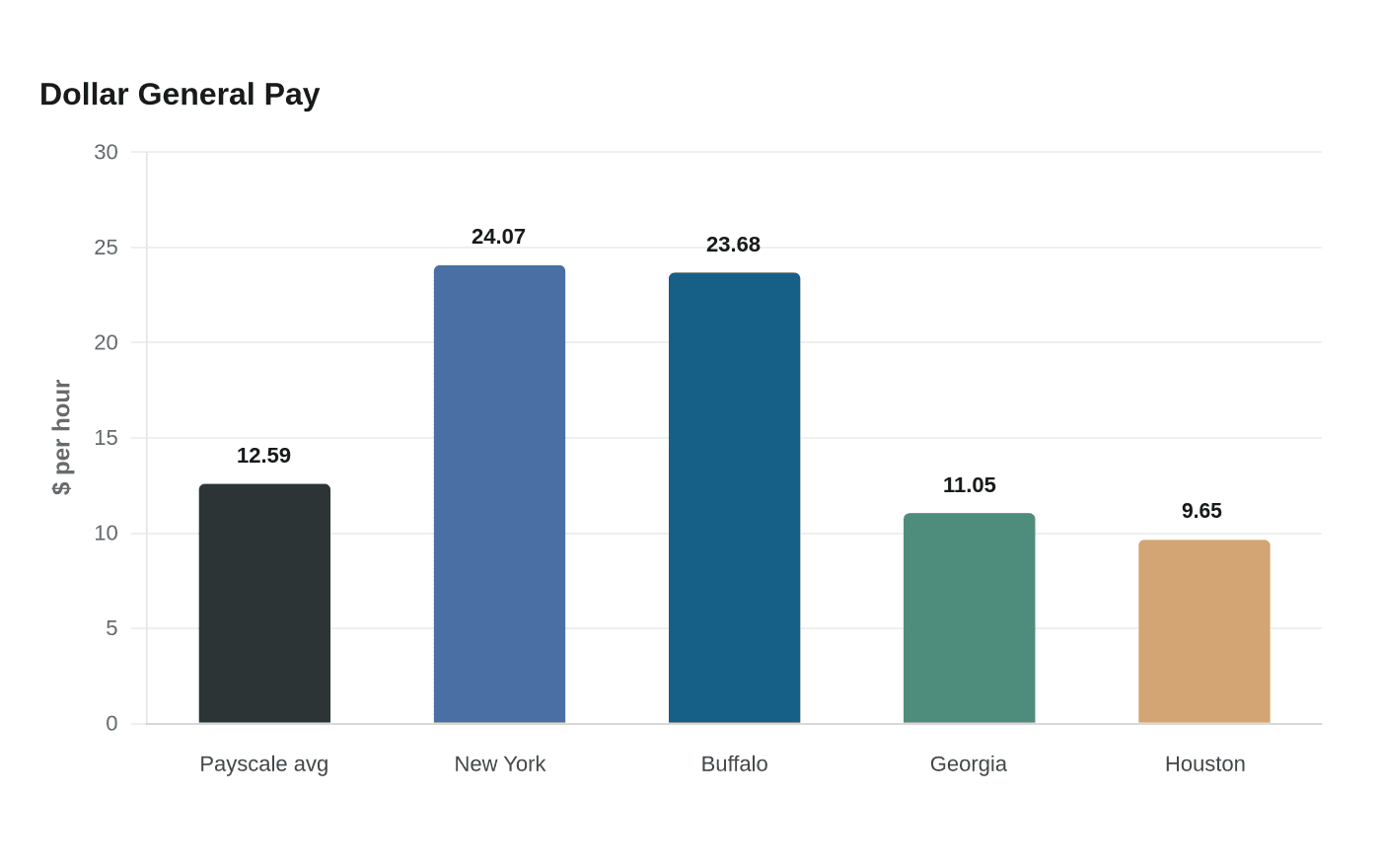
Payscale lists an average base hourly rate of $12.59 for Dollar General. For a company built on hourly labor, that is better than guessing from one coworker’s story or a rumor about what a cashier or key holder “ought” to make. The catch is that the figure is a benchmark, not a promise, and the difference between those two things can shape whether you accept an offer, push for a raise, or move to a different store.
Start with the benchmark, then match the job
The value of a public pay page is not that it reveals the exact wage in every Dollar General store. It gives job seekers and current associates a reference point before they sit down for an offer conversation or a transfer request. A cashier, a key holder, and an assistant manager are not interchangeable roles, and stores with heavier traffic or different staffing patterns can pay differently from one another.
At Dollar General, store labor is often stretched thin and the pace leaves little room for uncertainty once a shift starts. If you are comparing your own rate to a public average, match the title first, then the location, then the actual duties.
- Compare the posted wage with your exact title, not just “store associate”
- Check whether the role adds key-holder duties, opening and closing responsibilities, or supervisory tasks
- Separate base pay from any extra hours, bonuses, or temporary premium pay
- Ask whether the figure reflects a rural store, a suburban store, or a high-turnover district
Pressure-test the number against your local market
The biggest mistake workers make with hourly-pay sites is treating one number as universal. Indeed’s listings in the search results show how wide the spread can be for Dollar General retail sales associates: about $24.07 per hour in New York State and about $23.68 in Buffalo, compared with about $11.05 in Georgia and about $9.65 in Houston, Texas. Local labor supply, cost of living, and competition from other employers can move pay more than a national average suggests.
A self-reported Reddit post in the search results listed a Dollar General sales associate at $10 an hour, which sits far below the New York estimates and closer to the lower end of the market. A single estimate should never drive a yes-or-no decision on its own. If your offer is $12.59 and the local market for similar work is higher, you have a basis to ask more pointed questions. If the local market is lower, you still need to know whether the job’s schedule, workload, and advancement path justify the rate.
An Economic Policy Institute estimate found that more than 90% of Dollar General workers earn less than $15 an hour. An hourly benchmark can look reasonable in isolation and still fall short of what most workers in the chain are actually making.
Dollar General’s staffing choices shape the pay conversation
The company’s labor strategy gives more context to why workers keep checking pay against outside sources. In March 2023, Dollar General committed $100 million to increasing employee hours as labor competition continued. The commitment focused on hours, not wages. More hours can help with a paycheck, but they also mean more time on the floor, more exposure to understaffing, and more pressure on stores that already run lean.
If a district is short-staffed, an hourly rate has to be evaluated alongside workload, schedule stability, and whether the store can actually keep enough people on the roster to make the job manageable. A number like $12.59 helps you ask whether the company is paying enough for the hours it expects you to cover.
Dollar General’s business pressure adds another layer. On July 11, 2024, the company agreed to pay a $12 million penalty and improve safety in a U.S. settlement. On August 29, 2024, it cut its annual sales forecast amid weaker discretionary demand and rising competition. When a retailer is dealing with safety costs, weak demand, and competition at the same time, workers often feel the squeeze in staffing, scheduling, and the pace of work even before they see any improvement in pay.
Use the benchmark the right way in a raise or transfer conversation
A pay page becomes most useful when it helps you prepare for a conversation, not when it replaces one. If you are asking for a raise, comparing market rates can help you explain why your current pay does not match the role you are actually performing. If you are considering a transfer, the same number can help you judge whether a different store or district is worth the move.
The cleanest way to use the benchmark is to stack it against other evidence:
1. Confirm your exact title and the responsibilities attached to it.
2. Compare the posted wage with location-specific listings in your state, city, or nearby market.
3. Check the legal wage floor where you work, because state minimum wage laws vary by state. The U.S. Department of Labor lists those differences.
4. Look at what the job really demands, including hours, physical strain, turnover, and whether the store is chronically short-staffed.
5. Decide whether the number supports staying put, negotiating, or looking elsewhere.
Bad pay data can cost you in real ways. It can lead you to accept too little, undervalue a promotion, or overlook the fact that a transfer in another region could pay more. The California Department of Industrial Relations set California’s minimum wage at $16.90 per hour effective January 1, 2026. Local law can outrun a generic national benchmark very quickly.
Read the benchmark with the job itself in mind
Glassdoor review excerpts in the search results described Dollar General’s turnover as “horrendous” and showed compensation and benefits ratings around 2.3 out of 5. A wage that looks acceptable on paper can feel very different in a store that is constantly turning over staff, squeezing shifts, and asking one associate to cover too much.
This article was produced by Prism’s automated news system from verified source data, official records, and press releases, then run through automated quality and moderation checks before publishing. The system is built and supervised by the people who set the standards it runs under. Read our full AI policy.
Did this article answer your question?