Goldman Sachs CEO David Solomon outlines earnings, deals and AI strategy
Solomon used CNBC to cast Goldman as a growth story in M&A, IPOs and capital formation, while signaling AI is being funded as a strategic priority.
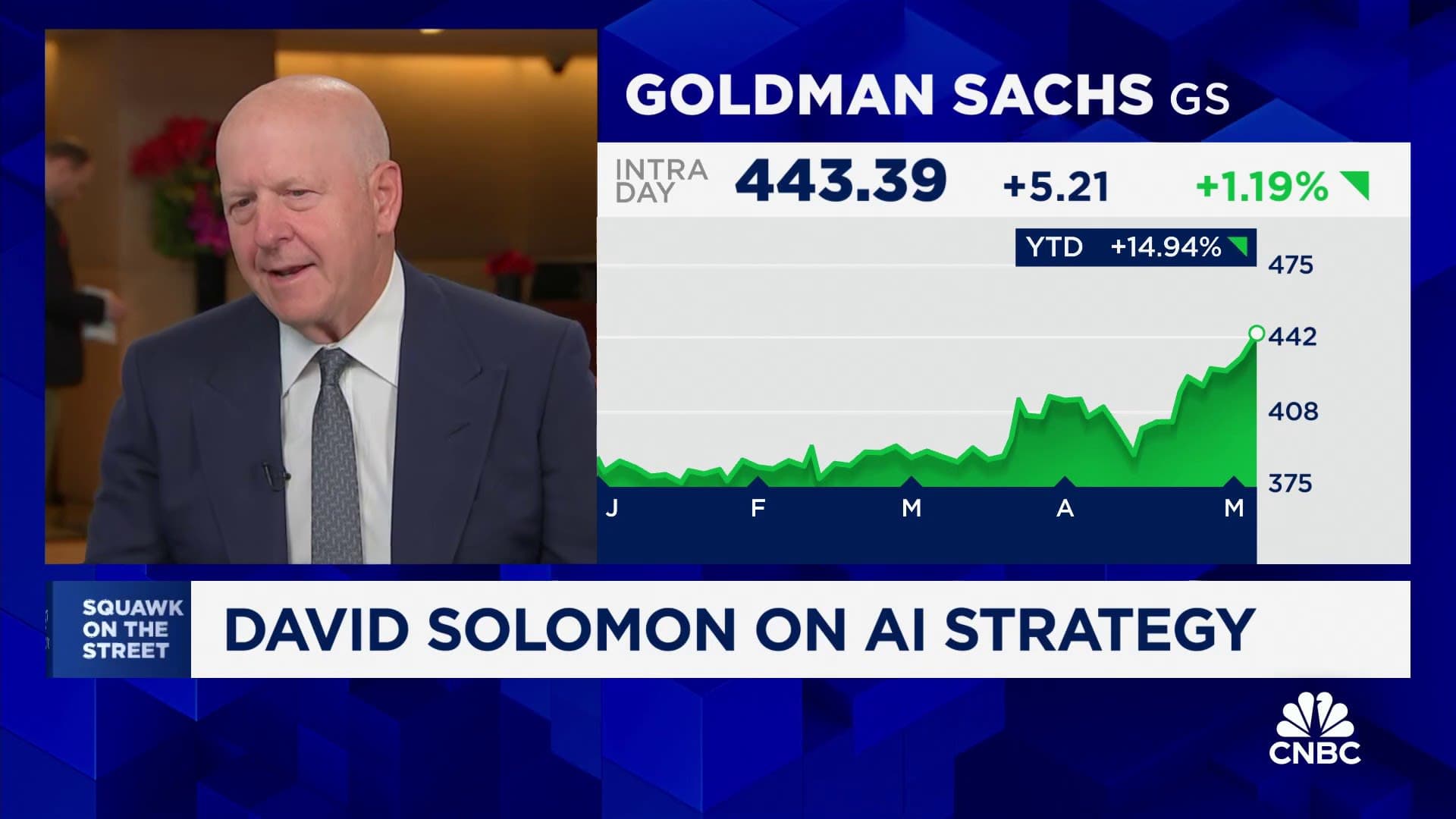
David Solomon used his CNBC appearance to do more than discuss a quarter. He gave Goldman Sachs a public script for how the firm wants to be seen right now: confident on earnings, active in deals, and willing to keep investing in AI.
What Solomon chose to emphasize
Goldman posted the interview as a discussion of second-quarter earnings, the deal-making environment and AI investment. Solomon said the current backdrop is well aligned with Goldman Sachs’ strengths, especially across the M&A and IPO landscape, capital formation and client activity. He also kept the emphasis on continued growth.
In a market where leaders can lean toward caution or expansion, Solomon picked expansion. He did not make the appearance about protecting the franchise from volatility or explaining away slow spots; he tied the firm’s position to areas where Goldman wants to win mandates and keep its revenue mix moving, which is the kind of message bankers and traders are expected to carry back into client conversations.
Why the deal-making message matters inside the firm
When Solomon talks about M&A, IPOs, capital formation and client activity in one breath, he is sketching where the bank sees opportunity: advisory fees, underwriting, sponsorship work and broader financing activity. For analysts and associates, that usually translates into a familiar operating reality, more live mandates when the market is open, and more pressure to move quickly when the pipeline starts to convert.
For managing directors, the message is just as practical. It tells rainmakers what to pitch, where to keep relationships warm and how to describe the firm’s posture to clients who want to know whether Goldman sees a real window or just a temporary burst. It suggests management wants the front office to behave as if the environment is supportive and to act like Goldman expects to capture its share of it.
Public optimism tends to come with an expectation of execution. It often becomes part of how priorities are set, which groups get resources, and how much patience there is for teams that are not tied directly to growth areas.
How to read the AI investment signal
The AI portion of the interview shows how Goldman wants the firm to think about automation. Solomon presented AI as a productivity tool, a client-facing opportunity and a strategic infrastructure theme, not just a cost-cutting slogan. By placing AI beside earnings and deal flow, he made it part of the same growth conversation.
If management is presenting AI as an investment theme, employees should expect the firm to keep pushing tools that speed up research, client response and internal workflows, rather than framing AI only as a headcount reduction story. The practical result is a workplace message that can sound upbeat from the outside while still increasing the pressure on teams to do more with the same bench.
For newer employees, the interview also works as an onboarding tool. It shows how Solomon and the firm talk in public: not in abstract strategy language, but in terms of where the market is active and where Goldman thinks it can compound its advantage.
What employees should take from the clip
Solomon chose to emphasize three things: the earnings story, the durability of deal activity and the willingness to keep funding AI. Together, they point to a firm trying to project confidence while steering attention toward the businesses that can carry growth and the technology that can lift productivity.
- Expect the external message to stay centered on M&A, IPOs and capital formation.
- Expect AI to be framed as an investment that supports scale and client service, not as a side project.
- Expect the internal pressure to match the public tone, especially in coverage teams, support functions and groups tied to execution.
This article was produced by Prism’s automated news system from verified source data, official records, and press releases, then run through automated quality and moderation checks before publishing. The system is built and supervised by the people who set the standards it runs under. Read our full AI policy.
Did this article answer your question?