Goldman Sachs details U.S. benefits for employees from day one
Goldman Sachs says U.S. benefits can start on day one for eligible employees, and the 401(k) clock starts almost immediately too. For new hires, that turns total comp into a real cash-and-coverage question.
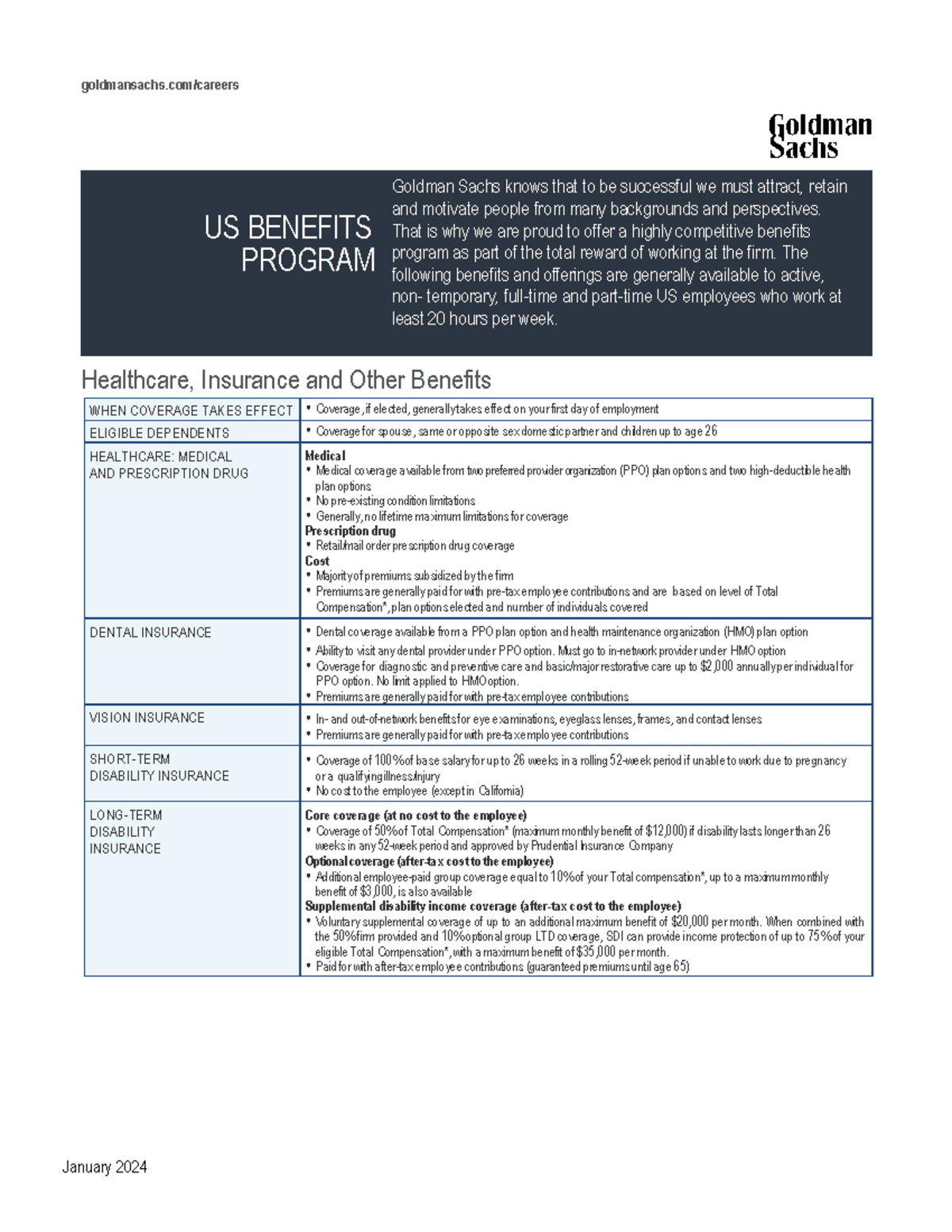
Goldman Sachs is making a clear pitch to U.S. employees: benefits are part of pay, not an afterthought. For active, non-temporary workers in the U.S. who work at least 20 hours per week, the firm says coverage generally takes effect on the first day if elected, which makes the package especially relevant when you are joining, changing roles, or trying to line up family coverage around a start date.
Who gets the package and when it starts
The most important detail in Goldman Sachs’ U.S. Benefits Program is eligibility. The program is generally available to active, non-temporary full-time and part-time U.S. employees who work at least 20 hours per week, so it is not limited to one type of banker or one seniority level. That matters in a workplace where analysts, associates, VPs, and managing directors can all face different schedules, different travel demands, and different family needs, but still need a benefits structure that is easy to understand.
The timing is just as important as the coverage itself. Goldman says that if coverage is elected, it generally takes effect on the employee’s first day. For a new hire, that means the benefits decision is part of the initial onboarding calculus, alongside start date, bonus timing, and the first few months of comp planning. For anyone moving from another employer, it also reduces the gap between leaving old coverage and getting settled into a new role.
Why this matters to your total rewards
Goldman Sachs says it offers a highly competitive benefits program as part of the total reward of working at the firm. That language is not just corporate polish. In a business where annual compensation can swing with markets, deal flow, and the bonus cycle, a benefits package with immediate availability has real value because it helps stabilize the parts of pay that do not show up in the headline base salary number.
The firm also says the program helps it attract, retain and motivate people from many backgrounds and perspectives. That is the real employer side of the story: Goldman is treating benefits as a retention tool in a labor market where prestige alone is not enough to keep people through the long hours, late-night revisions, and uneven work-life balance that define much of investment banking. For employees, the practical question is not whether the package sounds generous on paper, but whether it meaningfully supports day-to-day life when you are balancing work intensity with health coverage, dependents, or a move to New York.
Retirement contributions begin almost immediately
Goldman Sachs’ 401(k) materials make the retirement side of the package especially concrete. Employees are generally eligible to elect base salary contributions immediately upon hire, which means saving for retirement can start as soon as you join. Firm contributions generally begin on the first day of the month after hire, adding another layer of value shortly after onboarding.
That timing matters for recruits comparing offers because it changes the economics of the first paychecks. A banker who is looking beyond base pay and into total compensation needs to factor in how quickly retirement savings start to accumulate and how soon the firm adds its own money. In a business where many people focus on promotion trajectory, carry into the next role, or the exit market after a few years, a fast-starting retirement benefit is one of the few parts of comp that can compound quietly while the rest of the job is all visible pressure.
Goldman presents benefits as part of a broader people strategy
Goldman’s own internal materials show that the benefits discussion sits inside a larger workforce strategy. Its 2023 People Strategy Report, authored in part by Chief Human Resources Officer Jacqueline Arthur, includes a section titled “Advancing Wellbeing.” That framing matters because it places health and benefits inside the company’s stated agenda for how it manages its people, not just inside a compliance checklist.
The annual report language points in the same direction. Goldman Sachs said in its 2024 annual report that it increased net revenues by 16 percent year over year to $53.5 billion and grew earnings per share by 77 percent to $40.54. When a firm posts numbers like that, its benefits story becomes part of how it explains the value of scale to current and prospective employees: the business is generating significant profits, and it is using part of that strength to support the workforce it needs to keep winning mandates and retaining talent.
The long-running idea behind the package
Goldman has been talking this way for years. In its 2016 annual report, the firm said, “our assets are our people, capital and reputation.” That sentence still does a lot of work inside the firm’s culture. It places employees in the same category of strategic importance as balance sheet strength and brand, which is exactly why a benefits program can be more than a human resources document in a place like Goldman.
The company’s 2010 ESG report made the same logic more explicit, saying it makes an unusual effort to identify and recruit the very best person for every job. That kind of language is standard in elite financial services, but Goldman’s version is useful because it helps explain why employee benefits are packaged so carefully. In a business built on performance, benefits become part of the machinery that keeps high performers from looking elsewhere.
How to read the benefits package in real life
For anyone evaluating a Goldman offer or already inside the firm, the benefits materials are most useful when you line them up against the moments that actually matter. Joining a new team, moving cities, starting a family, choosing dependent coverage, or deciding how much to defer into the 401(k) are not abstract HR issues. They are the points where a benefits program turns into cash flow, coverage, and peace of mind.
A practical read of the package means asking a few direct questions:
- Does my coverage start the first day if I elect it?
- Am I eligible if I work at least 20 hours per week and am non-temporary?
- How quickly can I begin my own 401(k) contributions?
- When do firm contributions start?
- How do these benefits change the real value of my offer versus base pay alone?
Goldman Sachs Ayco’s 2025 benefits-and-compensation guide, which analyzed offerings at over 400 companies, reinforces that benefits are now part of a competitive benchmark, not just an internal policy file. That is the standard Goldman is competing on: not simply what it pays, but how quickly that package becomes useful in an employee’s life.
The result is a benefits program that reaches beyond payroll. For Goldman employees, the real takeaway is straightforward: the company is telling you that day-one coverage, near-immediate retirement access, and a broader wellbeing message are part of the deal, and those features are meant to help hold up the rest of the compensation stack when the workload is at its heaviest.
This article was produced by Prism’s automated news system from verified source data, official records, and press releases, then run through automated quality and moderation checks before publishing. The system is built and supervised by the people who set the standards it runs under. Read our full AI policy.
Did this article answer your question?