Goldman Sachs pay and hours put banking’s hourly value in focus
Goldman’s banking track still pays well, but the hourly math changes fast once 66-hour weeks, 80-hour rivals and promotion timing enter the picture.

Goldman Sachs’ banking pay still looks powerful on paper, but the real question for analysts and associates is what those dollars buy once the hours hit. The firm’s average compensation and the wider Wall Street promotion ladder suggest the job remains a fast track to cash and prestige, yet the workload debate keeps forcing a harder calculation: is the hourly value still worth it?
What the paycheck really looks like
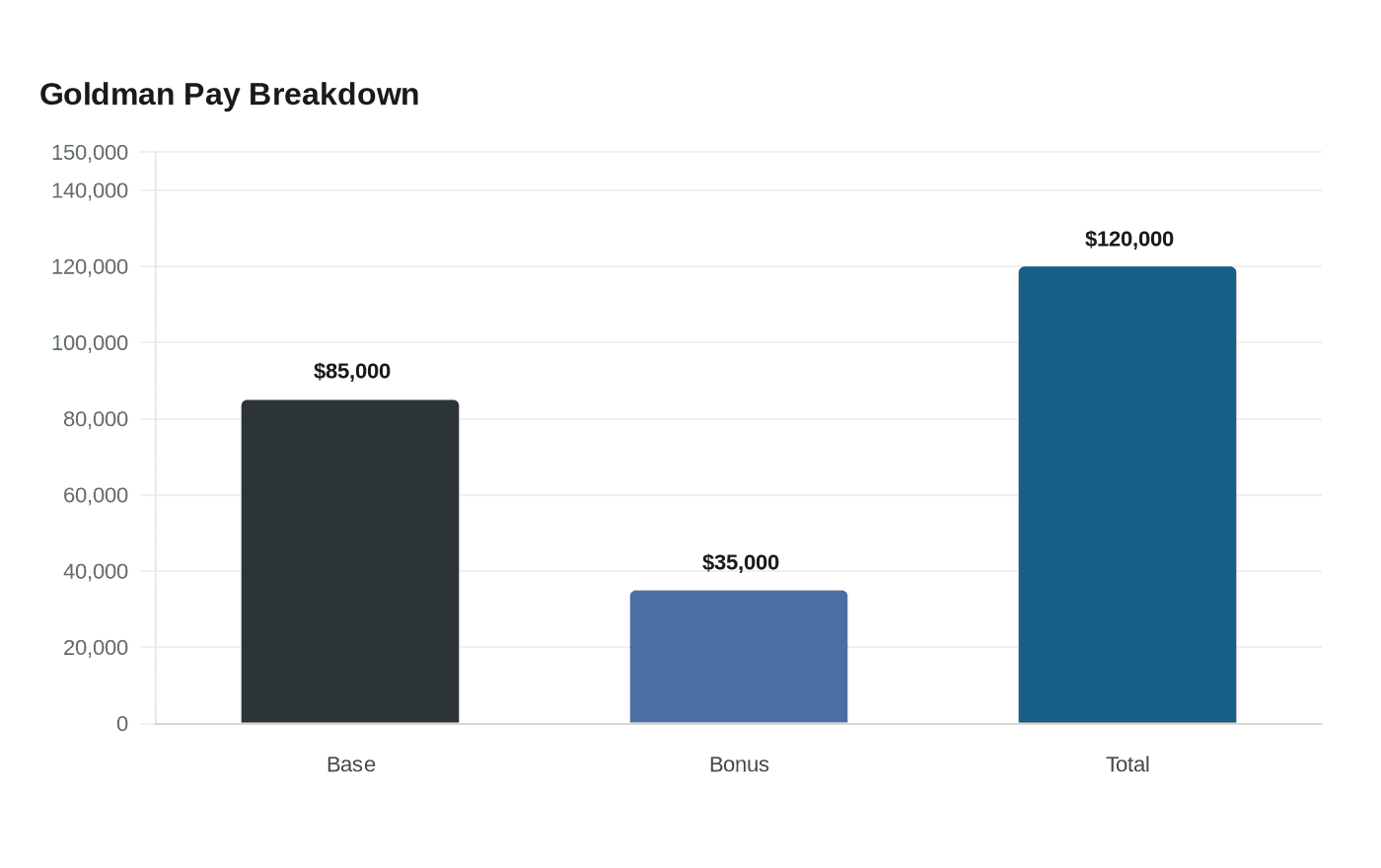
Wall Street Oasis’ 2026 compensation data puts Goldman’s average total pay in its database at about $120,000 a year, built from roughly $85,000 in base salary and $35,000 in bonus. That is a useful benchmark because it captures the part of banking compensation that people actually feel in real life: fixed pay that lands every two weeks, plus year-end upside that can swing meaningfully with market conditions and deal flow.
The same data says Goldman respondents report about 66 hours worked per week on average. That matters more than the sticker price of the job, because $120,000 spread over a 66-hour week looks very different from the same amount spread over a normal schedule. In banking, the headline comp only tells you half the story; the other half is how many nights and weekends you give up to earn it.
Why the hourly value matters at Goldman
The pay-hours tradeoff is especially important at Goldman because the firm’s banking track is built around intensity. The 2026 banker salary report from Mergers & Inquisitions puts typical base pay at $100,000 to $125,000 for analysts, $175,000 to $225,000 for associates, $250,000 to $300,000 for vice presidents and $400,000 to $600,000 for managing directors. Compensation rises sharply with title, but so does the expectation that you can handle bigger clients, bigger judgment calls and less supervision.
That same report says promotion timing is usually two to three years for analysts, three to four years for associates and vice presidents, with timing becoming more variable at the senior end. For a junior banker, that means the job can still be a rational bet if you are optimizing for accelerated earnings and exit options. But the longer you stay, the more the economics depend on whether you can move from execution work to client ownership without burning out first.
At Goldman, that distinction is central. Junior bankers are often trading time for training and credibility, while senior bankers are trading those same hours for real control over relationships and economics. The banking track looks more attractive when the path to promotion is clear and the market is rewarding seniority, less so when the hours stay punishing but the timeline stretches.
The burnout risk is not theoretical
Goldman’s own internal history shows why this conversation never really goes away. In a 2021 employee survey that circulated widely, first-year analysts reported working more than 95 hours a week and sleeping about five hours a night. Every respondent said work hours had hurt relationships with friends or family, and 75 percent said they had sought or considered counseling, therapy or other mental-health services because of job stress.
Those numbers still hang over the firm’s culture because they put hard data behind what juniors already know: the job can dominate your life. For some people, the trade remains worth it because the learning curve is steep, the brand carries weight and the exit opportunities are unusually strong. For others, the compensation premium no longer feels large enough to justify the toll, especially once peer firms start capping hours.
The new benchmark on Wall Street
That is why JPMorgan’s move in September 2024 matters so much in the background. The bank said it would limit junior banker hours to 80 per week in most cases, with a “pencils down” period from 6 p.m. Friday to noon Saturday and one full weekend off every three months, while still allowing exceptions for live deals. Even without changing Goldman’s economics directly, that policy gives Wall Street a live comparison point for what a major bank thinks junior burnout looks like in practice.
For Goldman employees, the JPMorgan benchmark changes the conversation in two ways. First, it gives analysts and associates a reference point when comparing their own schedules with peers at other firms. Second, it forces Goldman’s managers to defend not just the culture of hard work, but the premium they believe they are offering in exchange for it.
Why the franchise still pulls people in
The reason the tradeoff remains so powerful is that Goldman is still a machine that many candidates want to get inside. In its 2025 annual report, the firm said net revenues rose 9 percent to $58.3 billion, earnings per share increased 27 percent to $51.32 and return on equity improved to 15.0 percent. It also said it held the No. 1 M&A advisor spot in investment banking for the 23rd consecutive year, a reminder that the platform still carries enormous signaling value.
The hiring funnel shows how coveted that platform remains. Goldman said it had more than 1.1 million experienced-hire applicants in 2025, up 33 percent from the prior year, and its summer internship selection rate was less than 1 percent. The firm also reported 47,400 employees at year-end 2025, which helps explain why the place can feel both sprawling and fiercely selective at the same time. The brand still opens doors, but very few people get to walk through them.
How to think about the banking track now
For someone inside Goldman, the useful question is not whether banking pays well. It does. The more practical question is whether the compensation curve still beats the lifestyle cost at your current level and whether the next promotion is close enough to justify staying in the game. At the analyst and associate levels, the answer often depends on how quickly you are learning, how strong your exit options are and whether you can tolerate the hours long enough to capture the next jump in pay.
That is the real hourly-value test Goldman faces in 2026. The firm still offers prestige, deal flow and a path to outsized earnings, but the cost of entry remains heavy and the market is less willing to treat brutal hours as a badge of honor on its own. In a business where compensation, promotion and burnout are all tied together, the banking track has to prove not just that it pays, but that it pays enough for the life it asks you to lead.
This article was produced by Prism’s automated news system from verified source data, official records, and press releases, then run through automated quality and moderation checks before publishing. The system is built and supervised by the people who set the standards it runs under. Read our full AI policy.
Know something we missed? Have a correction or additional information?
Submit a Tip