Goldman Sachs report frames AI as an infrastructure and capital play
Goldman Sachs is reframing AI as a power-and-capital buildout, with data-center demand seen rising 175% by 2030 and new deal flow across banking teams.
.png&w=1920&q=75)
Goldman Sachs is teaching its own people to treat AI less like a software story and more like a buildout of physical assets, financing, and political leverage. The firm’s Powering the AI Era package turns the conversation toward data centers, power, land, transmission, and the capital needed to connect them, which is exactly where bankers, markets teams, and client-facing staff can find business.
AI as a balance-sheet and buildout story
Goldman Sachs presented Powering the AI Era as a 26-page analysis, and its table of contents makes the firm’s posture clear. The report moves from a letter from Dan Dees into sections titled “A Historic Paradigm Shift: AI Ushers In a New Era for Computing,” “The Power Imperative: Generational Opportunities and Challenges,” “Data Center Diplomacy: A New Tool for Geopolitical Influence,” and “Meeting the Moment with Capital Solutions.” That structure says as much about Goldman’s internal priorities as it does about the market: AI is being framed as a multi-front capital markets theme, not a narrow technology trade.
For investment bankers, that framing changes how pitches get built. A client may never say it needs “AI advice,” but it may need help financing a data-center campus, acquiring power assets, renegotiating supply relationships, or structuring partnerships that reduce execution risk. In a firm where revenue generation still shapes responsibility, visibility, and eventual bonus outcomes, the ability to connect those dots can matter as much as knowing which sector is hottest.
Why Goldman keeps coming back to power demand
Goldman has been building this case for more than a year. On April 28, 2024, the firm published AI, data centers and the coming US power demand surge, and later research said AI could drive a 160% increase in data center power demand. Goldman also said U.S. data center power demand could double by 2027, a blunt signal that the constraint is no longer only compute or model quality.
The firm sharpened that view in 2025, saying data center power demand growth could reach 175% in 2030 versus 2023 levels, up from a prior estimate of 165%. Goldman also described that demand as the equivalent of adding a top 10 consuming country, a comparison that turns an abstract infrastructure thesis into a scale problem for utilities, grid operators, and financiers.
That is where the work becomes much broader than a technology coverage assignment. The AI buildout pulls in power developers, utilities, equipment makers, landowners, infrastructure investors, and lenders. It also creates a wider set of internal skills that matter: sector fluency, project finance judgment, and the ability to translate technical constraints into capital solutions that clients can actually execute.
The 6 Ps behind the buildout
Goldman’s later research distilled the pressure points around data-center growth into six drivers and constraints, the “6 Ps.” Each one has operational consequences that bankers and markets teams can use in client conversations:
- Pervasiveness of AI: As adoption spreads, AI workloads stop looking like a niche and start looking like a structural source of demand for electricity and compute.
- Productivity of servers and compute: Better hardware can ease pressure on capacity, but it also raises the bar for what clients need to buy, replace, and finance.
- Prices of electricity: Power economics directly affect location decisions, operating costs, and the viability of large-scale campuses.
- Policy initiatives: Permitting, incentives, and industrial policy can accelerate or slow deployments, especially when local grids are already stretched.
- Parts availability: Transformers, chips, and other equipment can become bottlenecks long before a project reaches completion.
- People availability for construction and maintenance: Labor is part of the bottleneck too, from building sites to keeping facilities running once they are live.
Taken together, those constraints explain why AI infrastructure is becoming a cross-divisional theme inside Goldman. Coverage bankers can bring in sponsors, corporates, and sovereigns; infrastructure specialists can model the assets; and markets teams can think through financing windows, hedging, and broader risk appetite.
Data center diplomacy adds a geopolitical layer
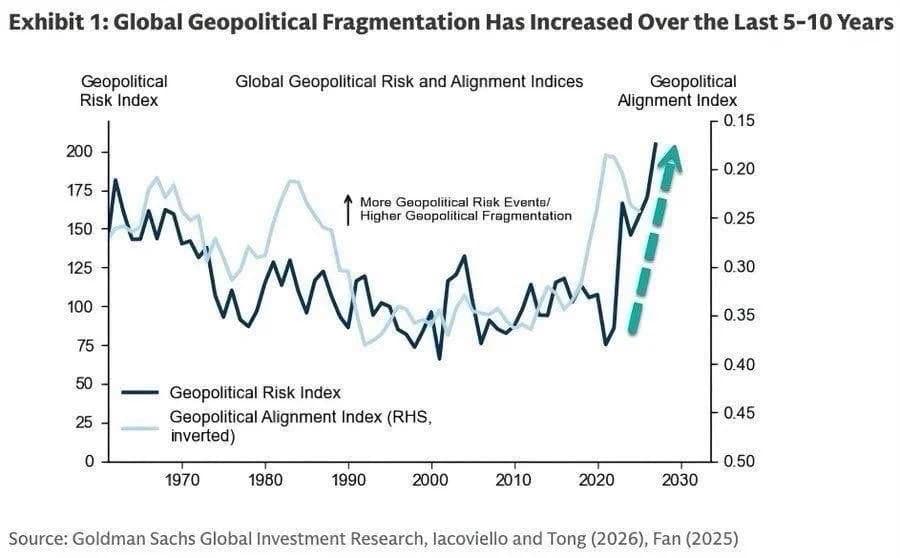
The report’s “data center diplomacy” section pushes the idea further. Goldman Sachs president of global affairs and co-head of the Goldman Sachs Global Institute, Jared Cohen, said the location of AI infrastructure could have profound geopolitical implications. That is a very different message from the usual technology narrative, and it matters for anyone working cross-border deals or advising clients with multinational footprints.
CNBC reported on Oct. 29, 2024, that Goldman Institute was calling for “data center diplomacy” as the United States competed in the global AI race. The phrase captures how AI infrastructure now intersects with industrial policy, national security, and resource competition. Deal teams that understand those tensions will be better positioned when transactions involve sensitive assets, foreign capital, or jurisdictions that want more control over strategic infrastructure.
For Goldman employees, that creates a genuine career advantage. Clients often want one advisor who can synthesize policy, markets, and execution into a single recommendation, especially when a project touches power markets and international politics at the same time. The more a team can speak that language, the more useful it becomes across the firm.
Where the work shows up inside Goldman
The report is also a reminder that AI revenue may come from places that never sat at the center of the software boom. A data-center campus can create work for financing teams, project finance specialists, leveraged finance bankers, equity capital markets desks, and M&A advisers all at once. Power transactions can pull in utilities, renewable developers, transmission owners, and infrastructure funds; land and construction issues can bring in real assets and financing specialists.
That breadth matters inside a place like Goldman Sachs because it widens the set of people who can originate meaningful client conversations. A banker who can connect an AI hyperscaler’s expansion plans to grid constraints, land acquisition, and capital structure is more valuable than one who treats AI as a generic growth label. The same is true for markets people who can think through financing conditions and for junior staff who want to build a narrative that travels from pitch book to live deal.
Goldman’s message is straightforward: AI is not just a model race. It is a race to secure power, sites, equipment, and capital, and the teams that can assemble those pieces will shape the next round of mandates.
This article was produced by Prism’s automated news system from verified source data, official records, and press releases, then run through automated quality and moderation checks before publishing. The system is built and supervised by the people who set the standards it runs under. Read our full AI policy.
Did this article answer your question?