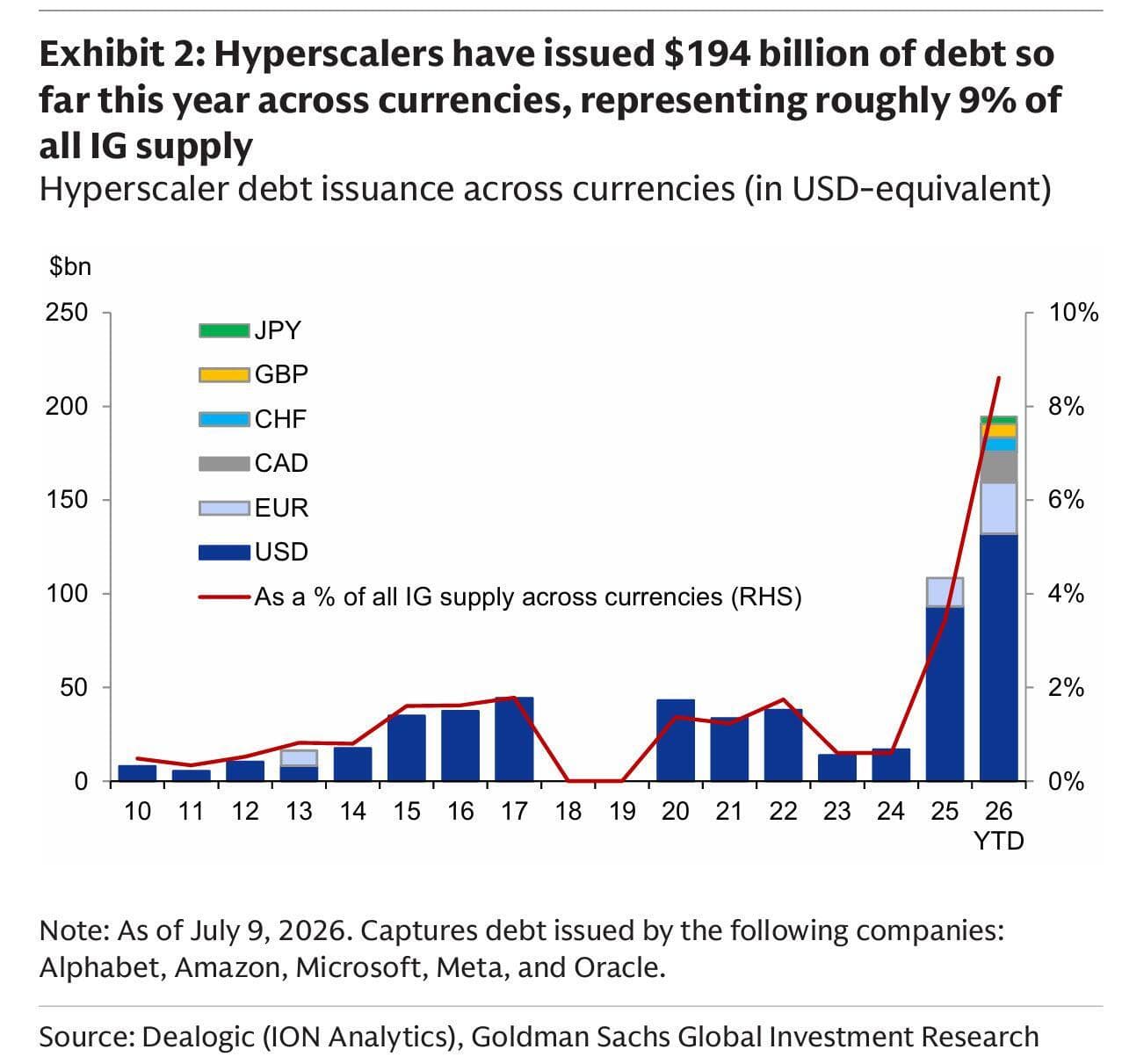
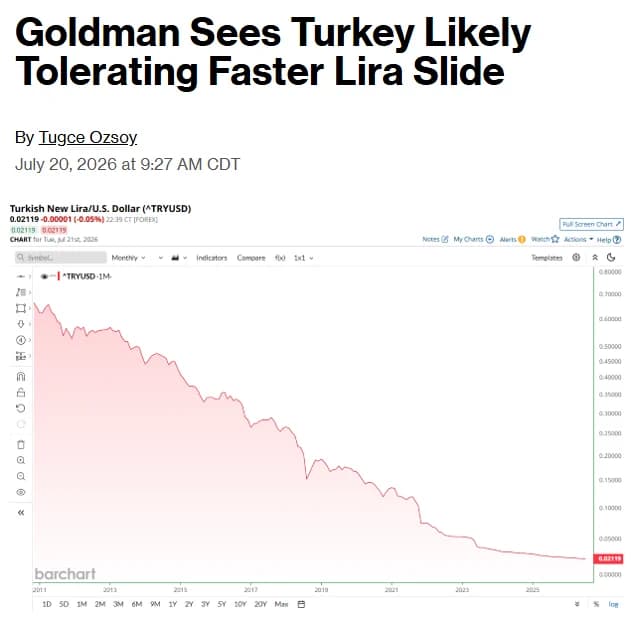
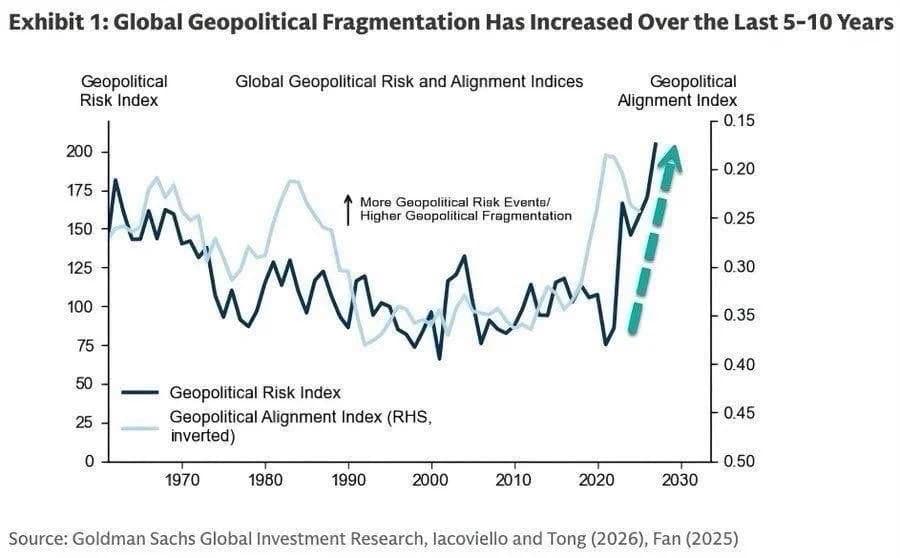
Goldman Sachs research page shows how the firm packages market insight
Goldman’s research page is a client tool, a career signal, and a tightly controlled product. The platform reaches 3,104 equity securities and feeds Marquee, podcasts, and frontline conversations.
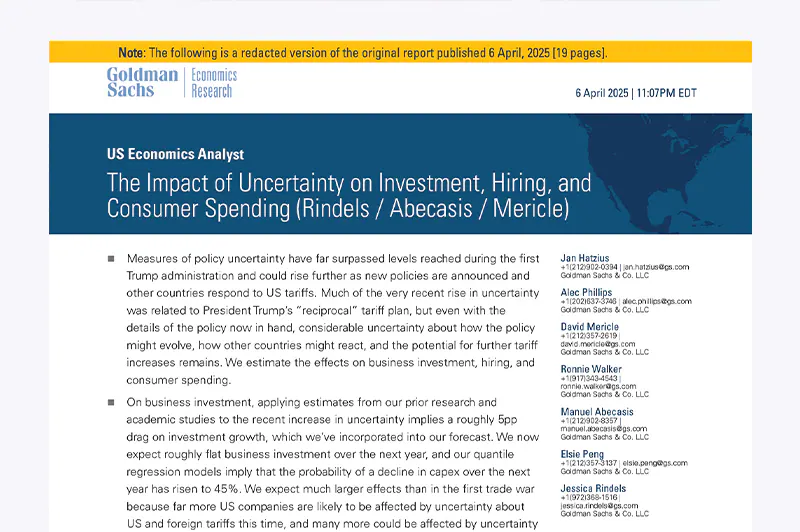
Goldman Sachs Global Investment Research sits at the center of how the firm turns market thinking into client influence. Goldman says it uses “world-class intellectual capital and expertise” to solve clients’ most complex challenges, and the research platform is built to move that expertise into notes, themes, and tools that clients actually use. As of July 1, 2026, the business had investment ratings on 3,104 equity securities, a reminder that this is not a side project but one of Goldman’s core products.
How Goldman packages insight
The firm organizes its insights hub around “Our Series,” “Topics in Focus,” and “Formats,” which gives the research franchise a structured way to reach different audiences. That matters inside Goldman because the same idea can travel in several forms: a macro call for portfolio managers, a sector note for bankers preparing pitches, a thematic brief for trading desks, or a market framework that helps advisers explain a move to wealthy clients. The packaging is part of the product, not decoration around it.
Goldman Sachs Exchanges shows how far that packaging has gone. The firm describes it as an “award-winning podcast” featuring Goldman Sachs leaders on key issues shaping the global economy, which pushes research-style thinking into audio and a broader audience. For employees, that means the firm is not only rewarding analysis that is well argued, but analysis that can be translated into something clients will read, hear, or forward.
The research page also helps explain what clients are already seeing before they walk into a Goldman meeting. In investment banking, that can shape the language of a pitch and the assumptions a client thinks are already on the table. On the trading floor, research provides market context that can affect positioning and client conversation. In asset and wealth management, it supplies narratives advisers can use when they are discussing portfolios, risk, or the next big macro turn.
Why presentation style carries weight
Goldman Sachs Marquee makes the distribution point especially clear. The platform says it provides “the latest insights, research, and analytics from our trading floor” along with tools to create and iterate on trade ideas. That turns research from a static publication into part of a digital workflow, where a client can move from reading a view to testing it against charts, market data, and trade construction.
That style matters because credibility on Wall Street is partly about how cleanly an idea is presented. A well-structured note can travel farther across sales, trading, banking, and wealth channels than a dense memo that never gets opened. Goldman’s own ecosystem makes that visible: research is tied to a broader “Research & Perspectives” and “Insights” framework, so the firm is presenting market thinking as a reusable internal asset, not just a published opinion.
There is also evidence that the rest of Goldman’s platform treats GIR as a source of market authority. Goldman Sachs Asset Management’s 2022 market know-how material cited Goldman Sachs Global Investment Research for macro and market forecasts, which shows the research franchise is used across businesses, not just inside one corner of the firm. That cross-business pull is part of why presentation style matters so much: the easier the insight is to reuse, the more influence it has.
A research franchise shaped by regulation and history
Goldman’s current research business sits inside a long and heavily regulated history. The firm has a history page on the 2003 research settlement titled “Reshaping Research: SEC Settlement Seeks to Eliminate Conflicts; Goldman Sachs is Ahead of the Curve,” and a 2025 research paper, “The History of GS Research,” says the business has roots in the 1960s and spans more than 60 years. That paper traces the globalization of research in the 1980s and 1990s, then the Global Analyst Research Settlement in the 2000s.
That backdrop matters because the research function is built around both reach and restraint. Goldman’s reports carry conflict-of-interest disclosures stating that the firm does and seeks to do business with covered companies, and they warn readers that the report should be considered only one factor in an investment decision. In practical terms, that is a reminder to anyone in research, product strategy, or client coverage that the function lives inside a controlled perimeter, with a clear line between analysis and commercial interests.
For employees, the takeaway is not just compliance hygiene. It is that the quality of a research call and the discipline around how it is framed are both part of the job. The firm has spent decades building a franchise that can influence markets without blurring the rules that govern how those markets are covered.
What the talent market says about the function
Goldman’s own careers page dedicates a landing page to Global Investment Research, which confirms that the function remains a distinct part of the firm’s employment architecture. Public job listings reinforce that scale: Indeed showed 131 Goldman Sachs Global Investment Research jobs, while LinkedIn showed 322 Goldman Sachs Equity Research jobs in the United States. Those numbers point to a broad market for the skill set, whether someone is building sector expertise, learning how to frame macro views, or preparing for a move into another corner of finance.
That matters for analysts and associates because research communication is not an isolated specialty. The ability to synthesize macro forces, earnings trends, regulation, and valuation into a coherent view travels across the bank, and it can shape internal reputation as much as external client impact. For prospective hires, the research page is also a window into Goldman’s intellectual brand and the kinds of skills the firm treats as durable.
What the page really shows
Goldman’s research page is not just a repository of commentary. It is a distribution system, a client-service tool, a control-object, and a talent signal all at once. The fact that it feeds podcasts, trading tools, wealth discussions, and multi-business workflows is the point: Goldman is packaging market insight so it can move through the firm, hold up under scrutiny, and reach clients with enough clarity to matter.
This article was produced by Prism’s automated news system from verified source data, official records, and press releases, then run through automated quality and moderation checks before publishing. The system is built and supervised by the people who set the standards it runs under. Read our full AI policy.
Did this article answer your question?