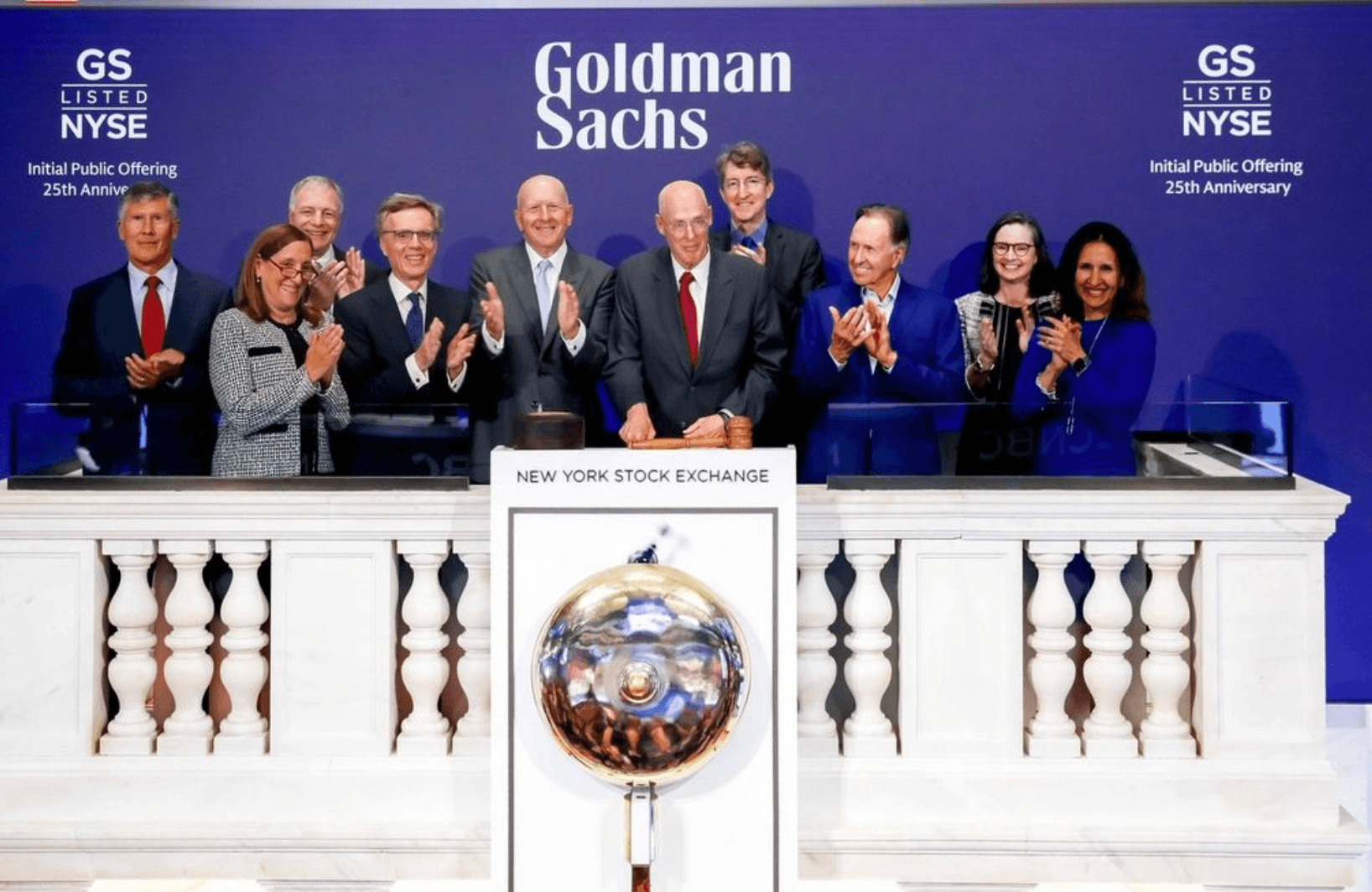
Goldman Sachs says active ETFs are becoming core portfolio tools
Active ETFs pulled in nearly $1.8 trillion by late 2025, and Goldman says they are now being used to chase income, hedge risk and seek alpha.

Active ETFs are moving from a side bet to a core portfolio tool, and Goldman Sachs Asset Management says the shift is being driven by a simple client demand: investors still want the ETF wrapper, but they want it to do more than track an index. Goldman said active ETF assets worldwide reached nearly $1.8 trillion at the end of 2025, with organic growth of 53% last year and flows running about four times stronger than passive ETFs on a global basis.
The numbers show how fast the category has moved into the mainstream. In the United States, nearly one-third of all ETF flows went to active funds in 2025, and more than 85% of new ETF launches were active strategies. Morningstar said active ETFs took in $338 billion through the first three quarters of 2025, more than in any prior full year, while ETFGI said globally managed active ETFs reached a record $1.73 trillion at the end of September 2025, with $447.72 billion in year-to-date inflows across 4,191 active ETFs on 45 exchanges in 35 countries.

For Goldman, the appeal is not just product growth. It is a change in how advisors build portfolios and how the firm sells solutions. Active ETFs are increasingly being used to package income, downside protection and differentiated views into a structure that is still accessible, transparent and generally more tax efficient than many mutual funds. That makes them a practical tool for model portfolios, where advisors want intraday trading, clear holdings and a way to shift exposure without giving up the ETF format clients already understand.
The firm is also pointing to where the next wave of demand may land. Goldman highlighted derivative-income strategies, defined outcome products, fixed income ETFs and private asset ETFs as the frontier for active growth. Its own derivative-income funds, the Goldman Sachs S&P 500 Core Premium Income ETF and the Goldman Sachs Nasdaq-100 Core Premium Income ETF, each topped $1 billion in assets by July 2025, a sign that clients are willing to use active ETFs not just for equity beta but for cash flow and lower volatility.

The broader backdrop helps explain why the category has accelerated. The Securities and Exchange Commission adopted Rule 6c-11 in 2019, and the rule became effective in December 2019, making it easier for many ETFs to launch without individualized exemptive relief. Morningstar has said active ETFs’ U.S. market share rose from slightly above 2% in 2019 to 8.5% as of March 31, 2024. For Goldman, that means the fight is no longer about whether active ETFs belong in the lineup. It is about which firms can combine investment capability, distribution and education fast enough to capture the client dollars moving there next.
Know something we missed? Have a correction or additional information?
Submit a Tip