Goldman Sachs says AI costs fell 90% as bubble fears grow
Goldman says AI intelligence costs fell more than 90% in 30 months, sharpening the case for automating more Goldman work even as bubble fears deepen.
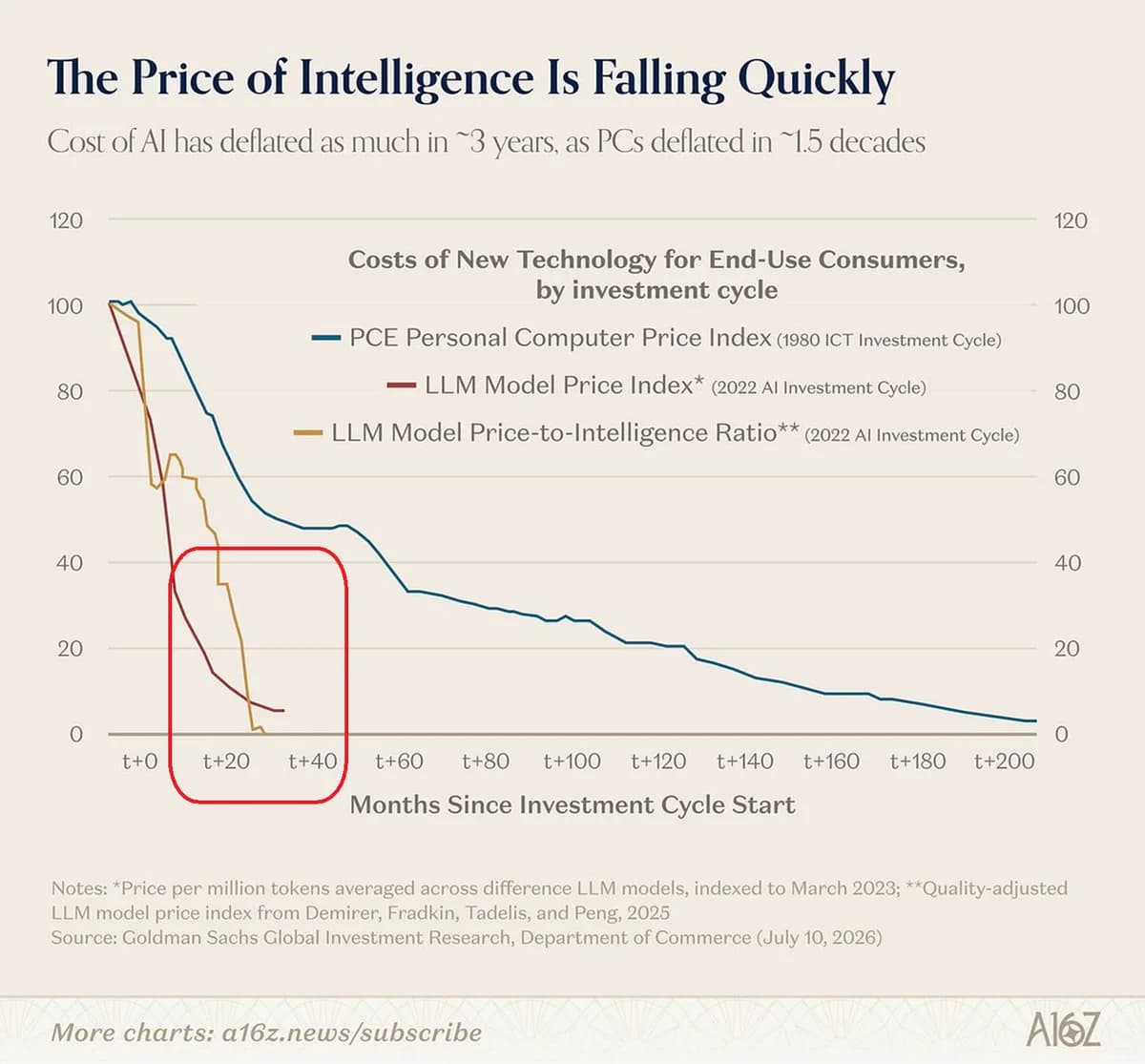
Goldman Sachs said the cost of AI intelligence has fallen more than 90% in just 30 months, a collapse that is forcing managers to rethink which Goldman tasks can be automated, augmented, or scaled without adding people at the same rate. The faster the price drops, the sharper the workplace question becomes: which parts of a bank built on junior labor, long hours, and premium compensation are still worth doing manually?
The bank had already flagged the risk in its October 22, 2025 report, “AI: In a Bubble,” which said bubble concerns were back amid rising valuations, massive AI spending, and growing circularity inside the AI ecosystem. Goldman’s own framing now puts the focus on deployment, not just enthusiasm. If AI output gets cheaper that quickly, management has to decide whether to use it to cut drudge work, push more work through the same teams, or chase new revenue with the same headcount.

Jim Covello, of Goldman Sachs Research, sharpened that debate in a June 2, 2026 Goldman Sachs Exchanges conversation, saying the economics of artificial intelligence looked more questionable than they did two years earlier because enterprise buyers, model companies, and hyperscalers have yet to show returns on their spending. He also said semiconductor companies could not remain the only clear beneficiaries of the AI buildout. That is a direct challenge to the current investment case: if the chip suppliers keep winning while customers keep waiting, the payroll and productivity gains inside firms like Goldman may lag the capital rush outside them.
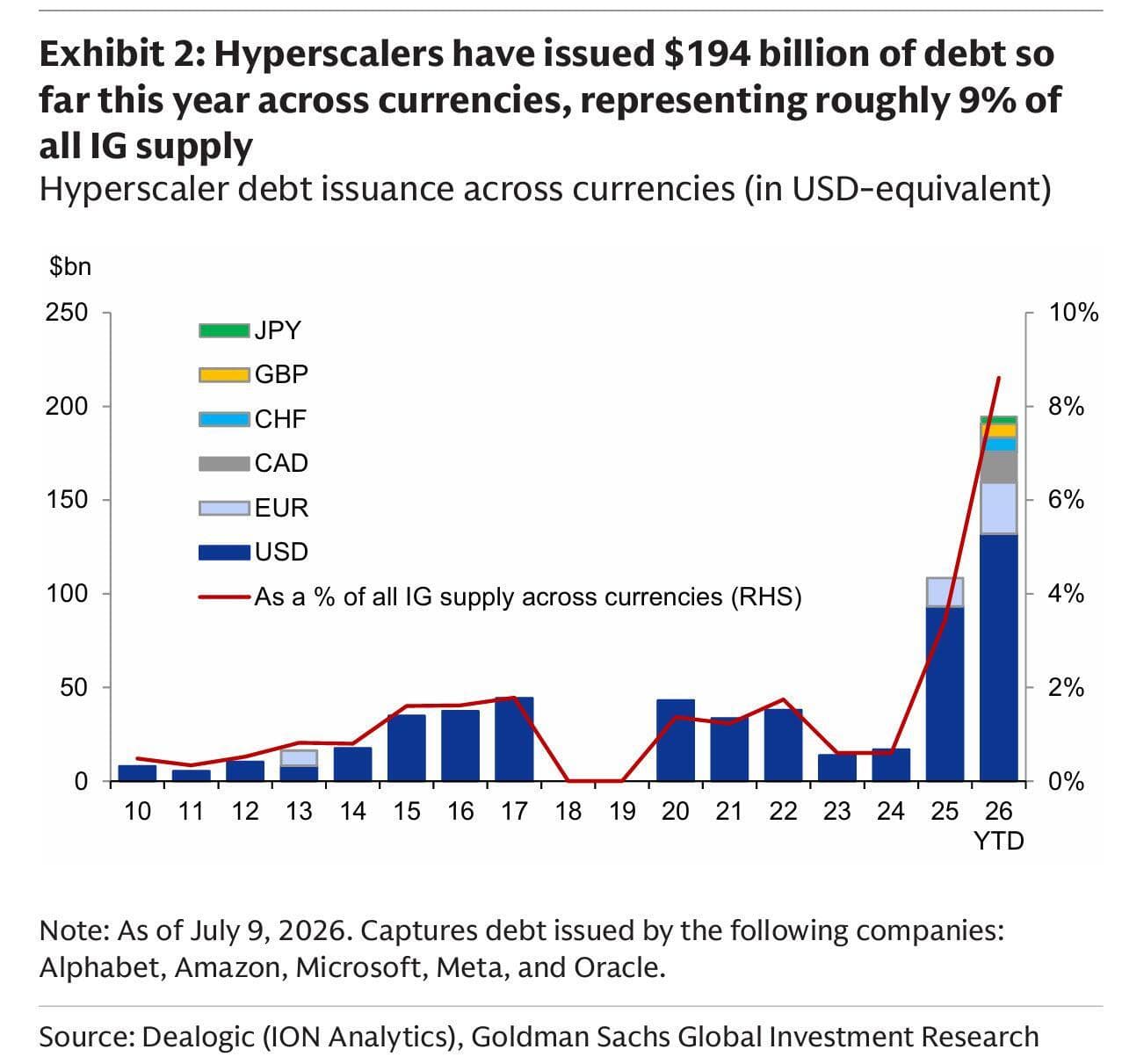
The scale of that rush remains enormous. Goldman expects hyperscalers to spend $757 billion on AI capital expenditure in 2026 alone, with cumulative outlays through 2030 nearing $5.5 trillion. In another Goldman piece, “Why AI Companies May Invest More than $500 Billion in 2026,” the bank argued that AI infrastructure spending could top $500 billion next year, and that the buildout depends on physical assets and power as much as software. Goldman has also said spending by the four major tech giants through 2030 would exceed Japan’s GDP.
For Goldman employees, the economic signal is straightforward. Cheaper intelligence makes the most document-heavy and repetitive work more vulnerable first, including first-draft research, client materials, basic coding, and internal workflow processing. It also makes the highest-value desks more scalable, because one analyst or associate can push more output through AI tools without waiting on a larger support stack. In a firm where bonus pools still reward revenue, judgment, and speed, the pressure will shift toward using AI to turn more of the same labor into more billable work, not just to save time.
This article was produced by Prism’s automated news system from verified source data, official records, and press releases, then run through automated quality and moderation checks before publishing. The system is built and supervised by the people who set the standards it runs under. Read our full AI policy.
Did this article answer your question?