Goldman Sachs sees strategic shift driving 2026 M&A surge
Goldman Sachs is treating 2026 M&A as a transformation cycle, not a broad rebound. Bankers who read sector urgency, financing shifts, and board intent may gain the edge.
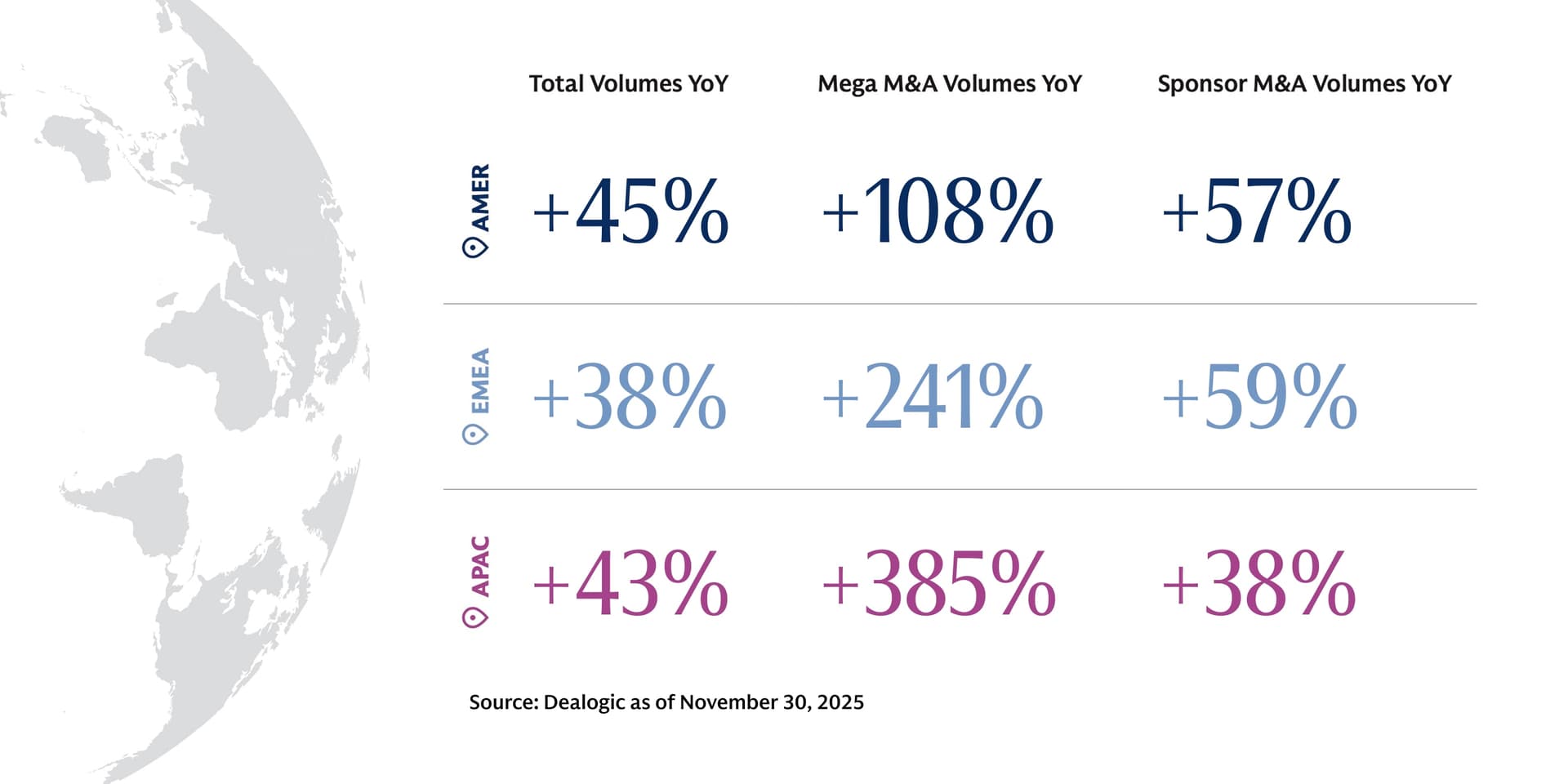
Global M&A volumes rose 15% year over year in 2025, and Goldman Sachs is not framing the next M&A wave as a simple comeback story. In its “Think Big, Build Bigger” outlook, the firm frames the market as being pushed by strategic urgency, sector reshaping, sponsor involvement, and boards willing to act when conditions improve. For deal teams, that shifts the job from predicting whether transactions happen to understanding why a specific company, in a specific industry, decides to move.
Why the next cycle looks different
The companion piece to Goldman Sachs Investment Banking’s 2026 Global M&A Outlook, published on Feb. 10, describes 2025 as already bringing a surge in dealmaking even as geopolitical uncertainty, slowing growth, and higher tariffs hung over the market. Corporations are moving when they see strategic pressure, portfolio gaps, or a chance to reset their position before competitors do.
Stephan Feldgoise, Goldman Sachs’ head of global M&A, has spent nearly three decades advising clients through pivotal moments that reshape capabilities and industries. His framing is consistent with the broader message of the outlook: market cycles and shocks matter, but leaders still end up focused on building, growing, and sometimes pivoting.
What actually drives the mandates
Goldman’s 2025 M&A Outlook identified two bottlenecks for capital markets: monetary policy and regulation. Those dynamics were normalizing, allowing volumes to rise even with unsettled geopolitics.
Goldman’s 2025 read pointed to three upside drivers: a generational technology disruption reshaping industries, sponsors seeking liquidity, and corporates using M&A to transform their portfolios. That combination tells bankers where the next wave may come from. It will not be enough to pitch “scale” in the abstract. The better story will be tied to technology pressure, ownership change, or a board-level decision that the portfolio no longer fits the business.
Goldman Sachs Investment Banking frames its 2026 outlook around M&A evolving beyond scale as companies focus on transformation. A client buying to defend margin, adapt to regulation, or move faster in a technology transition is thinking differently from a client simply adding revenue.
What bankers should watch in the structure of deals
If 2025 was about clearing bottlenecks, 2026 is likely to reward teams that can price the new assumptions correctly. Financing availability still matters, but so do the terms around it: leverage tolerance, equity financing, and how much certainty a board wants before it signs off. The capital markets piece of the job becomes more valuable when rates, regulation, and cross-border exposure can change the math quickly.
For bankers inside Goldman, sector expertise has to be sharper and more specific than in a generic rebound. Teams covering technology disruption need to understand where a client is vulnerable, where it can consolidate, and where a transaction solves a strategic problem instead of just adding size. Teams working with sponsors need to understand liquidity pressure and exit timing. Teams advising corporates need to know when a portfolio needs reshaping, not just reshuffling.
A useful way to think about the next cycle is this:
- strategic urgency will matter more than broad market sentiment
- sector reshaping will reward bankers who can explain why one industry is accelerating while another is still paused
- sponsor involvement will keep liquidity and exit needs in the center of deal flow
- boards will back transactions when the strategic case is concrete, not when the pitch sounds merely upbeat
The bankers who can connect a technology shift to valuation, or a regulation change to a feasible structure, will be better positioned than those relying on a generic M&A recovery thesis.
What it means for coverage teams inside Goldman
For analysts and associates, the immediate value is in how you frame catalysts. The better read is not “deals are back,” but “this client has a reason to move now, and this structure fits the pressure it is under.”
For VPs and managing directors, the outlook is a client-messaging tool. It supports conversations around portfolio optimization, synergy realization, and the need to adapt to technology, regulation, or changing consumer behavior. It also helps identify which CEOs are likely to act and which transaction structures are realistic, especially when a board wants transformation without taking on unnecessary execution risk.
In its 2025 annual report, Goldman Sachs, at 200 West Street, New York, NY 10282, said firmwide net revenues had increased by roughly 60% since its January 2020 Investor Day. In 2024, it reported net revenues of $53.5 billion, up 16% year over year.
This article was produced by Prism’s automated news system from verified source data, official records, and press releases, then run through automated quality and moderation checks before publishing. The system is built and supervised by the people who set the standards it runs under. Read our full AI policy.
Did this article answer your question?