Goldman Sachs treats AI boom as a structural market shift
Goldman is treating AI as a capital-markets regime shift, and that changes who gets attention inside the firm. Analysts and bankers who can tie AI to real financing, not hype, will matter most.
Goldman Sachs is increasingly treating the AI investment boom as a structural market shift, not a narrow theme that lives only in equity research or tech trading. For employees, that matters because it changes what clients want to hear, what pitches get airtime, and which desks can credibly claim they are closest to the next wave of deal flow.
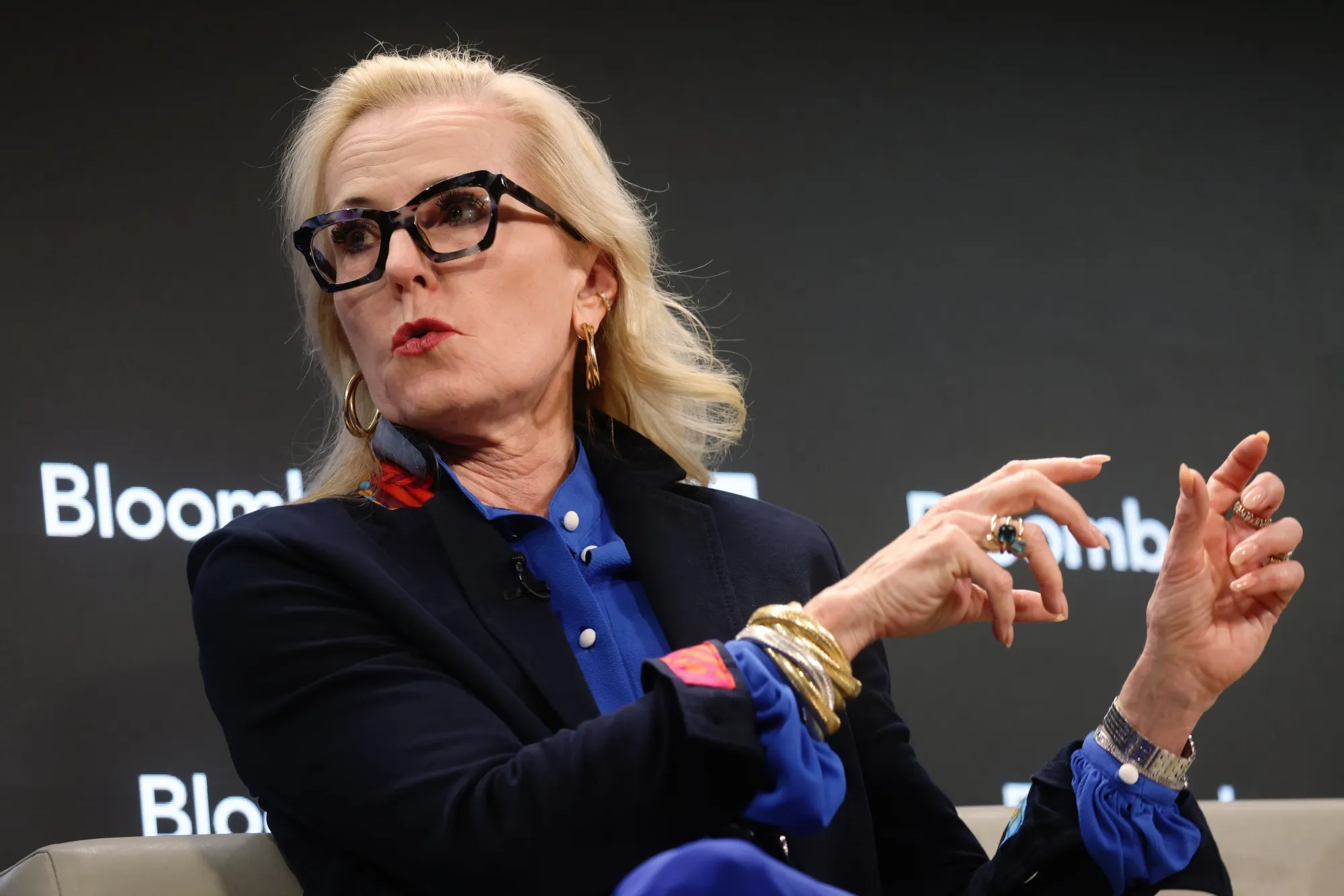
Christina Minnis captured that shift in a Bloomberg appearance at the Global Credit Forum in New York on June 3, 2026, where she described the AI investment boom as a “fundamental, generational” force that is already moving markets and filtering into the real economy. That framing is not just a market view. Inside Goldman, it points to a broader message: AI is now being treated as a source of capital allocation, financing demand, and transaction activity across the firm, not a single sector call.

AI as a market regime, not a trade
The practical significance for Goldman employees is that AI is no longer being discussed only as a technology story. It is becoming a credit story, a financing story, and a structuring story. That opens the door for leveraged finance teams to underwrite the infrastructure behind the buildout, for equity research to separate the likely winners from the crowded names, for markets to trade the volatility, and for asset management to package exposure through public and private vehicles.
That is a meaningful shift in how work gets assigned and how internal credibility is built. A junior banker who can explain where the capex is coming from, which borrowers need refinancing, and which capital structures can support the buildout is more valuable than one who can only repeat the headline that AI is booming. The same is true for strategists and salespeople: clients now expect a market view that connects AI spending to actual financing behavior, balance sheets, and risk appetite.
The firm’s own framing reinforces that point. Goldman says its Capital Solutions platform is designed to activate the breadth of its relationships and deal flow, which suggests that thematic opportunities are meant to be handled across product lines rather than inside one silo. In practice, that means the AI story can surface in financing, advisory, origination, structuring, and investing all at once.
Why Goldman built Capital Solutions around this logic
Goldman made that institutional posture more explicit on January 13, 2025, when it created the Capital Solutions Group. The group combines financing, origination, structuring, and risk-management activities across public and private markets, and Goldman said it was designed to better serve corporate and investor clients while growing the business in private credit, private equity, and other asset classes.
The timing matters for employees trying to understand where the firm is going. Goldman has said it operates at the fulcrum of one of finance’s most important structural trends: the convergence of public and private markets. AI fits neatly into that worldview because the biggest opportunities are rarely just a public-equity trade. They involve debt, equity, hybrid structures, alternatives, and client advice that crosses the boundaries between them.
That is why Minnis’s role matters inside the firm. In January 2026, Goldman elevated her to global head of the alternatives origination group while she retained her credit- and acquisition-finance responsibilities. That puts her in the middle of both traditional financing and alternatives-driven capital formation, which is exactly where the AI theme is now being routed.
For people across Global Banking & Markets, this creates a different kind of internal competition. The pitch is no longer simply who knows the sector best. It is who can connect the sector to the capital structure, the financing market, and the right product wrapper.
The real money is in capital formation, not just narrative
Goldman’s recent commentary around private credit and bond markets shows how the firm is thinking about this broader regime. Minnis previously said Goldman was seeing a convergence of public and private markets, and Goldman has said the private credit market is about $1.7 trillion, or roughly 12% of private markets. That scale matters because it shows where the firm sees durable business, not just episodic excitement.
Goldman has also pointed to borrowers returning to the bond market even as rates stay elevated. In that commentary, Minnis said companies were increasingly refinancing rather than waiting for Federal Reserve cuts, and that high-yield company bonds yielded around 9% while a significant amount of debt matures around 2028. For clients, that is a concrete capital-markets frame. For employees, it is a reminder that AI is only useful as a story if it leads to actual issuance, underwriting, refinancing, or portfolio construction.
That is the workplace takeaway: the strongest internal voices will be the ones who can move from thematic language to funding mechanics. In a bank like Goldman, that usually means the people who can show how a trend affects spreads, maturities, client demand, and risk appetite, not just the ones who can describe the trend in broad terms.
What changes for analysts, strategists, and sales staff
For analysts, the opportunity is to become the person who can translate AI spending into real market behavior. That could mean tracking who is issuing debt for infrastructure, which companies are spending ahead of revenue, and where the financing market is still open. It also means building a reputation for substance, because a theme this large creates more pitch work and more chances to develop sector expertise that travels across roles.
For strategists, the pressure is different. Clients are no longer satisfied with a generic view that AI is important. They want to know what kind of capital gets allocated first, which assets gain value, where refinancing comes from, and what happens if the expected earnings do not arrive on schedule. The strategist who can connect AI to credit conditions and market structure will have more credibility than the one who treats it as a stand-alone equity narrative.
For sales and coverage teams, the shift is equally real. The clients most likely to listen are the ones already making investment, financing, or portfolio decisions around AI infrastructure and adjacent sectors. That means the conversation needs to be sharper: how the theme affects capital needs, what structures fit the risk, and where Goldman can help across public and private markets.
Goldman’s own performance gives the story weight
This is not a bank pretending to chase a buzzword. Goldman’s 2025 annual report said net revenues rose 9% year over year to $58.3 billion, earnings per share rose 27% to $51.32, and return on equity improved to 15.0%. Those numbers matter because they show management is pairing thematic bets with a broader effort to deepen interconnected businesses.
That creates a familiar Goldman dynamic: the firm rewards employees who can combine market insight with commercial usefulness. In an environment where AI is being treated as a generational force, the people who can turn the theme into underwriting, origination, advisory, and client education will look more central. The people who cannot make that connection risk sounding like they are following the market instead of helping shape it.
Minnis’s framing suggests that Goldman sees AI as one of the few themes large enough to justify multi-year engagement across financing, advisory, and investing. For employees trying to understand where budgets, hiring, and client conversations are likely to concentrate, that is the clearest signal yet: the AI boom is being handled as a structural market shift, and the firm will increasingly expect its own people to treat it that way.
This article was produced by Prism’s automated news system from verified source data, official records, and press releases, then run through automated quality and moderation checks before publishing. The system is built and supervised by the people who set the standards it runs under. Read our full AI policy.
Know something we missed? Have a correction or additional information?
Submit a Tip