Goldman says global oil stockpiles are falling at record pace
Goldman says visible oil inventories fell 8.7 million barrels a day in May, turning a Middle East shock into urgent work for its commodities desks.

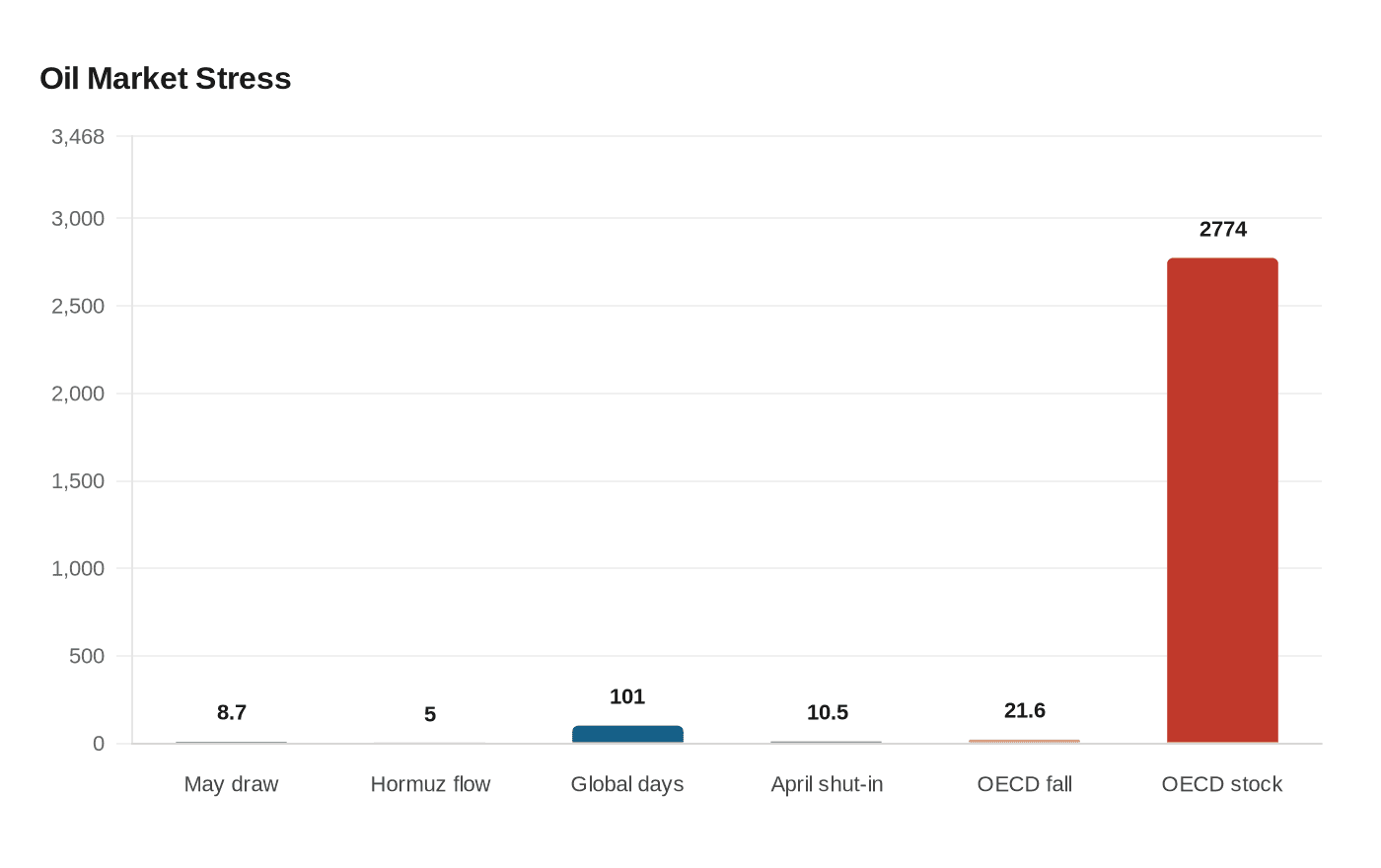
Goldman Sachs has turned the latest Middle East supply shock into a faster-moving workload for its commodities, macro and risk teams. In a May 20 note, analysts including Daan Struyven and Yulia Zhestkova Grigsby said visible inventories had shrunk by a record 8.7 million barrels a day so far in May, almost double the average pace since the conflict began, as restricted flows through the Strait of Hormuz helped drain the market.
For Goldman employees, that kind of call changes the tempo inside the firm. When crude stockpiles are falling this quickly, client notes move faster, desk coverage gets tighter, and commodities traders need more immediate input from macro strategists and risk managers. The bank’s estimate that oil exports through Hormuz were running at about 5% of normal levels, combined with reports that roughly two-thirds of the May draw came from lower oil-on-water inventories, points to a market being squeezed not just on paper but in transit.

Goldman’s warning also sharpened an internal message that matters far beyond the energy desk: the buffer against a wider price shock is getting thinner. The bank said total global oil inventories had fallen to about 101 days of expected demand, the lowest in nearly eight years. Bloomberg had already said on May 9 that the world was burning through inventories at a record speed as Persian Gulf flows were throttled, suggesting this was a deterioration, not a one-day spike.
The broader market backdrop makes the pressure harder to ignore. The International Energy Agency said in March that the Middle East supply disruption was the largest in the history of the global oil market. The U.S. Energy Information Administration said in its May 12 outlook that Iraq, Saudi Arabia, Kuwait, the UAE, Qatar and Bahrain collectively shut in 10.5 million barrels a day of crude production in April, and it assumed the Strait of Hormuz would remain effectively closed until late May, with shipping traffic starting to recover in June. OPEC’s May report added that OECD commercial inventories fell by 21.6 million barrels month over month in March, to 2,774 million barrels.
Inside Goldman, a market like this raises the value of staff who can translate geopolitics into trading levels, hedging advice and client action. It also raises the stakes for analysts and associates trying to build a reputation quickly, because in a volatile oil tape, a sharp call can travel from a research note to a client decision in hours, and that kind of visibility can shape careers as much as it shapes positions.
This article was produced by Prism’s automated news system from verified source data, official records, and press releases, then run through automated quality and moderation checks before publishing. The system is built and supervised by the people who set the standards it runs under. Read our full AI policy.
Know something we missed? Have a correction or additional information?
Submit a Tip