Morgan Stanley overtakes Goldman Sachs in AI infrastructure financing race
Morgan Stanley has arranged more than $40 billion in AI debt, taking the lead as Goldman builds a new data-center team to fight for the fee pool.

Morgan Stanley has overtaken Goldman Sachs as Wall Street’s leading bank for AI infrastructure financing after arranging more than $40 billion in related debt deals. The move comes as total AI-related borrowing is projected near $570 billion this year, turning data centers, chips and power-hungry buildouts into one of the busiest financing lanes on Wall Street.
Morgan Stanley has put hard numbers on how fast the market is growing. The bank said global AI-related debt issuance was on pace to top $500 billion in 2026, and that issuance through May 31 had already reached nearly $236 billion, about four times the pace in the same period of 2025. Morgan Stanley has also said total AI-related capital expenditure could eventually reach $10 trillion over many years, and its research identified a roughly $1.5 trillion data-center financing gap. That gap is why banks, private credit firms and other capital providers are all fighting for the same mandates.

Goldman is trying to close that gap from another angle. It has set up a new team focused on deals to finance data centers and other artificial-intelligence projects, while Goldman has said private markets are expected to play a growing role in data-center financing. For Goldman Sachs Global Banking & Markets, that pushes the business deeper into specialized infrastructure-style lending and away from a narrower dependence on traditional tech coverage or public-market execution. The work now cuts across bankers, private credit teams and infrastructure finance staff, who are competing to structure the debt and win the client relationships that will matter most if the AI buildout keeps accelerating.
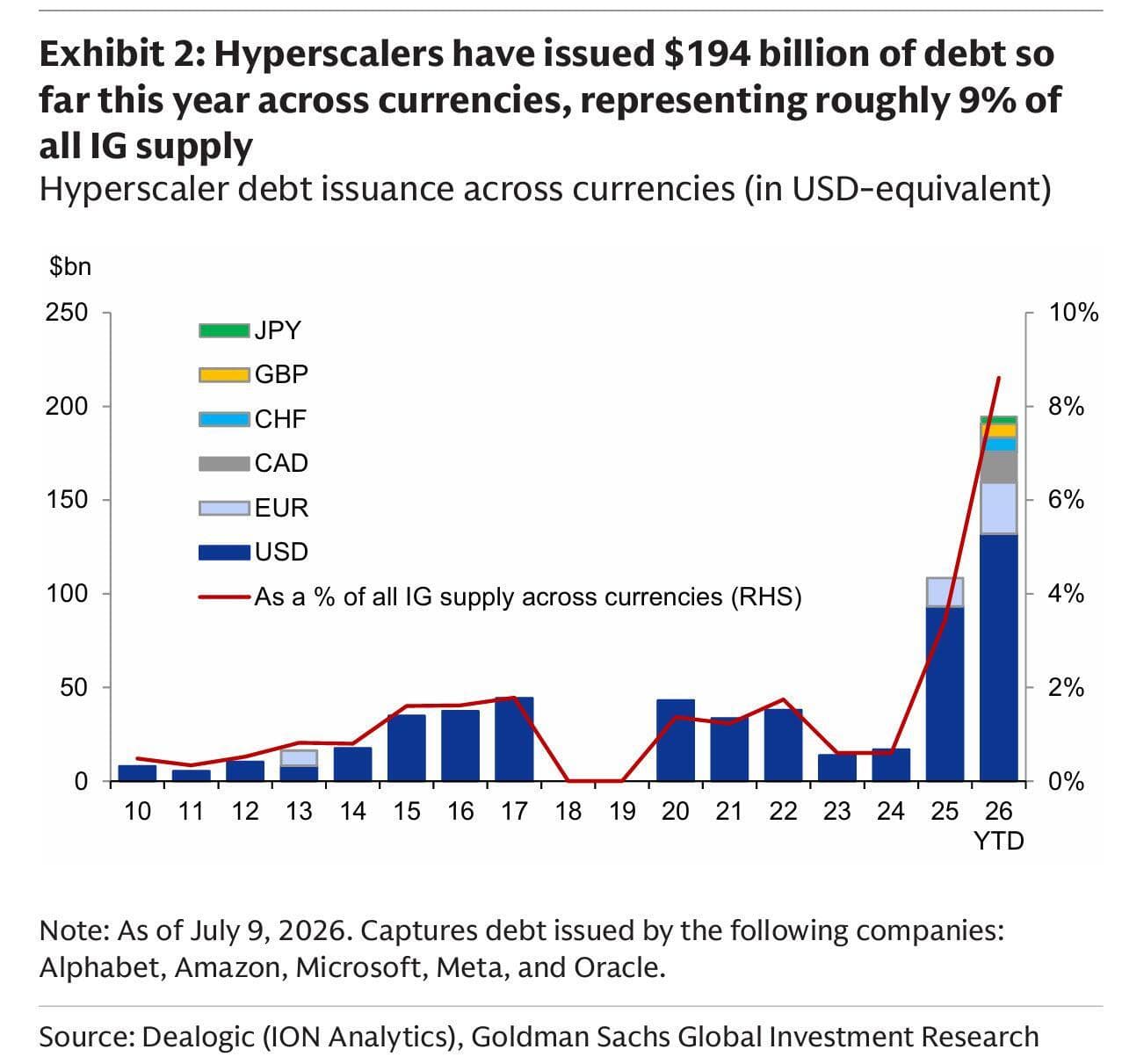
The urgency inside Goldman is easy to see in its own market commentary. Max Lukianchikov said on a Goldman video that the largest tech companies have issued more than $170 billion in corporate debt this year and warned that supply could begin to overwhelm demand. David Solomon and Morgan Stanley chief executive Ted Pick have also warned about the risk of a correction in major tech valuations, a reminder that the financing boom is still tethered to investor appetite for the companies building the AI stack. If that appetite weakens, the banks that rushed in first will have to manage the unwind.
For Goldman employees, the shift is less about a league table than about franchise power. Morgan Stanley’s lead shows that AI finance is rewarding banks with deeper sector specialization, faster capital-markets execution and stronger private-market distribution, and Goldman is now having to prove it can match all three before the next wave of mandates gets locked up.
This article was produced by Prism’s automated news system from verified source data, official records, and press releases, then run through automated quality and moderation checks before publishing. The system is built and supervised by the people who set the standards it runs under. Read our full AI policy.
Did this article answer your question?