McDonald's app reshapes shift timing, order flow and handoffs
McDonald’s app now drives when orders arrive, how crews stage pickups, and which counters feel the rush first.
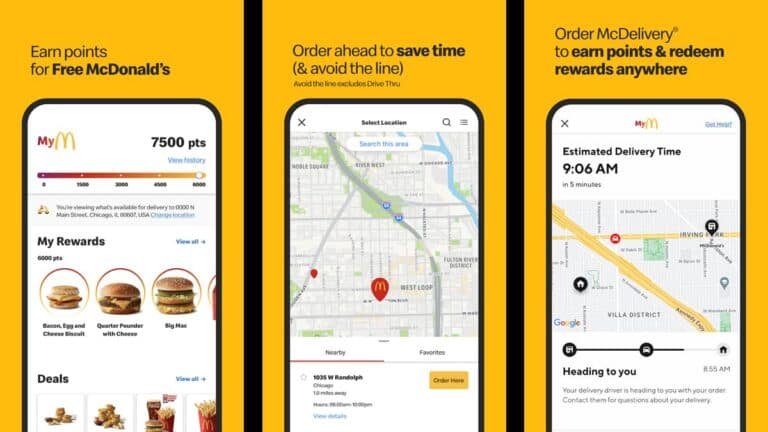
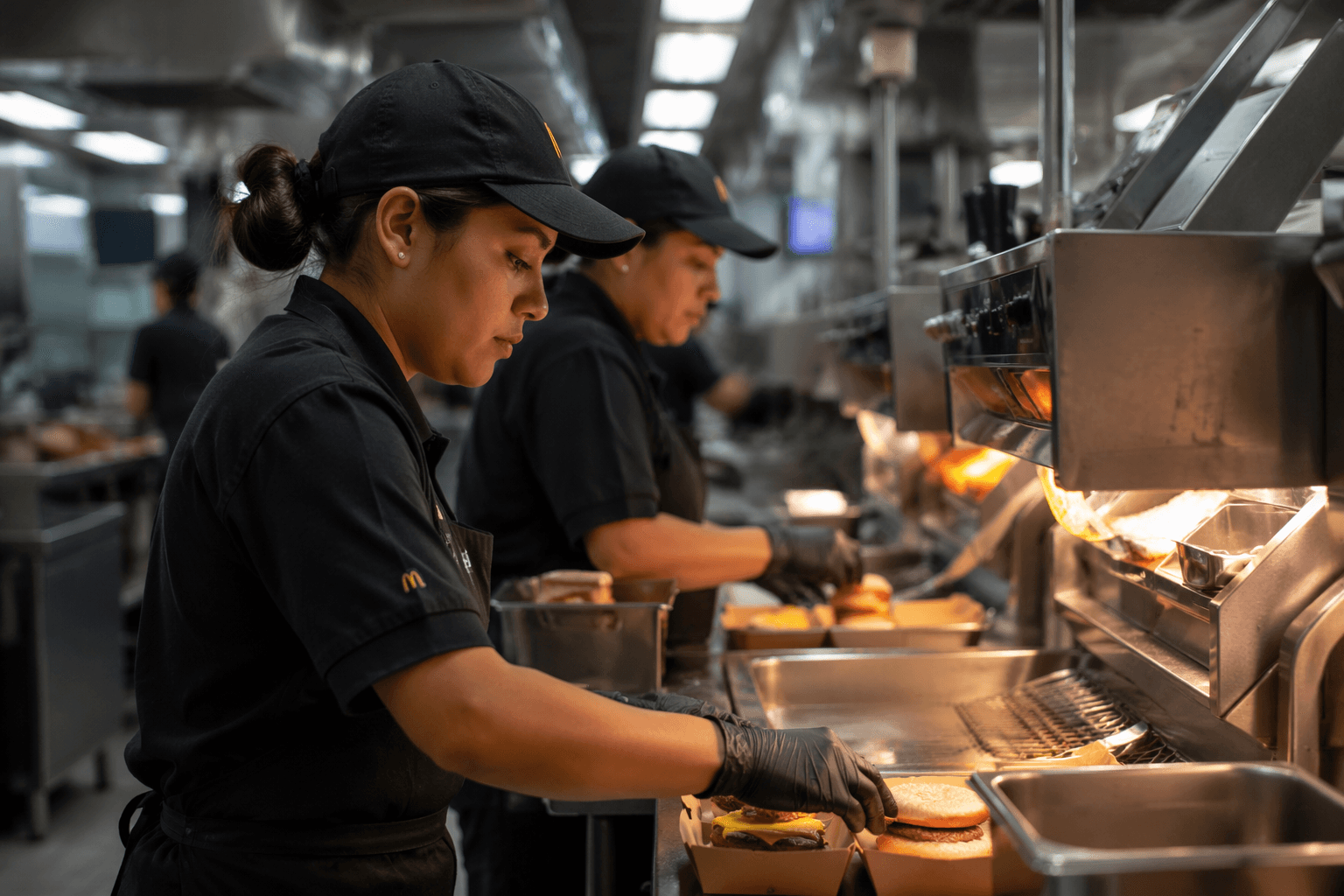
McDonald’s app is no longer just a side convenience for customers. On the floor, it changes the rhythm of a shift, because orders can hit the system before the customer reaches the restaurant and crews have to stage them for a handoff that feels seamless even when the lobby is packed.
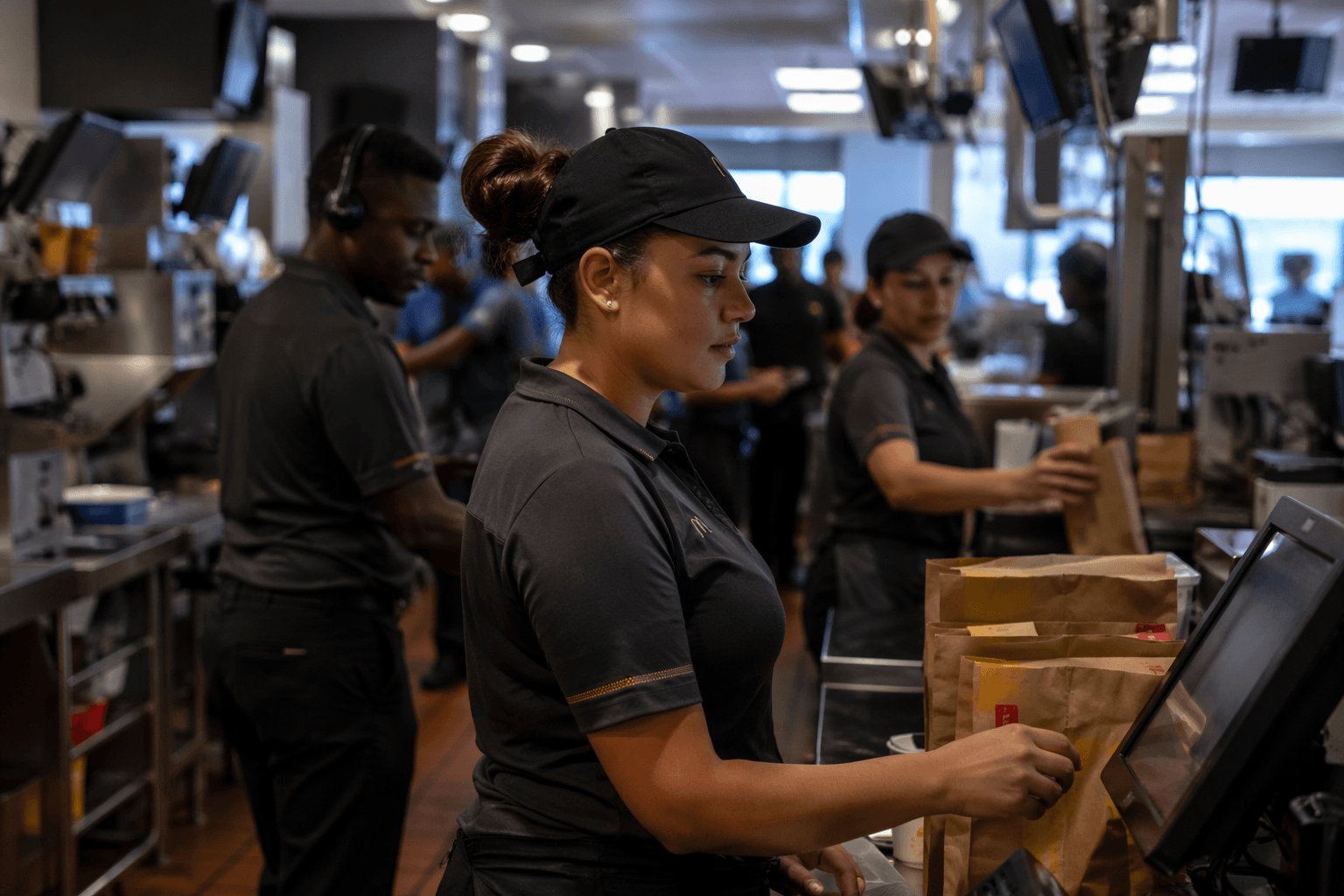
That matters most at the counter, curbside, and drive-thru, where the app can reset expectations in real time. A worker who is used to taking orders one by one now has to manage digital demand, watch for pickup timing, and keep the line moving while making sure the bag on the shelf matches the screen.
What the app actually adds to the shift
McDonald’s app materials say customers can use Mobile Order & Pay along with deals, coupons, rewards, and menu access, which means the app is built to do more than collect payments. Customers can pay with debit or credit cards, Apple Pay, Google Pay, PayPal, or Venmo, and the company says crew members prep the order while the customer is on the way.
That creates a different kind of pressure for crews. The job is not just to take the order accurately, but to sequence it correctly, keep track of pickup timing, and avoid a handoff mistake that can ripple into the next order, the next bag, and the next complaint. When app demand spikes, the rush does not always look like a traditional line at the register, but the kitchen still feels it.
McDonald’s also says Mobile Order & Pay is available only at participating restaurants and excludes drive-thru ordering, which makes the flow even more specific. A customer may still arrive through the drive-thru, but the order itself has to be routed through the app first, so the team has to understand where the order enters the system and how it leaves the restaurant.
Why handoffs matter more now
The operational problem is not just volume. It is the handoff choreography between the kitchen, the pickup shelf, the front counter, the curbside lane, and the drive-thru window. If the order is early, the food can sit too long; if it is late, the customer is already at the counter asking where it is.
For managers, that means more channels to monitor at once. They have to make sure the front line, kitchen, and pickup points are talking to each other clearly, because a mobile order that is ready but not delivered creates a different kind of friction than a register order held up in line. The app turns communication into part of the food-prep process.
That is why the company’s digital system matters on a practical level, not just a promotional one. McDonald’s says the app is central to its deal strategy and meal promotions, so employees need to know how those offers can change what the restaurant is making and when it is making it. A deal can push a single item or meal into a rush that the team does not fully see until the lunch crowd hits.
Loyalty volume is now an operating issue
The scale of the app economy at McDonald’s is now large enough to shape labor on the floor. In December 2023, the company said it wanted 250 million 90-day active loyalty members by the end of 2027 and $45 billion in annual loyalty systemwide sales by the end of that year. By 2024, McDonald’s said its loyalty program had reached over 175 million users across 60 markets.
The growth did not stop there. On February 11, 2026, McDonald’s reported nearly 210 million 90-day active loyalty users across 70 loyalty markets, along with nearly $37 billion in systemwide sales to loyalty members for full-year 2025. In a separate update, the company said that in the second quarter of 2025 it had already surpassed 185 million 90-day active loyalty users across 60 markets.
Those numbers are not abstract to a crew member working the lunch rush. Loyalty and app offers can move demand toward specific items, alter the mix of orders, and add another layer of unpredictability to an already compressed kitchen timeline. When the promotion changes, the order stream changes with it, and the team has to absorb that shift without losing speed or accuracy.
Ready on Arrival and the push for tighter timing
McDonald’s has also made digital execution a formal corporate priority. In December 2023, the company said it would deploy Ready on Arrival technology across its top six markets by the end of 2025, tying the rollout directly to speed, convenience, and freshness for mobile orders. The point is clear: the company wants the order to be ready at the moment the customer gets there, not after a lag that frustrates both sides of the counter.
That has consequences for how a restaurant organizes labor. Ready on Arrival raises the bar on sequencing because the crew has to estimate arrival timing more accurately, stage the food more carefully, and keep pickup channels from clashing with live counter traffic. It also gives managers another reason to tighten procedures, since a missed digital order can damage the customer experience even if the rest of the shift is running smoothly.
McDonald’s said in that same strategic update that beginning in 2024 it would deploy new universal software across its digital platforms, from the mobile app to loyalty and in-store kiosks. That broader system matters because it suggests the burden on workers is coming from digitally routed demand as a whole, not just from app downloads alone.
From a small app to a core operating system
McDonald’s has not always operated this way. Coverage from 2016 said the company was preparing to launch mobile order-and-pay in 2017, after earlier limited app versions in 2015. That timeline matters because it shows how quickly a convenience feature became embedded in the store’s operating model.
The company’s own history offers a longer view of how much the system has changed. Ray Kroc opened the first restaurant for McDonald’s System, Inc. in Des Plaines, Illinois, in April 1955, and McDonald’s acquired the brothers’ company rights in 1961 for $2.7 million. What started as a single restaurant system has become a digital operation that now depends on matching software, kitchen timing, and customer expectations across 70 loyalty markets.
That is the real shift crews are living with. The app is not just a marketing tool sitting outside the restaurant. It is part of how the line moves, how the food is staged, how the handoff happens, and how fast a shift can fall out of sync when the digital promise and the in-store reality do not line up.
This article was produced by Prism’s automated news system from verified source data, official records, and press releases, then run through automated quality and moderation checks before publishing. The system is built and supervised by the people who set the standards it runs under. Read our full AI policy.
Know something we missed? Have a correction or additional information?
Submit a Tip