McDonald’s India promotes training, flexible hours, and leadership paths
McDonald’s India is turning training, flexible shifts and youth hiring into a retention strategy, even as one region reports 58% attrition and more than 6,000 workers.

McDonald’s India is pitching something more practical than brand polish: a job that can turn into a schedule, a paycheck and a path upward. Its career pages frame training, flexible hours and leadership development as the core of the restaurant business, while regional hiring data shows why keeping people matters almost as much as finding them.
The retention playbook behind the pitch
The company’s own language is clear about what it wants workers to see. McDonald’s India says the real strength of the business is its people, and that it is creating future leaders with world-class training, flexible hours and rewarding achievements. That matters in restaurants because turnover is expensive, skills are hard to replace, and a store runs better when crews stay long enough to learn the pace of the kitchen, the register and the rush.
This is where the story becomes more than a culture statement. McDonald’s India says it is building an employer of opportunity, and it frames employee development as part of how the brand succeeds, not as an add-on. In a labor market where workers have options, especially younger workers balancing classes, second jobs or family obligations, the promise of advancement and schedule control is a retention tool, not just a slogan.
Training as the first step toward a better job
The strongest signal in the India materials is training at scale. One company PDF says training inputs were reaching close to 4,000 employees in India, which suggests a system large enough to touch a meaningful share of the workforce rather than a narrow pilot. For a restaurant chain, that kind of reach matters because training is what turns a first-time crew hire into someone who can work independently, support a rush and eventually supervise others.
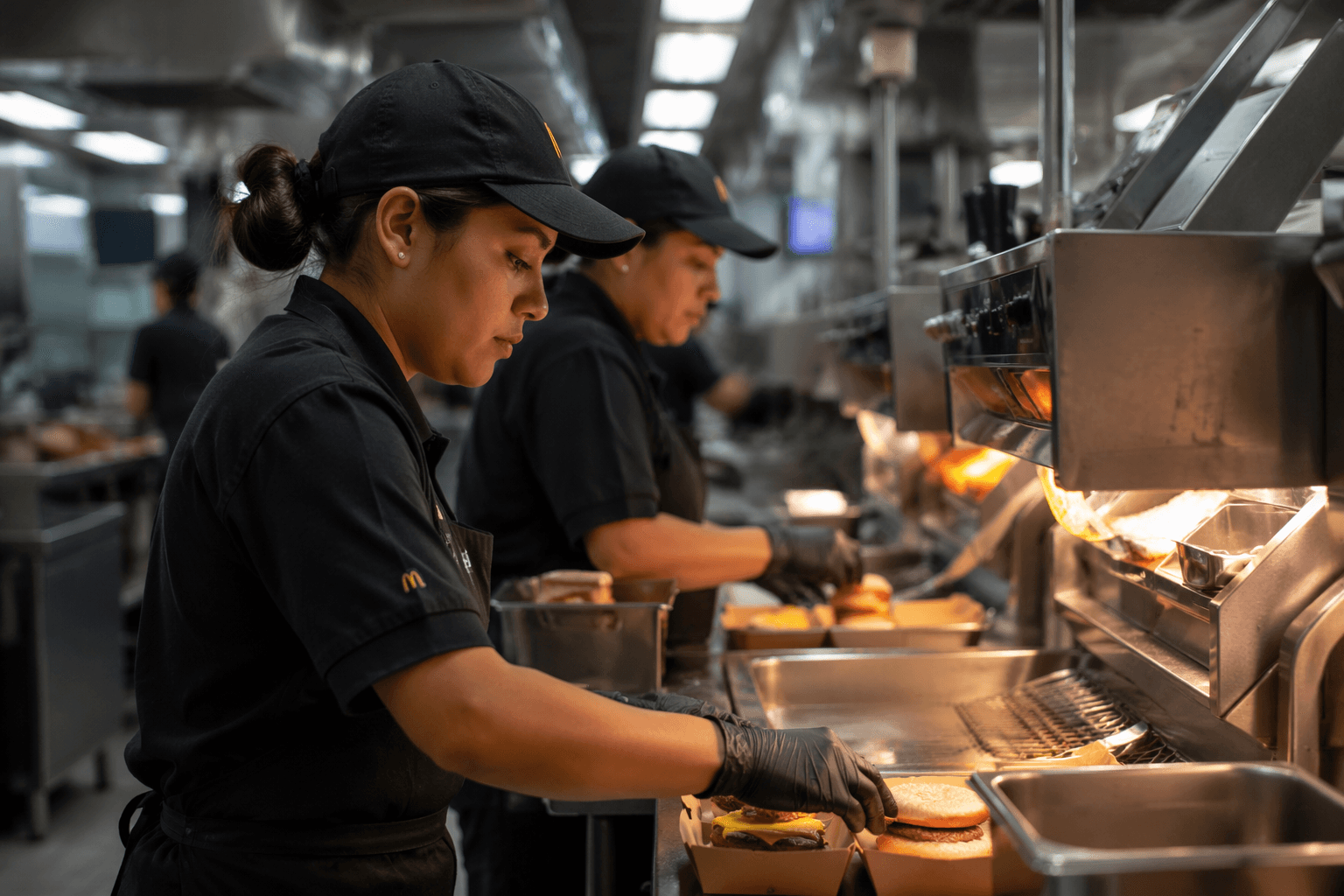
McDonald’s India also says the average restaurant employs 60 to 80 people from crew to restaurant manager. That gives the company a built-in ladder inside each store: a single location is not just a service point, it is a small labor market with room for entry-level workers, shift leaders and managers. If the training is real, the path from one rung to the next can be visible. If it is not, then the words about leadership development become hard to believe on the floor.
The company’s working-here page also says diversity and inclusion run from the crew room to the board room, and that training and development have been at the heart of its work in India. For workers, the important part is not the slogan itself but whether that promise shows up in scheduling, coaching and promotion decisions. A training-heavy culture only pays off if people can see who gets the better shifts, who gets the extra coaching and who actually moves into leadership roles.
Flexible hours only matter if the schedule works in practice
Flexible hours are one of the clearest retention levers in restaurant work, because the job has to fit around real life. McDonald’s India says flexibility is part of how it is creating future leaders, and that is not a small detail in quick service, where school schedules, caregiving and second jobs often decide whether a worker stays or quits.
That makes scheduling part of the job quality conversation. A company can talk about advancement all day, but if shifts are unpredictable or too rigid, workers never stay long enough to benefit from the training. In other words, flexibility is not separate from career building. It is the thing that makes career building possible for the people who are most likely to start on the crew line.
The company’s broader business framing also helps explain the strategy. McDonald’s India says it is focused on good food, good people and good neighbors, and that its commitment to employees and consumers is a trademark of success. That is a reminder that the company is trying to tie worker stability to customer service. In a restaurant, a steadier crew usually means smoother service, fewer mistakes and a better chance that a shift leader knows how to keep the line moving when demand spikes.
The hiring numbers show why retention has become urgent
The regional workforce data gives the retention strategy a sharper edge. In May 2023, McDonald’s India North and East said it planned to hire up to 2,000 people from underprivileged communities over three years, and it said the region already had more than 5,000 employees on the rolls. By August 2025, ETHRWorld reported that the same business was aiming to hire 2,000 people in India by 2025 through NGO partnerships, with a workforce of over 6,000 employees and women making up around 45 percent of the total.
The same report said attrition stood at around 58 percent. That number is the clearest argument for why training and career pathways matter. A workforce that turns over that quickly cannot rely on generic morale messages; it needs a system that gives people a reason to stay long enough to see a future inside the company. For managers and franchise operators, that means the challenge is not only recruiting new people, but keeping the ones already trained.
This is also where the youth pipeline comes in. By January 2026, McDonald’s India North and East said its McDonald’s for Youth initiative had helped more than 2,500 young people take their first steps into the workforce, surpassing its original hiring goals. Related coverage said the program is being scaled further through NGO partnerships in Kolkata, Bhubaneswar and Lucknow, showing that the company is treating entry-level hiring as a structured pipeline rather than a one-off campaign.
What the model means for crew members and managers
For a crew member, the practical lesson is simple: the best route to a better role still starts with mastering the basics. Training opens the door, but the chance to move up usually comes from learning the stations, building speed and showing you can handle responsibility when the store is busy. In a chain this large, with 60 to 80 people in an average restaurant, those skills can translate into better shifts, more trust and, eventually, a leadership path.
For managers and franchisees, the message is just as plain. A retention strategy that combines training, flexible hours and youth hiring is only effective if it actually lowers turnover and creates a stronger bench. McDonald’s India’s own numbers suggest why the company keeps pushing this angle: a workforce of more than 6,000 in one region, close to 4,000 employees reached through training inputs, and an attrition rate around 58 percent leave little room for vague promises.
That is why this India playbook matters beyond one market. In a fast-food industry shaped by wage fights, automation talk and the constant pressure to replace lost labor, McDonald’s India is betting that the better answer is not just hiring faster. It is building a place where people can learn, stay and move up, which is exactly how a restaurant chain turns staffing into strength.
This article was produced by Prism’s automated news system from verified source data, official records, and press releases, then run through automated quality and moderation checks before publishing. The system is built and supervised by the people who set the standards it runs under. Read our full AI policy.
Know something we missed? Have a correction or additional information?
Submit a Tip