McDonald’s tech push reflects restaurant industry’s uneasy AI balancing act
The flashy robots are a sideshow. The McDonald’s tech that will matter most is the software that changes drive-thru orders, training, and how crews recover when systems miss.
The real test is not whether the tech can impress a trade-show crowd. It is whether it changes a lunch rush without slowing the line.
At the National Restaurant Association Show, the tech floor mixed rotary phones, robots, and a lot of AI, which says plenty about where restaurant automation is headed. Operators still want speed and efficiency, but they also know that crews and guests only accept tools that feel reliable, familiar, and useful when the store is slammed.
For McDonald’s, that tension is not theoretical. The chain has spent years pushing digital ordering, drive-thru innovation, and front-of-house automation, so the question is no longer whether the company will adopt more tech. The real question is which tools will change the next shift, and which ones will just make for a noisy demo.
What will actually reach the shift first
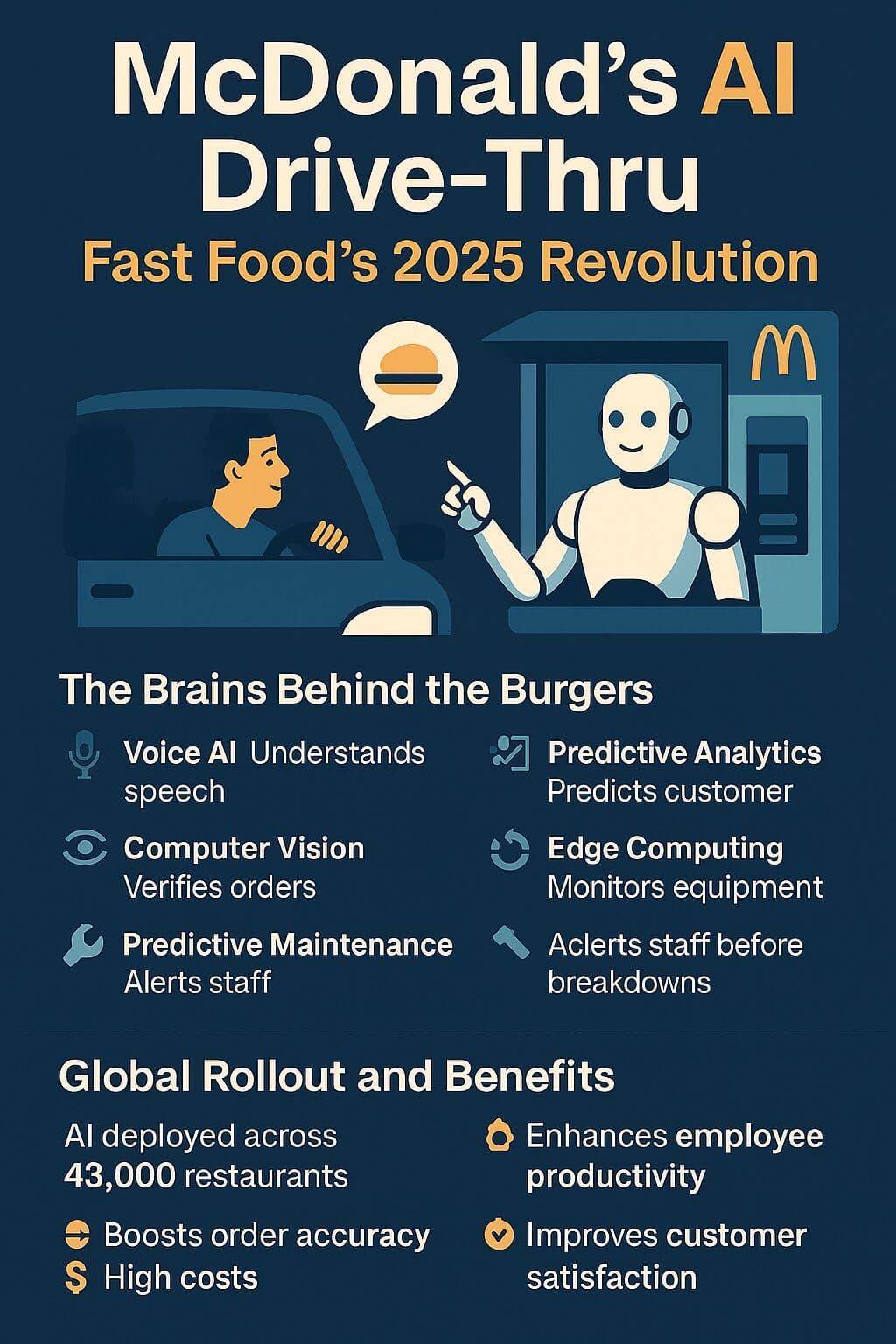
The most consequential tools over the next 12 months are the ones sitting closest to the order flow: voice AI at the drive-thru, connected kiosk and ordering systems, and software that helps managers juggle labor and service in real time. McDonald’s and IBM announced in October 2021 that IBM would help accelerate Automated Order Taking technology, which shows that voice AI has been under active testing for years rather than arriving overnight.
McDonald’s has also said it is connecting Google Cloud technology across thousands of restaurants worldwide. That matters because the bigger change is not a robot on the floor, but the systems behind the counter that move data, prompts, and decisions faster. A tool that saves five seconds at the order point can matter more than a flashy machine that looks good at a booth but never survives a dinner rush.
Where the friction hits first: training
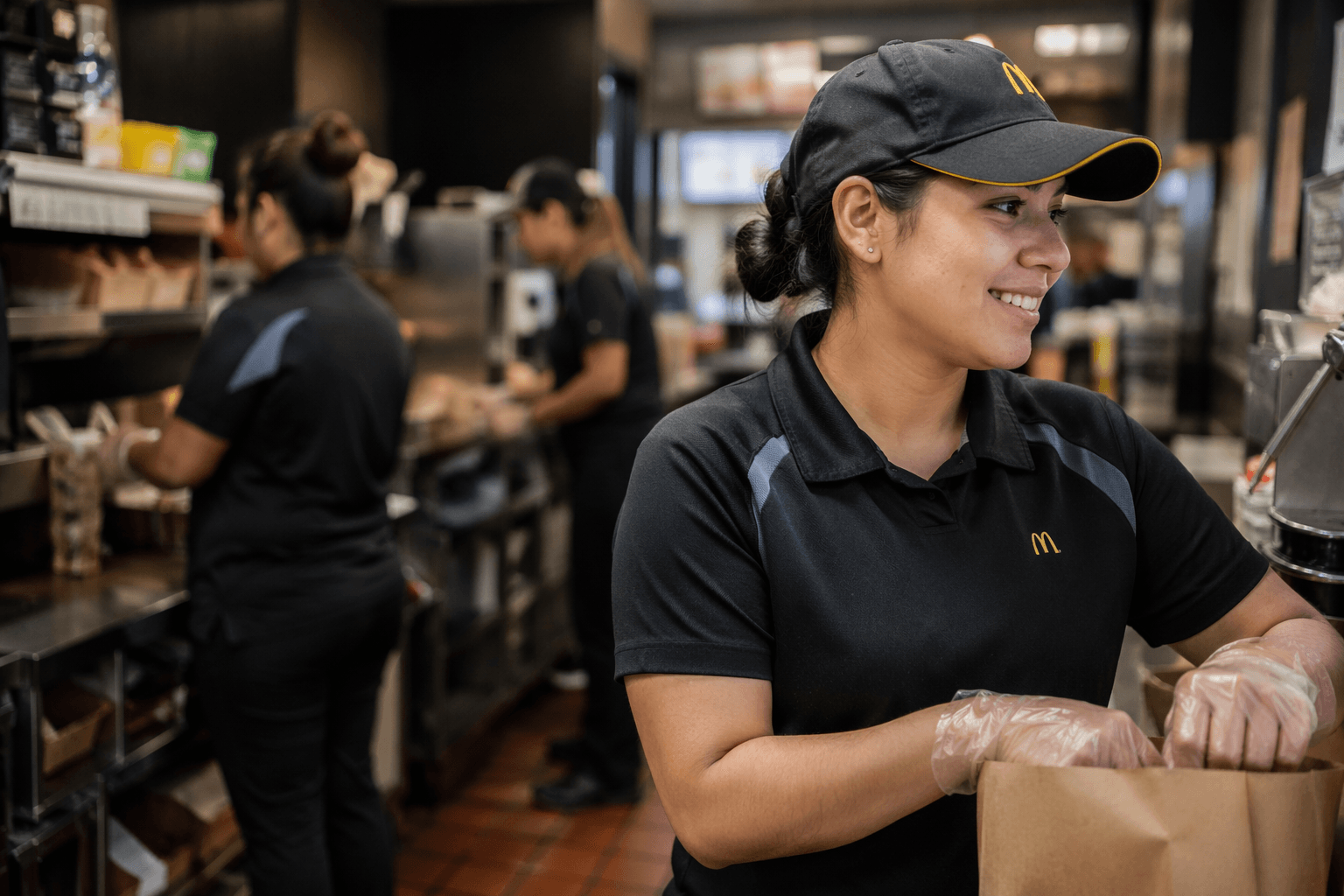
The first pressure point is training. McDonald’s has said its testing is intended to alleviate pressure on restaurant employees and make service simpler and more enjoyable, but that promise only holds if crew members know when to trust the system and when to override it. Every new tool adds more prompts, more exceptions, and more recovery steps that new hires have to learn before they can move at McDonald’s speed.
That is where scale turns small changes into big ones. McDonald’s annual reports say the company has more than two million employees and crew, so even a modest shift in how restaurants work can ripple through a massive workforce. The company has described Digitizing the Arches, launched in August 2025, as a “once-in-a-generation transformation,” which makes clear that this is about more than gadgets. It is about changing how people are trained to run the restaurant.
Where the friction hits second: staffing and speed targets
The second pressure point is staffing. McDonald’s reported global systemwide sales above $130 billion in 2024 and over $139 billion in 2025, and it said it was the largest drive-thru player worldwide, with more than 27,000 drive-thru locations. That scale explains why the drive-thru is the biggest automation battleground. Even a small improvement or slowdown can affect how many cars a store clears, how many crew members are needed, and how hard a shift manager has to push the team.
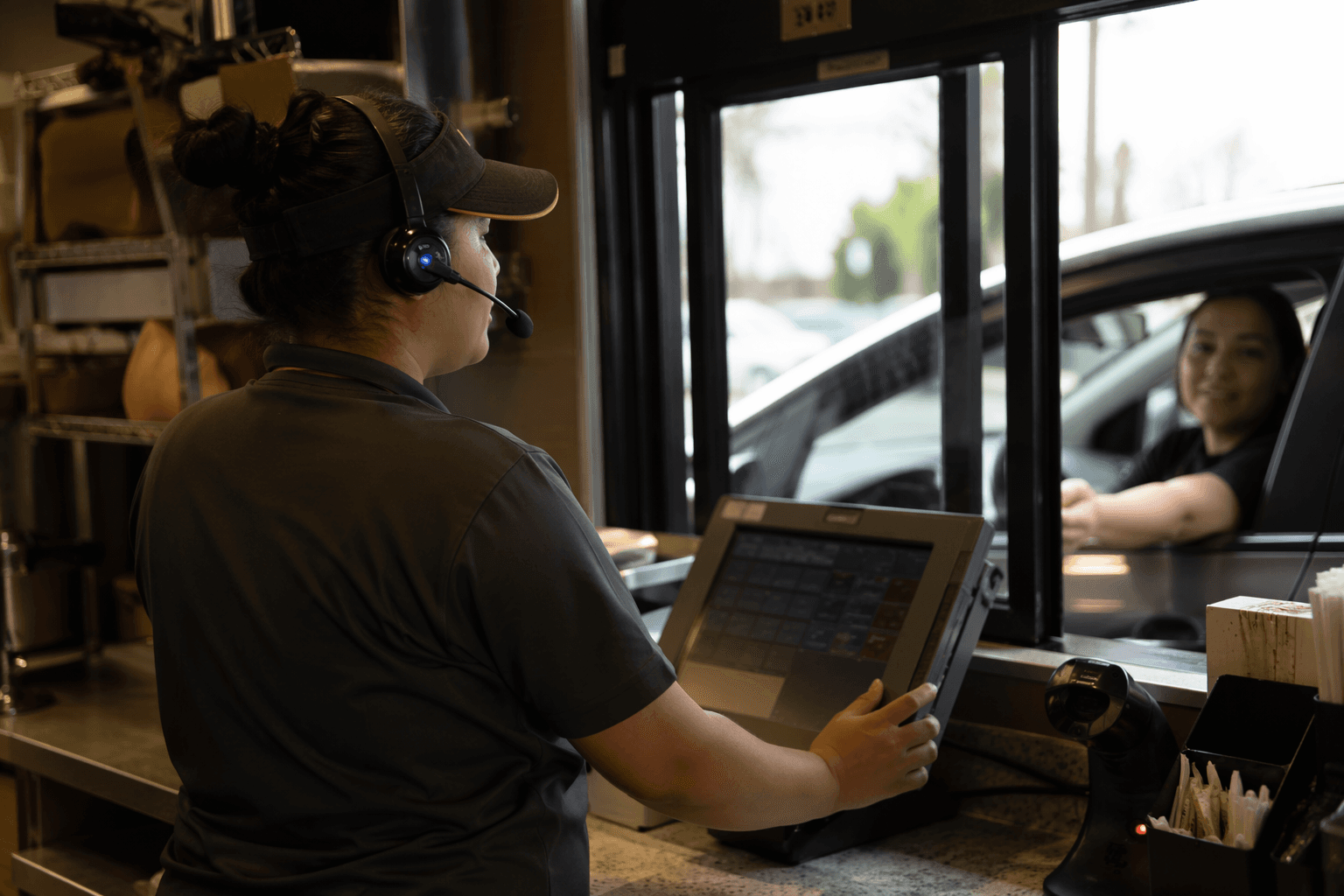
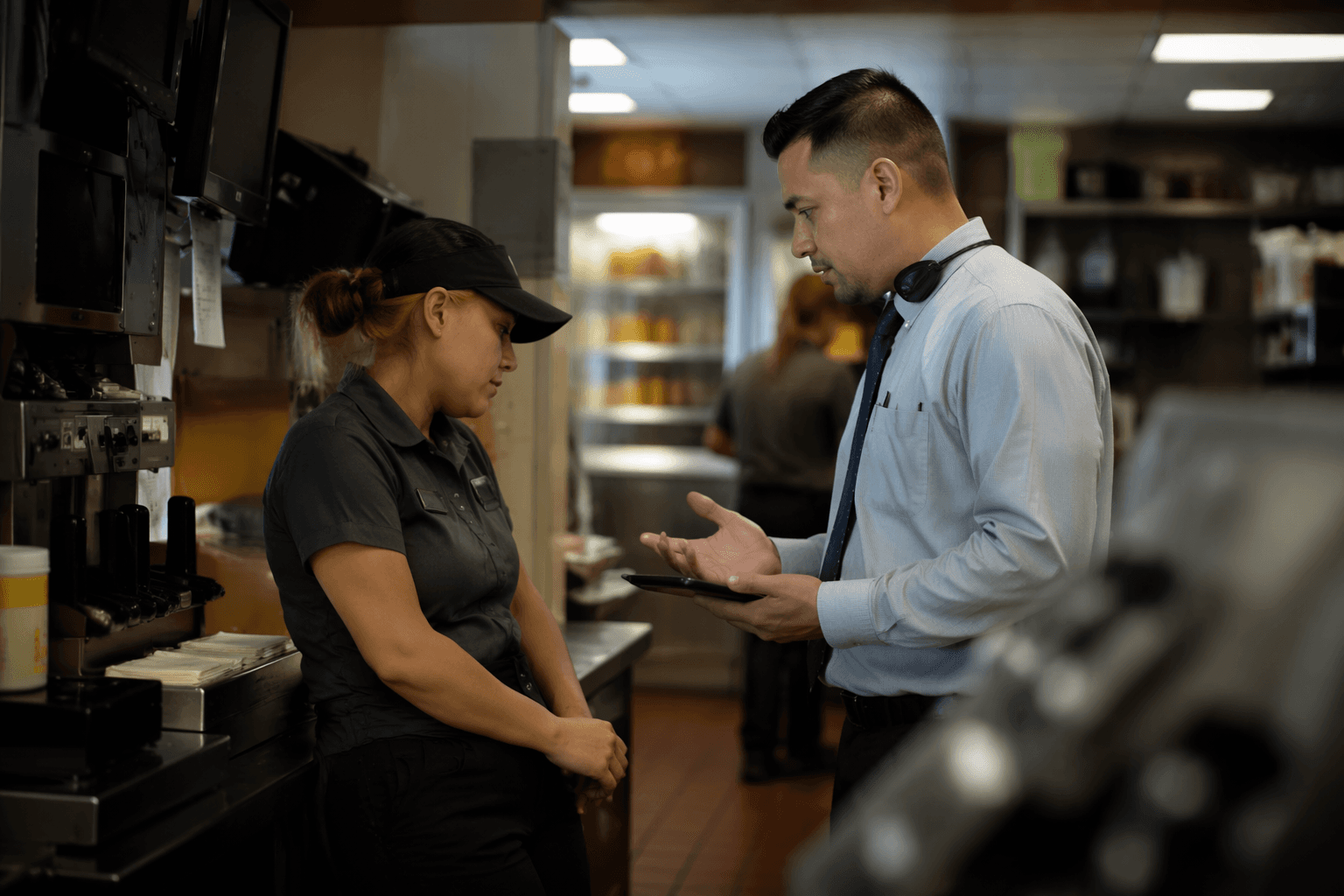
Automation can relieve routine tasks, but it can also shift labor into exception handling. If the tech works, a crew member may spend less time taking simple orders and more time fixing misfires, handling special requests, and keeping service calm when the system stalls. If it fails, the manager who expected a lighter rush may suddenly need extra hands to recover. For workers shaped by Fight for $15 organizing and state minimum wage laws, that can feel like a classic corporate move: more complexity on the floor without a clean answer on pay, staffing, or workload.
Where the friction hits third: customer interaction
The third pressure point is the guest experience. Kiosks, voice AI, and other ordering tools only help if customers understand them fast and trust them enough to use them. The odd mix of rotary phones and robots at the show was revealing because some vendors are trying to make new technology feel more human. They know that too much friction at the order point still sends the problem back to the crew.
That is especially true at McDonald’s, where front-of-house automation has to fit a brand built on volume. A guest who is confused at the kiosk, frustrated by a misheard order, or unsure whether to speak to a machine or a person will not experience innovation as efficiency. They will experience it as a line that needs rescuing, and that rescue almost always lands on the crew.
Why McDonald’s is the clearest workplace case study
McDonald’s is not just another chain testing gadgets. In March 2025, it created a Restaurant Experience Team to move big ideas into execution faster, and Speedee Labs at headquarters in Chicago spans 21,000 square feet across two floors. That space is used to test menu ideas, equipment, processes, and the integration of tech and AI, which is where the company is really trying to solve the hard part: making automation work in a real restaurant, not just in a polished demo.
The corporate side can push the technology, but franchise operators still live with the daily cost of retraining, staffing, and service speed. That corporate-vs-franchise tension matters because the people who sign the paycheck may not be the people who have to absorb every operational change on the floor. In a McDonald’s system that runs on scale, the tools that survive will be the ones that make the restaurant easier to manage without turning every busy hour into a troubleshooting session.
The bottom line for crew and managers
The flashy robots will keep drawing attention, but the technologies that matter most are the ones that sit inside the normal shift: order taking, labor planning, kitchen flow, and the handoff between guest and crew. McDonald’s has built toward that model through Google Cloud partnerships, Automated Order Taking trials, and its Digitizing the Arches overhaul.
The workplace reality is simple. AI is not arriving as a clean replacement for labor. It is arriving as another operational layer, and the stress test will be whether it helps the restaurant run smoother when the line is long, the headset is busy, and the crew is already stretched.
This article was produced by Prism’s automated news system from verified source data, official records, and press releases, then run through automated quality and moderation checks before publishing. The system is built and supervised by the people who set the standards it runs under. Read our full AI policy.
Know something we missed? Have a correction or additional information?
Submit a Tip