AI layoff wave raises morale concerns despite monday.com growth
AI cutbacks are colliding with solid growth, and monday.com’s expansion makes the morale question harder to dismiss. Employees are watching where the productivity gains go.

The hardest part of the current AI layoff wave is not the math, it is the message. Companies are still posting strong profits and revenue, yet they are cutting people and pointing to AI as the reason, leaving employees to wonder whether the technology is driving real productivity or just providing cover for smaller teams. For monday.com, that tension lands directly on engineers, product managers, sales reps and operations staff who are being asked to build faster while reading every AI push through a labor-market lens.
monday.com’s own numbers cut against the panic narrative. On Feb. 9, the company said fiscal 2025 revenue reached $1.232 billion, up 27% from a year earlier, with a non-GAAP operating margin of 14%. Co-CEOs Roy Mann and Eran Zinman said AI products were seeing strong adoption, while CFO Eliran Glazer pointed to record non-GAAP operating profit and cash generation. The company also said monday vibe became the fastest product in its history to top $1 million in annual recurring revenue.

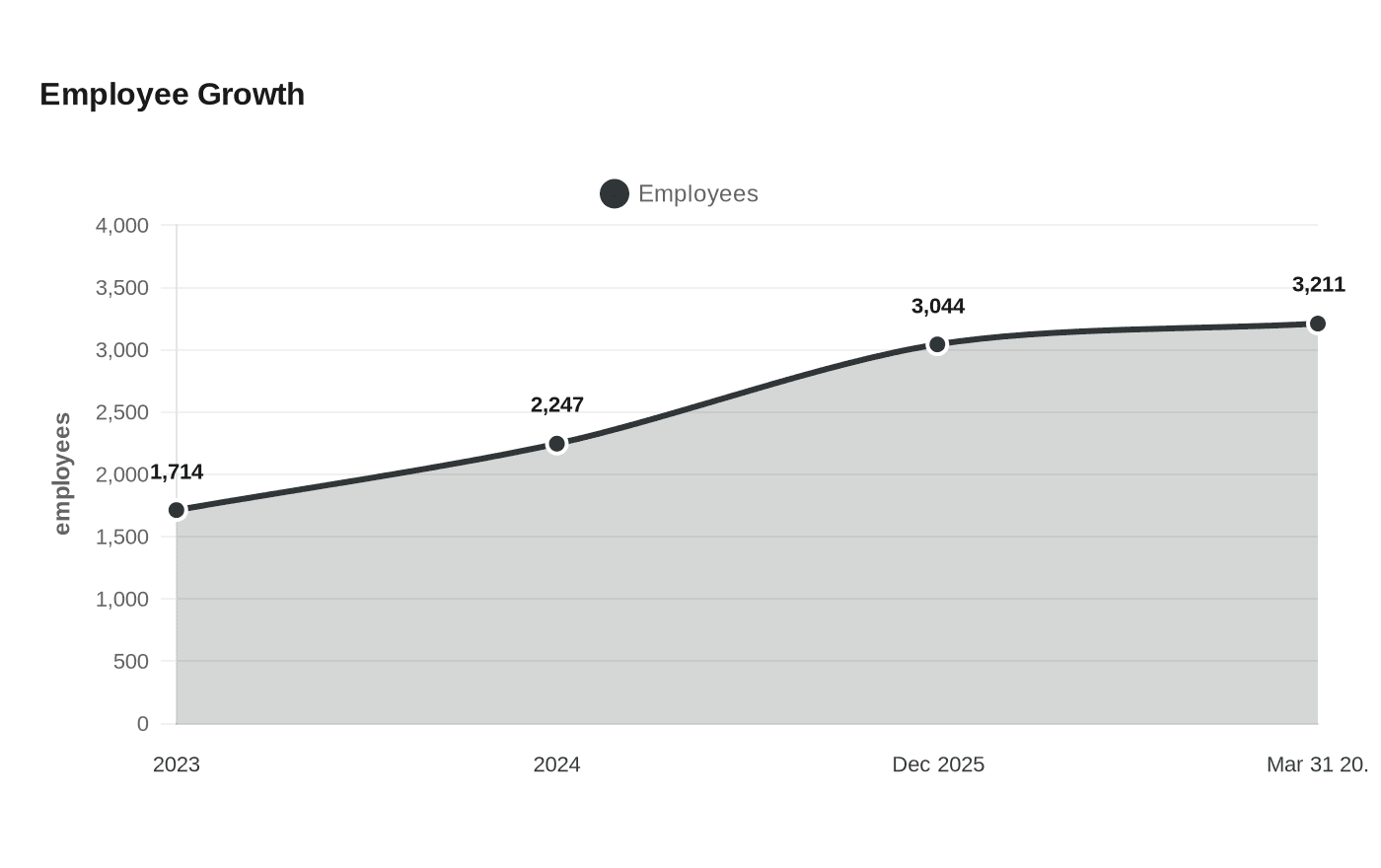
The growth is still showing up in the customer base and the payroll. monday.com said it had more than 250,000 customers worldwide as of Dec. 31, 2025, 4,547 customers spending more than $50,000 in annual recurring revenue as of March 31, 2026, and 3,211 employees on that same date. Revelio Labs put the company at about 3,044 employees in December 2025, up from 2,247 in 2024 and 1,714 in 2023, while active job postings rose to 1,165 in 2025 from 402 a year earlier. In other words, monday.com is still expanding while much of tech is talking as if automation and headcount cuts are the same story.
That makes the company’s AI roadmap more than a product update. On July 10, 2025, monday.com introduced monday magic, monday vibe and monday sidekick. Then on May 11, it said it had launched an AI work platform with native agents and reported first-quarter 2026 revenue of $351.3 million, up 24% year over year, with net dollar retention at 110%. The product strategy is now tied to a common AI layer across work management, CRM, service and dev tools, which means the people who can turn AI into usable workflow automation will matter more than ever.
For managers, the real challenge is credibility. Employees will keep asking whether AI spending is meant to create new revenue and better products, or simply justify doing the same work with fewer people. That question is not abstract anymore. It is shaping how workers judge stability, internal mobility and whether the companies promising an AI future are still willing to invest in the people who have to build it.
This article was produced by Prism’s automated news system from verified source data, official records, and press releases, then run through automated quality and moderation checks before publishing. The system is built and supervised by the people who set the standards it runs under. Read our full AI policy.
Did this article answer your question?