monday.com guide says engineering productivity means business impact
monday.com’s productivity playbook rejects vanity metrics, tying engineering output to customer value, reliability, and revenue.
Counting tickets, commits, or hours can make engineering look busy while revealing almost nothing about whether customers feel the difference. monday.com’s own productivity guide draws a harder line: software teams are productive when they turn time, skills, and tools into customer and business value, not when they simply ship code faster. That framing matters inside a company whose platform, revenue growth, and infrastructure footprint make false confidence especially expensive.
Busy work is not the same as business impact
The company’s updated engineering productivity guide, refreshed on Jan. 15, 2026, is blunt about the trap teams fall into when they measure activity instead of outcomes. Lines of code are treated as a vanity metric, not a sign of progress, because volume alone does not tell you whether a feature works, whether it lands with users, or whether it creates more support problems than it solves. monday.com’s 2026 engineering metrics article makes the same point even more directly: teams should use actionable metrics that drive decisions and avoid numbers that exist mainly to make people feel busy.
That distinction is more than a management philosophy. In a SaaS business, the work only matters if it improves the product experience, shortens delivery time, reduces risk, or helps revenue teams sell with more confidence. monday.com’s own framing makes engineering part of the commercial engine, not a separate technical silo.
The metrics that actually tell the story
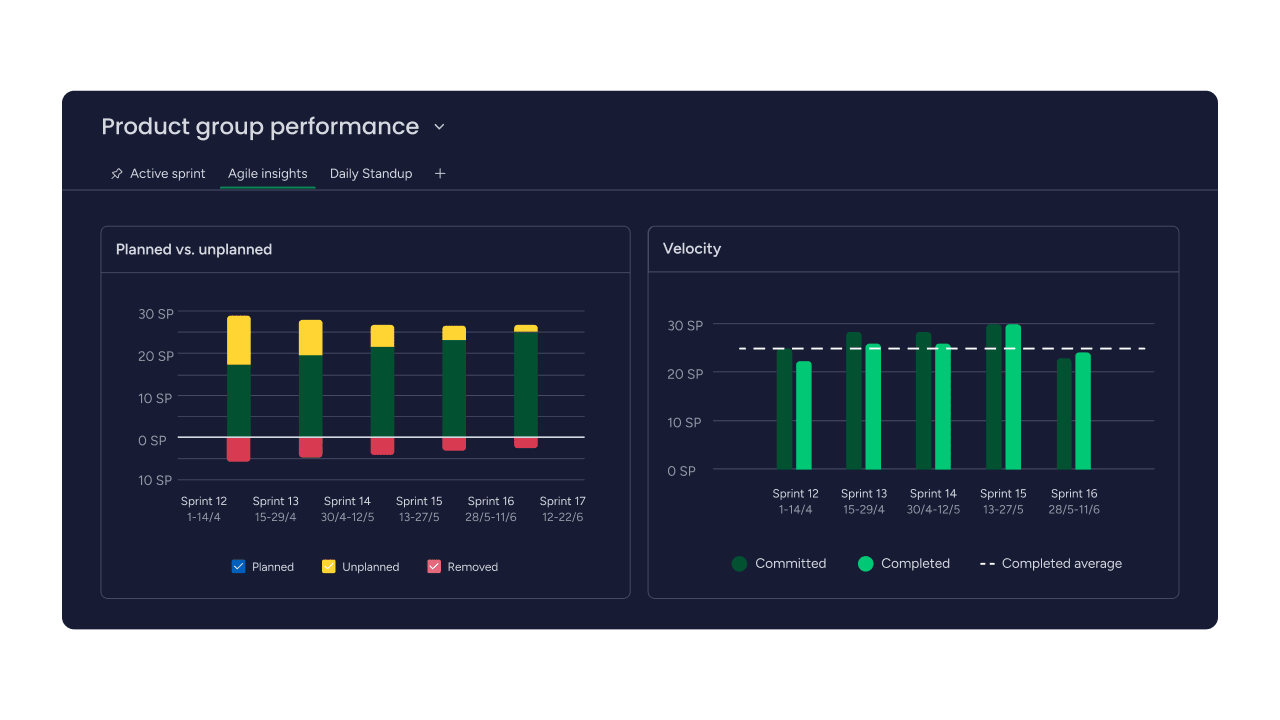
The guide points teams toward operational measures that reflect how software moves through the system. Cycle time shows how long work takes from start to finish. Deployment frequency shows how often teams are shipping. Mean time to recovery measures how quickly the organization can bounce back when something breaks. Change failure rate shows how often releases create incidents or rollback risk.
Those numbers matter because they expose where work gets stuck. A long cycle time might point to review bottlenecks, unstable requirements, or environment problems. A low deployment frequency can mean teams are batching too much risk into each release. A weak recovery time or high failure rate tells leaders they may be trading speed for fragility, which eventually lands on customers in the form of outages, delays, or support load.
monday.com’s guidance is also explicit that metrics should help teams learn and improve. The point is not surveillance, and it is not blame or punishment. For managers, that means using data to shape decisions about process, tooling, and staffing. For engineers, it means having a language for performance that does not collapse into blunt output counts. For product leaders, it gives a way to connect roadmap choices to delivery health instead of treating engineering as a black box.
Why the company’s own scale makes this matter
The stakes are easy to see in monday.com’s second-quarter 2025 results. Revenue reached $299.0 million, up 27% year over year. Net dollar retention was 111%, with stronger retention inside larger customer cohorts, including 115% for customers with more than 10 users, 116% for customers with more than $50,000 in annual recurring revenue, and 117% for customers with more than $100,000 in ARR. The company also said monday CRM had recently reached $100 million in ARR.

Those figures make engineering productivity a business issue, not a side conversation. Higher retention and larger customer accounts depend on product reliability, usable features, and the ability to support enterprise workflows without friction. In that context, engineering metrics are not just internal dashboards. They are part of the machinery that keeps customers renewing, expanding, and trusting the platform enough to standardize on it.
The company’s co-CEOs said they were focused on AI innovation and operational efficiency, which makes the productivity conversation even sharper in a market where speed is being marketed everywhere. The difference is that monday.com’s guide asks what speed produces, not just how fast it looks.
The infrastructure behind the dashboard
That philosophy becomes more concrete in a May 2026 engineering post about shortening feedback loops. monday.com said it runs on more than 100,000 vCPUs, with production spanning 4,900 nodes and 292 terabytes of memory. Its staging environment has 645 nodes and 25 terabytes of memory. Ephemeral environments supporting about 50 active users required around 140 dedicated nodes and roughly $450 per month per developer.
The team said it cut development feedback loops from 30 minutes to 30 seconds. That kind of change is exactly why raw activity counts are such poor proxies for engineering quality. If developers wait half an hour for feedback, the organization pays in lost focus, slower iteration, and more context switching. If the same loop drops to 30 seconds, the impact shows up in faster debugging, tighter collaboration, and less dead time between idea and verification.
For engineers, that means the useful question is not how many changes were made, but how quickly the system helps you learn whether a change was right. For product managers, it means roadmap decisions are intertwined with platform throughput. For sales teams, it means the promise being sold to customers rests on a delivery system that can actually keep pace.
What monday.com’s culture says about measurement
monday.com’s engineering blog is organized around themes like DevOps, reliability, observability, product mindset, and AI, and the company says its R&D culture is centered on “making Impact.” Daniel Lereya, who has served as chief product and technology officer since 2023, sits at the center of that operating model. The message is consistent across the guide and the engineering blog: the job is to build a cloud-based Work OS that performs in the real world, not to maximize internal motion for its own sake.
That matters because measurement can shape behavior as much as it describes it. If teams are judged on vanity metrics, they optimize for volume. If they are judged on cycle time, deployment frequency, recovery, and failure rate, they are pushed toward better systems, cleaner releases, and stronger product judgment. At a company the size of monday.com, where revenue growth, customer retention, and AI-driven product bets are all in play, that difference is the line between looking productive and actually becoming more valuable.
This article was produced by Prism’s automated news system from verified source data, official records, and press releases, then run through automated quality and moderation checks before publishing. The system is built and supervised by the people who set the standards it runs under. Read our full AI policy.
Did this article answer your question?