Monday.com explains employee lifecycle management from hiring to exit
monday.com’s lifecycle lens turns HR into a systems problem, showing where handoffs break from recruiting to exit and how one platform can reduce the drag.
Employee experience usually falls apart at the seams: the candidate who waits too long, the new hire who cannot get access on day one, the manager who has no signal on engagement, the departing employee whose handoff turns messy. monday.com’s employee lifecycle framing treats those failures as workflow problems, not soft culture problems, and that shift matters in a SaaS company where retention, ramp time, internal mobility, and cross-functional collaboration all shape output.
Employee lifecycle management as an operating system
The core idea is simple but practical. Instead of treating employee experience as a vague goal, monday.com breaks it into stages: recruiting, onboarding, development, engagement, and exit. That structure gives managers something they can actually run, measure, and improve, which is why the framework lands especially well with team leads, HR partners, and people managers.
Gartner’s view of employee experience pushes in the same direction. The firm frames it as a strategic move that can improve business outcomes, and its guidance on “moments that matter” puts the emphasis on clear manager action and relevant feedback. That is a useful correction to the usual HR noise: the problem is rarely that a company lacks good intentions. The problem is that the work is not organized well enough to deliver a consistent experience.
Where the process usually breaks
Recruiting is often where the first cracks show. A strong candidate experience depends on fast coordination, clear ownership, and no needless back-and-forth between hiring managers, recruiters, and interviewers. If those steps live in separate systems or depend on ad hoc Slack pings, the organization can look disorganized before anyone has signed an offer.
Onboarding is the next pressure point. New hires need equipment, permissions, policy acknowledgments, introductions, and a real sense of how work gets done. When HR, IT, and the business handle those tasks separately, employees feel the friction immediately. monday.com’s own framing is blunt on this point: when service, HR, and IT operate separately, the workplace feels fragmented; when they coordinate around one system, it feels coherent.
Development and engagement are where companies lose momentum more quietly. A manager can hire well and onboard well, then let the experience drift for months without enough feedback, growth planning, or visibility into what is slowing someone down. The lifecycle approach forces leaders to treat those moments as part of the employee journey, not as optional extras that happen after the “real” work is done.
Exit is the final test. Offboarding is not just about collecting equipment or disabling access. It is also where knowledge transfer, stakeholder communication, and final task ownership determine whether the company keeps institutional memory or lets it leak out the door. The same workflow discipline that helps a person start well can make sure they leave well.
How monday service fits into the model
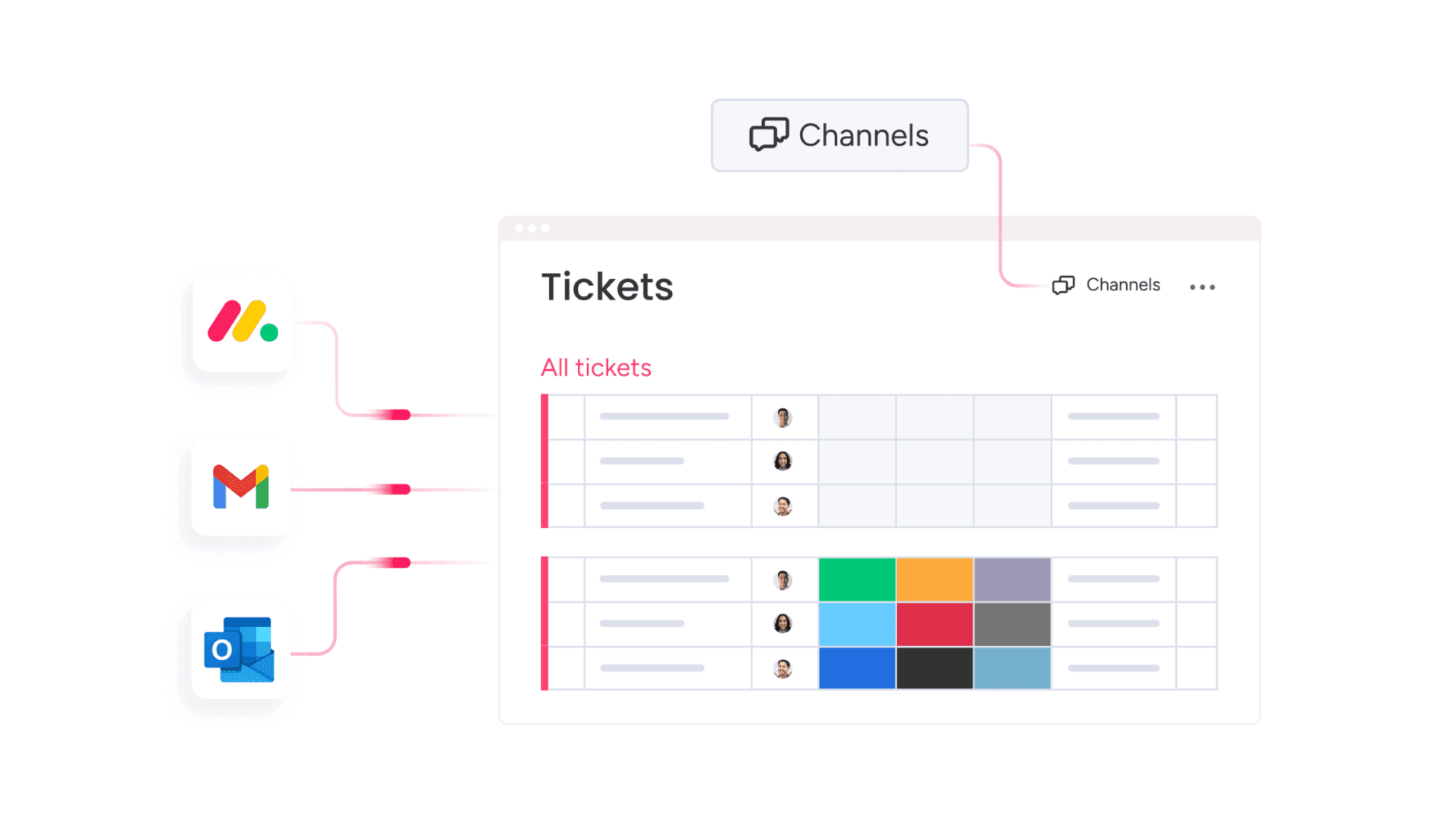
monday.com connects that lifecycle thinking to monday service, its service-management product. The company says monday service centralizes requests and uses AI agents, portals, and real-time insights to help teams resolve issues faster. Its support materials describe it as a platform that connects ticketing, projects, and cross-department teams in one centralized support system.

That matters because the employee lifecycle is full of service moments. A new hire needs a laptop and accounts. A manager needs a faster answer on a policy question. Finance needs a clean approval path. Facilities needs a request routed without a manual chase. monday.com positions monday service as a way to bring HR, IT, procurement, facilities, finance, marketing, legal, and learning and development into one operating layer, so employees are not left translating the organization’s org chart back into usable help.
The product story is also broader than employee support. For product teams inside monday.com, lifecycle thinking is a reminder that the same kind of friction shows up in the customer journey. A bad handoff, a slow answer, or a broken workflow is never just an internal problem. It becomes part of the product experience, too.
Why the timing matters inside monday.com
The company is big enough now that process design is not a side issue. monday.com reported fourth-quarter 2025 revenue of $333.9 million, said full-year 2025 revenue grew 27%, and reported a 14% non-GAAP operating margin. It also said customers with more than $50,000 in ARR represented 41% of total ARR in the fourth quarter, a sign that larger, more complex accounts are an important part of the business.
Scale shows up in headcount as well. Revelio Labs estimated monday.com had 3,079 employees in 2025, up from 2,363 in 2024 and 1,833 in 2023. That kind of growth changes the stakes for internal service delivery. When a company adds people that quickly, every manual workaround becomes more expensive, and every unclear ownership boundary starts to create drag.
The customer base has expanded, too. monday.com said that more than 250,000 customers worldwide use its platform as of July 1, 2026. For a company operating at that scale, the logic behind employee lifecycle management becomes part of the product philosophy itself: if the platform helps customers orchestrate work across teams, it should also make internal service feel less fragmented.
What the article is really telling managers
The bigger lesson is not that companies need another HR framework. It is that employee experience improves when managers treat each stage as a workflow with owners, handoffs, and measurable delays. Recruiting, onboarding, development, engagement, and exit are not separate HR chores. They are linked systems that shape whether people stay, how fast they contribute, and how well teams work together.
That is also why monday.com has started publishing adjacent content on HR service management, employee experience platforms, digital employee experience strategy, and service desk automation. The pattern is clear: internal service delivery is being positioned as a management system, not a back-office detail. For a SaaS company built around work orchestration, that is not a cosmetic theme. It is how the company is choosing to describe the modern workplace.
This article was produced by Prism’s automated news system from verified source data, official records, and press releases, then run through automated quality and moderation checks before publishing. The system is built and supervised by the people who set the standards it runs under. Read our full AI policy.
Did this article answer your question?