Monday.com guide frames product innovation as a repeatable system
Monday.com’s playbook shows innovation works best as a repeatable system, not a lucky burst, with AI products, roadmaps, and feedback loops driving releases.

Innovation at monday.com works best when product, engineering, and business teams move inside the same operating model. With more than 250,000 customers and a product stack that spans work management, CRM, service, dev, and AI, the company cannot afford ideas to stall between strategy and shipping. The lesson for teams inside the company is simple: better releases come from repeatable rituals, not sporadic flashes of inspiration.
Innovation starts with one shared environment
The core idea behind monday.com’s product guidance is that innovation breaks down when teams work in separate lanes. Engineering can build a feature, product can define the roadmap, and sales can promise value, but none of that matters if the work is not connected in a single flexible environment where decisions stay visible. That matters more at monday.com than at a smaller SaaS company because the platform now serves multiple surfaces at once, from work management to CRM and service to dev, all on the same AI layer.
For employees, that means product progress is not just a matter of speed. It is a matter of whether the organization can keep strategy, delivery, and customer feedback in the same loop. A company with 250,000-plus customers does not get to treat each release as a standalone event. Every launch has to fit into a system that can scale across business lines without forcing teams to rebuild alignment from scratch each time.
Roadmaps and metrics are the real innovation engine
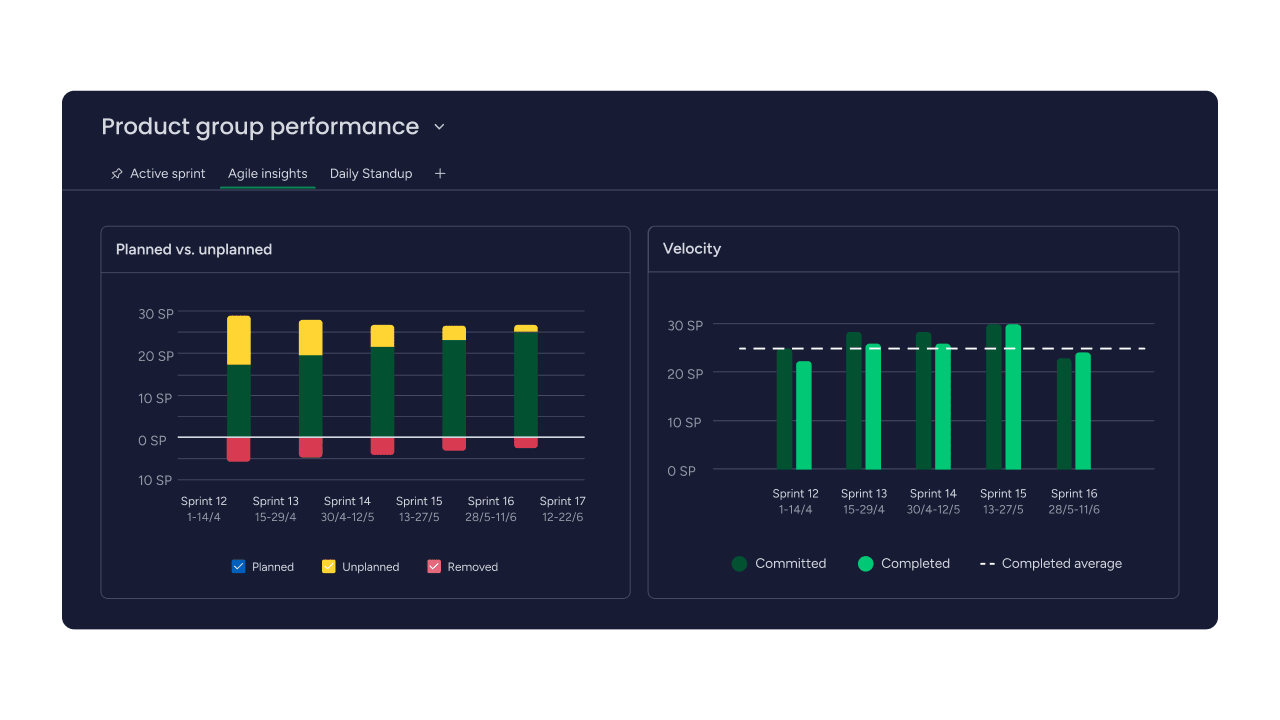
monday.com’s engineering content puts unusual weight on roadmaps, metrics, and product planning because they give teams a single source of truth. That framing matters inside a fast-moving SaaS business where customer expectations shift quickly and competitors move just as fast. If a roadmap is only a slide deck, it does not help much. If it is tied to live metrics and clear ownership, it becomes a practical tool for deciding what gets built, what gets delayed, and what gets cut.
That approach also changes how engineers think about their job. Building features is only half the work. The other half is making the product easier to operate, govern, and extend, so each release improves the next one instead of creating more complexity. For product managers, the same logic applies to discovery and handoffs: if the team cannot move from concept to launch without confusion, then innovation is leaking out through process friction rather than turning into shipped value.

The numbers show why process now matters as much as ideas
monday.com’s recent product reporting gives the operating model real scale. In the third quarter of 2025, the company said new products accounted for more than 10% of total ARR, while monday CRM reached $100 million in ARR by mid-2025. Around the same period, more than 60,000 apps had been built on monday vibe in about three months, a sign that the fastest path from idea to adoption is also the shortest path from internal experimentation to customer value.
Those figures matter because they show innovation as a measurable output, not a slogan. When a new product line starts contributing more than 10% of total ARR, it becomes part of the business, not a side project. When monday vibe becomes the fastest product in the company’s history to cross $1 million in ARR, that is a signal that the company’s launch machinery can turn a new concept into revenue quickly if the path from creation to distribution is clean.
Product launches now carry a broader business narrative
The company’s fourth-quarter and full-year 2025 results add another layer to that picture. monday.com reported 27% full-year revenue growth and $333.9 million in fourth-quarter revenue, numbers that show how much the market has started to buy into the broader platform story. For sales teams, that makes innovation part of the pitch, not a background detail. Prospects comparing workflow software are not only asking whether the platform works today. They are asking whether it can keep up as their own organizations grow, automate more work, and move into AI-assisted workflows.
That is why the product story and the revenue story now point in the same direction. Monday vibe, monday CRM, and the company’s AI layer are not isolated feature launches. They are evidence that the company can keep shipping in ways customers can understand and finance teams can measure. For anyone selling the platform, that makes product innovation a concrete conversation about expansion, retention, and the ability to serve more use cases without fragmenting the experience.
What this means for teams inside monday.com
For engineers, the key takeaway is to treat each release as part of an operating system, not a one-off build. A feature that ships cleanly but is hard to govern or extend creates more work later. A feature that fits the roadmap, surfaces metrics clearly, and plugs into the broader AI work platform gives the company a better base for the next launch.
For product managers, the discipline is in sequencing. Discovery, prioritization, and handoffs need enough structure to move fast, but not so much rigidity that the team loses adaptability. That balance is especially important when one platform is serving work management, CRM, service, dev, and AI at the same time. The stronger the cross-functional loop, the less likely a promising idea is to disappear between planning and release.
For sales professionals, the message is that innovation has to remain legible to customers. A platform story only works if the customer can see how today’s release connects to tomorrow’s expansion. monday.com’s scale, its 250,000-plus customer base, and the growth in new products and AI-driven creation all make that story more credible when the conversation turns to value, not just features.
The system is the product
monday.com’s shift from work management company to AI work platform makes the underlying lesson harder to ignore. AI agents and prompt-based app building are now part of the company’s product and go-to-market story, which means innovation has to be repeatable enough to support new categories as they emerge. The companies that keep winning in SaaS are usually the ones that turn alignment, workflow design, and feedback loops into habit.
At monday.com, that habit is the real product advantage. When engineering, product, and business teams work from the same metrics and the same roadmap, innovation stops depending on luck and starts behaving like a system that can ship again and again.
This article was produced by Prism’s automated news system from verified source data, official records, and press releases, then run through automated quality and moderation checks before publishing. The system is built and supervised by the people who set the standards it runs under. Read our full AI policy.
Did this article answer your question?