Asana update underscores rising need for context-rich subtasks on monday.com
Asana’s new subtask inheritance shows how much time teams lose when bug fixes and QA tickets lose project context. That hidden friction matters for monday.com because it shapes execution and reporting.
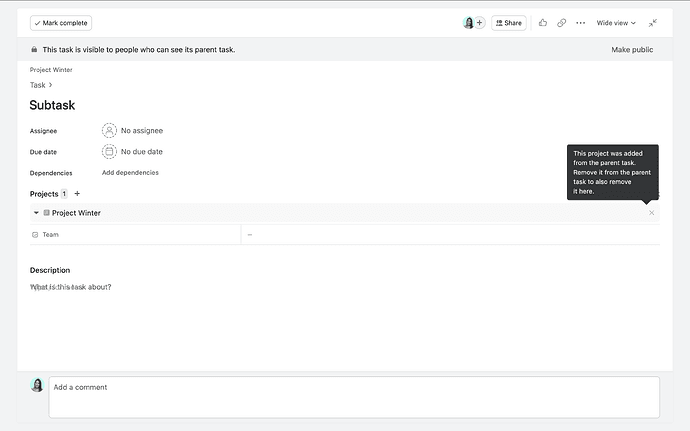
The smallest work items often carry the biggest context tax. Asana’s May 8 update let subtasks inherit the project and custom fields of their parent task, and surface that information directly in the subtask task pane, even five levels deep. That means the person doing the narrower piece of work no longer has to climb back up the hierarchy just to figure out which initiative the task belongs to, which fields matter, or how the work fits into the larger project structure.
That change matters most in the places where teams do the messiest, most detail-heavy work: bug fixes, QA follow-up, launch checklists, security remediation, localization checks and content approvals. When that context disappears, lower-level contributors spend time reconstructing it, and the cost shows up as inconsistent field values, duplicated checks and avoidable misunderstandings. In other words, the work does not just slow down. It gets noisier, and the noise spreads upward into reporting and handoffs.

For monday.com, the signal is bigger than one competitor’s feature tweak. Workflow software is increasingly expected to carry context downward instead of forcing people to rebuild it every time they zoom into a smaller unit of work. That is especially relevant for engineering and product teams, where hierarchy is not just an organizational chart but the structure behind delivery. If the right project and field context stays visible at the level where people actually execute, adoption friction falls and reporting quality rises. If it does not, teams end up with task lists that look organized but still leak time at every handoff.
The update also points to a broader standard buyers will keep demanding from work-management platforms: consistency without extra manual steps. That matters to operations-heavy sales prospects, to PMs trying to keep launch work aligned, and to engineers who need the system itself to preserve the details that make automation and scale possible. Asana just made the case that subtask design is not a cosmetic issue. It is where execution either stays aligned or starts to drift.
Know something we missed? Have a correction or additional information?
Submit a Tip