Asana’s StackAI deal raises stakes in monday.com’s AI race
Asana’s StackAI acquisition pushes monday.com rivals toward AI orchestration, not chatbots, and raises a blunt question for operators: who governs the work?
Asana’s purchase of StackAI is a direct challenge to every work-management vendor, including monday.com: the category is moving past AI helpers and toward software that can coordinate real business processes across ERP, CRM, ITSM, and other enterprise systems. Asana said it completed the acquisition on Thursday, May 28, 2026, and TechCrunch reported the deal value at $75 million.
StackAI was built by Antoni Rosinol and Bernardo Aceituno, two MIT PhD students who started the company to let enterprises design, test, deploy, and govern custom AI agents without code. That matters because the pitch is no longer limited to drafting text or summarizing tasks. It is about running cross-system workflows with approvals, handoffs, and controls built in, the kind of execution layer enterprise buyers increasingly want inside the tools they already use.

For monday.com, the competitive signal is hard to miss. The company said in 2025 that its AI strategy would center on AI Blocks, Product Power-ups, and a Digital Workforce. In its first-quarter 2026 results, monday.com said it had launched the AI Work Platform with native agents, and by May it said more than 250,000 customers were using its platform. That puts real pressure on product and engineering teams to show that monday.com can do more than surface automation prompts. Buyers will expect it to govern agents, connect systems cleanly, and carry work from trigger to completion without creating a brittle integration mess.
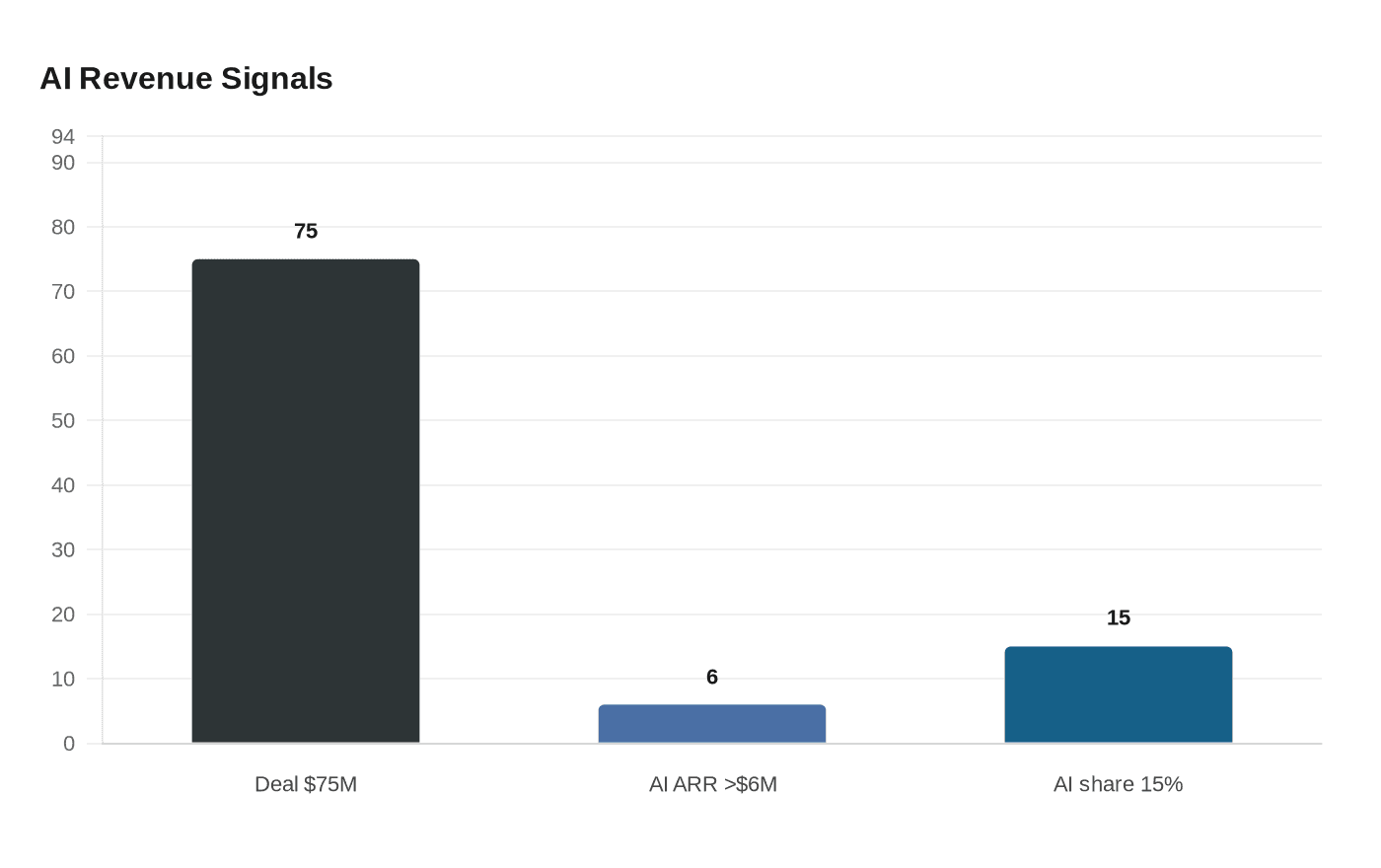
The stakes are also commercial. Asana has been describing itself as the operating system for human-agent teams, and its latest earnings materials showed that AI is already becoming a revenue engine, with AI Studio annual recurring revenue above $6 million and management pointing to AI as a driver of 15% of new ARR. For monday.com sales teams, that changes the conversation with enterprise prospects. The question is no longer whether a platform has AI features. It is whether the platform can safely run the work itself, with controls that satisfy IT, finance, operations, and security.
That is the practical test now facing monday.com inside every roadmap review and enterprise deal cycle. If Asana can buy its way deeper into orchestration, monday.com has to prove its own AI layer is not just smart, but trusted enough to sit in the middle of daily business execution.
This article was produced by Prism’s automated news system from verified source data, official records, and press releases, then run through automated quality and moderation checks before publishing. The system is built and supervised by the people who set the standards it runs under. Read our full AI policy.
Did this article answer your question?