Atlassian’s AI rollout underscores rising pressure on monday.com
Atlassian is collapsing agents, automations, and app building into one layer, and that shifts the buyer question at monday.com from features to operating model.
One prompt, one layer, one harder comparison
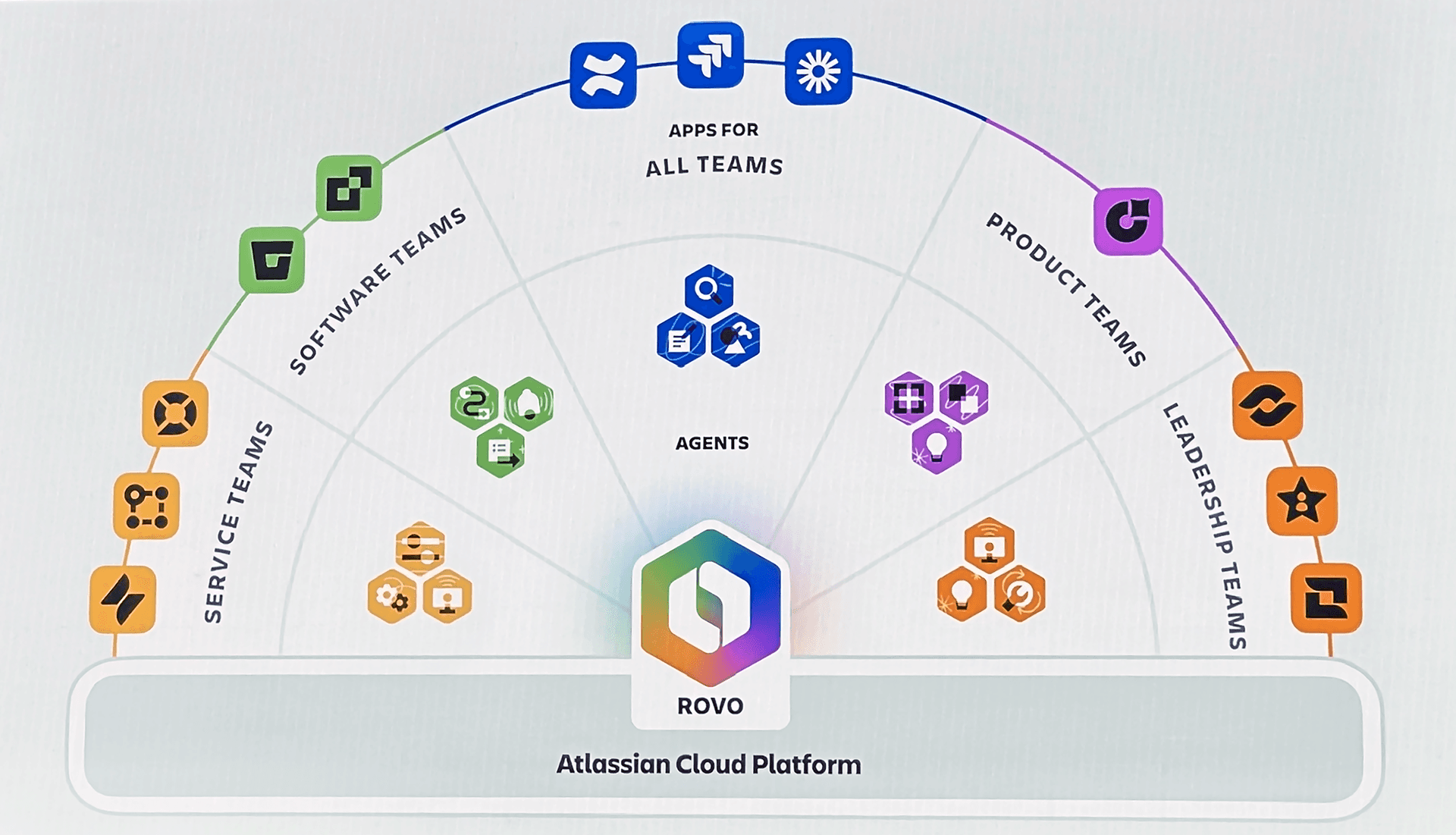
Atlassian’s latest Rovo Studio rollout is not just another AI release. It is a signal that the work-management market is moving toward a single operating layer where agents, automations, and custom apps are built together, governed together, and expected to act on the same work context.

That matters for monday.com because buyers are no longer comparing isolated features. They are comparing whether a platform can truly host the full arc of work, from intake to approval to handoff to execution, without forcing teams to stitch together separate tools for automation, agent behavior, and app building.
Why Atlassian’s move changes the buying conversation
Rovo Studio lets teams build AI agents, automations, and custom apps from a single prompt, with no code required. Atlassian says Studio brings agents, automations, assets, and hubs into one place, which is a subtle but important shift: the company is treating AI as part of the operating environment, not a side panel or a helper chat.
For enterprise buyers, the real value is not that AI can talk. It is that it can work inside Jira with the same project context as teammates, where actions, comments, status changes, and handoffs become operational inputs. That makes the platform easier to defend in a procurement meeting because it looks less like experimental AI and more like a controlled system for executing work.
Atlassian is also putting guardrails around the rollout. Admins can restrict who creates automations, apps, or agents, and the company says Rovo activity is tracked in the audit log, including events such as chat started, agent created, updated, or deleted, and third-party connector created, updated, or deleted. The new Studio experience is rolling out over the coming weeks and may be activated automatically from May 2026, which tells buyers the company is pushing hard to make this model the default.
The pressure point for monday.com
For monday.com, the competitive issue is not simply whether it can match a feature-by-feature checklist. The more serious question is whether buyers now expect one unified environment where app building, automation, and AI behavior are all part of the same product philosophy.
monday.com has already made its own move in that direction. In 2025 it introduced monday vibe as a no-code, AI-enhanced app-building tool and framed the company’s direction as entering a “work execution era.” In its fiscal fourth-quarter and full-year 2025 results, monday.com said monday vibe was the fastest product to surpass $1 million in ARR in company history. That is the kind of metric that gets attention inside a product org because it suggests customers are willing to pay for AI when it is tied to a practical build-and-ship use case.
The company also says more than 250,000 customers worldwide use the platform, which raises the stakes. At that scale, buyers are not just testing novelty. They are asking whether monday.com can keep moving from a flexible work OS into a true execution layer without splitting the experience across too many surfaces.
What buyers will now expect from a work OS
The Atlassian update sharpens the criteria that enterprise teams should use when they evaluate monday.com and its peers. The old question was whether a platform could automate repetitive work. The newer question is whether it can let teams create, govern, and deploy AI-driven workflows without making them manage three separate systems for the same job.
That means procurement conversations are likely to revolve around a few concrete tests:
- Can the platform understand real work items, not just generate text?
- Can an admin decide who builds, who edits, and who can let AI act?
- Can the system show a clear audit trail when an agent changes status, opens a task, or connects to another app?
- Can custom workflows, automations, and agents all live inside one governed environment?
These are not abstract questions. They are the practical concerns of sales managers who want follow-up tasks routed correctly, product teams trying to keep cross-functional launches moving, and engineers who do not want AI touching production-adjacent workflows without oversight.
Governance is becoming part of the product story
The governance angle may be the most important part of Atlassian’s rollout, and it is where monday.com will be judged closely. Atlassian is saying, in effect, that useful AI has to be controllable AI. Its support docs make that explicit through restricted creator permissions, admin visibility into Rovo actions, and logging for both user and system activity.
monday.com already recognizes the same problem. Its support docs say account admins can disable AI capabilities and monitor AI usage through an AI governance section. That matters because adoption inside large companies often stalls not on the promise of AI, but on fear of rogue behavior, unclear permissions, and compliance headaches.
This is where the conversation inside monday.com gets especially real for employees. Product managers have to think less about demo wow factor and more about permissioning, observability, and failure modes. Engineers have to make sure AI features do not become brittle wrappers around existing workflows. Sales teams have to explain why the platform is safe enough for enterprise deployment, not just flashy enough for a pilot.
What this means for monday.com’s next phase
The market is converging around a simple idea: AI, automation, and app building are becoming one layer. Atlassian is pushing that vision from the Jira and Confluence side, with Rovo, Studio, and a governance-heavy enterprise posture. monday.com is pushing from the Work OS side, with monday vibe and a broader no-code story that already has real commercial traction.
That creates a tougher standard for monday.com, but also a clearer one. Buyers will increasingly expect a platform that can translate directly from idea to workflow to agent action without making users jump between disconnected tools. They will also expect that same platform to keep humans in control when the work gets messy, because messy is where most work actually lives.
The companies that win this phase will not be the ones that simply add AI labels to existing menus. They will be the ones that make AI feel like part of the operating system of work. Atlassian just raised the bar, and monday.com now has to prove that its own execution story is more than a slogan.
Know something we missed? Have a correction or additional information?
Submit a Tip