Monday.com guide turns career growth into a measurable roadmap
A career roadmap turns promotion talk into a working system, helping managers reduce attrition with visible milestones, skills, and proof of impact.
Why vague growth talk fails
At monday.com, career development stops being a soft HR promise and starts looking like an operating system. The logic is simple: when advancement is fuzzy, ambition stalls, engagement drops, and even loyal employees begin looking elsewhere. A career roadmap template gives that problem shape by connecting goals to concrete skills, milestones, and next steps, so growth becomes visible instead of something people are expected to intuit.
That matters inside a company built on scale and complexity. monday.com says more than 250,000 customers worldwide use the platform to bring people, workflows, and AI agents together, and that kind of growth tends to multiply ambiguity as fast as it multiplies opportunity. In a business like this, the question is not whether people are busy. It is whether they can see where their work is taking them.
What the roadmap actually changes
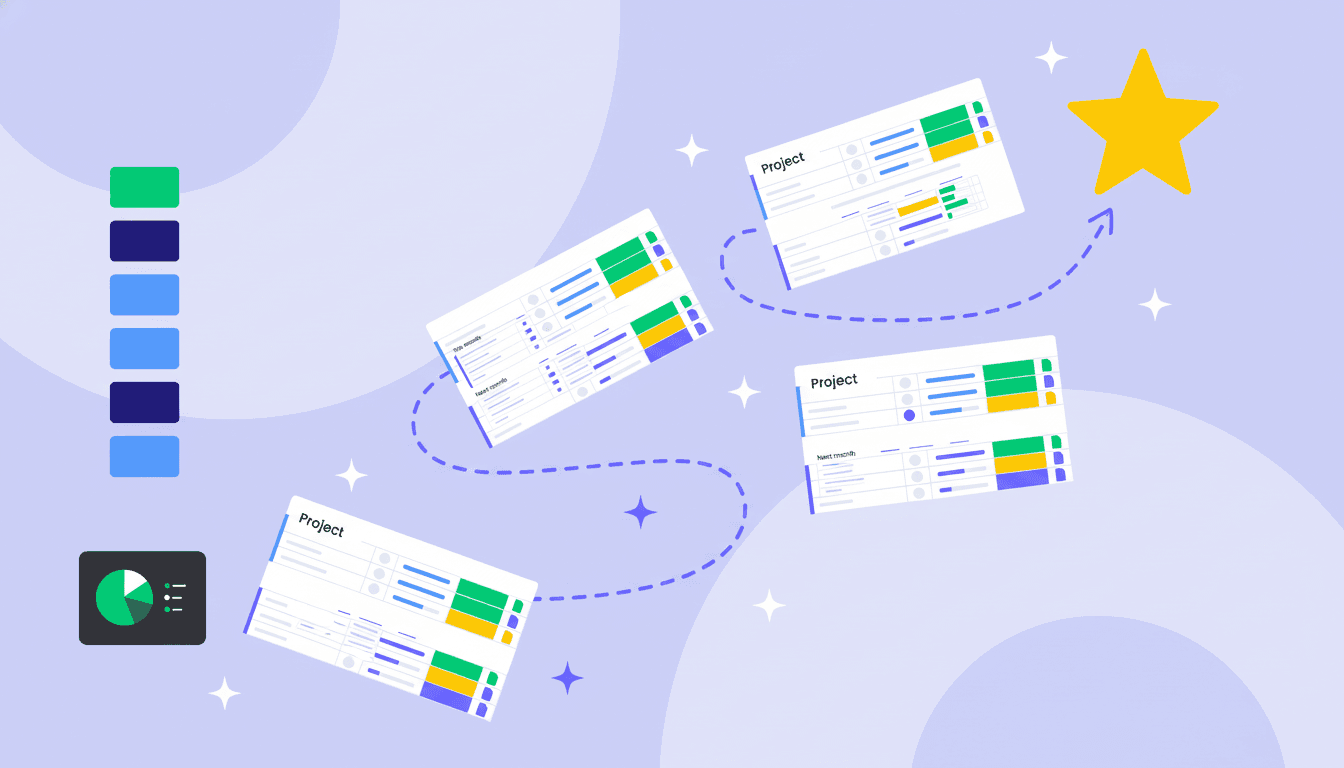
The value of the roadmap template is that it turns a one-time career conversation into a living plan. Instead of asking someone to remember vague feedback from six months ago, the template creates a shared artifact that shows where they are now, what capabilities they need next, and what kinds of projects or experiences would prove they are ready. That makes advancement easier to discuss, easier to track, and harder to leave to memory or vibes.
monday.com’s earlier development plan template already framed development as a way to create a personal career path or framework for employees to reach their fullest potential. The newer career roadmap version sharpens that idea. It is less about a general aspiration to grow and more about visible, measurable progress that managers and employees can revisit as priorities shift.
That is a useful shift for a SaaS company where roles rarely stay still for long. Product cycles move quickly, customer demands change, and the line between individual contribution and leadership can blur. A roadmap helps people keep pace without having to guess what “next level” means.
Why retention depends on clarity
The broader workplace data makes the retention case harder to ignore. Gallup’s retention work highlights “The Great Detachment: Why Employees Feel Stuck” and also notes that 51% of employees are exploring new jobs. At the same time, Gallup says engaged employees have better retention, lower absenteeism, higher wellbeing, and higher productivity. Put those together and the message is blunt: if people cannot see a path forward, they start looking for one somewhere else.
That is why vague promises about future opportunity do not hold much weight. Employees do not leave only because they dislike their current work. They leave when the path from today’s job to tomorrow’s role feels hidden, inconsistent, or dependent on who remembers what in a calibration meeting. A roadmap template reduces that uncertainty by making expectations explicit and revisitable.
Microsoft Viva Glint adds another data point that managers should not ignore. It cites research showing that companies that excel at internal mobility retain employees for 5.4 years, almost twice as long as companies that struggle with it. That is not a nice-to-have benefit. It is a measurable difference in how long organizations keep the people they have already trained.
How managers can operationalize advancement
For managers, the point is not to hand someone a template and call it development. The point is to use the template as a cadence. If career growth is going to affect retention, it needs the same discipline as any other business process: clear inputs, visible milestones, and regular review.
A practical roadmap usually needs four things:
- A current-state snapshot, so the employee and manager agree on what the person already does well.
- A skill map, so the team can see which capabilities separate the current role from the next one.
- Milestones with proof, so progress is tied to specific outcomes, projects, or behaviors rather than broad sentiment.
- A check-in rhythm, so the plan stays active when priorities change.
That last point matters. A roadmap should not live in a document that gets opened only during annual review season. It works best when managers use it in recurring conversations about scope, readiness, stretch assignments, and feedback. That makes advancement legible and prevents the familiar drift where good intentions fade into silence.
The same framework can also help with succession planning and mentoring. If a manager knows which team members are building toward a future leadership slot, they can assign work that actually prepares them for it. If a company wants internal mobility, the roadmap becomes the bridge between ambition and placement.
What it means for engineers, product managers, and sales teams
For engineers at monday.com, the roadmap can clarify the difference between being a strong contributor and operating at a senior or staff level. That is not just about writing more code. It is about showing architecture judgment, influencing technical direction, and making decisions that improve the system beyond one feature cycle.
For product managers, the roadmap should separate shipping features from owning strategy. A PM might already be good at execution, but the next step may require clearer problem framing, stronger cross-functional leadership, and the ability to connect product choices to business outcomes. A roadmap makes those expectations visible instead of implicit.
For sales professionals, the same tool can define what moves someone from reliable execution to broader responsibility, whether that means larger accounts, wider territory ownership, or leadership. In sales, advancement often depends on repeatable performance, but it also depends on judgment, coaching ability, and the ability to handle complexity. A roadmap gives managers a way to identify which of those muscles need building.
Why the company’s growth makes this more urgent
monday.com’s own financial and reporting cadence reinforces why process clarity matters. The company filed its 2024 Annual Report on Form 20-F with the Securities and Exchange Commission on March 17, 2025, and its fourth-quarter and fiscal 2024 results showed revenue of $268.0 million, up 32% year over year, with net dollar retention of 112%. Those are signs of a company expanding fast enough that roles, expectations, and internal paths can shift just as quickly.
That kind of momentum creates opportunity, but it also creates the risk of hidden assumptions. When a platform business scales, people can end up doing more without having a clearer route upward. The roadmap template is useful precisely because it pushes the organization to name the next step, define the proof, and revisit the plan before frustration turns into turnover.
The real test of a career roadmap
The best career roadmap is not the prettiest document. It is the one that keeps people from feeling stuck. It gives managers a way to show what progress looks like, gives employees a way to measure their own growth, and gives the company a better shot at keeping the people who already know how it works.
In a fast-moving SaaS company, that is not a side project. It is part of how retention gets built.
Know something we missed? Have a correction or additional information?
Submit a Tip