ChartMogul metrics guide shows monday.com how SaaS growth really works
At monday.com, SaaS metrics are the operating language, showing when product quality, sales discipline, and customer expansion are really working.

ARR, MRR, and the number everyone should care about
At monday.com, ARR is not finance jargon parked off to the side of the business. It is the shared language that tells product, engineering, sales, customer success, and marketing whether the company is building durable value or just piling on activity. ChartMogul’s cheat sheet is useful for exactly that reason: it turns recurring revenue into something operational, showing how predictable income helps leaders forecast, and how churn or downgrade expose where the business is leaking.
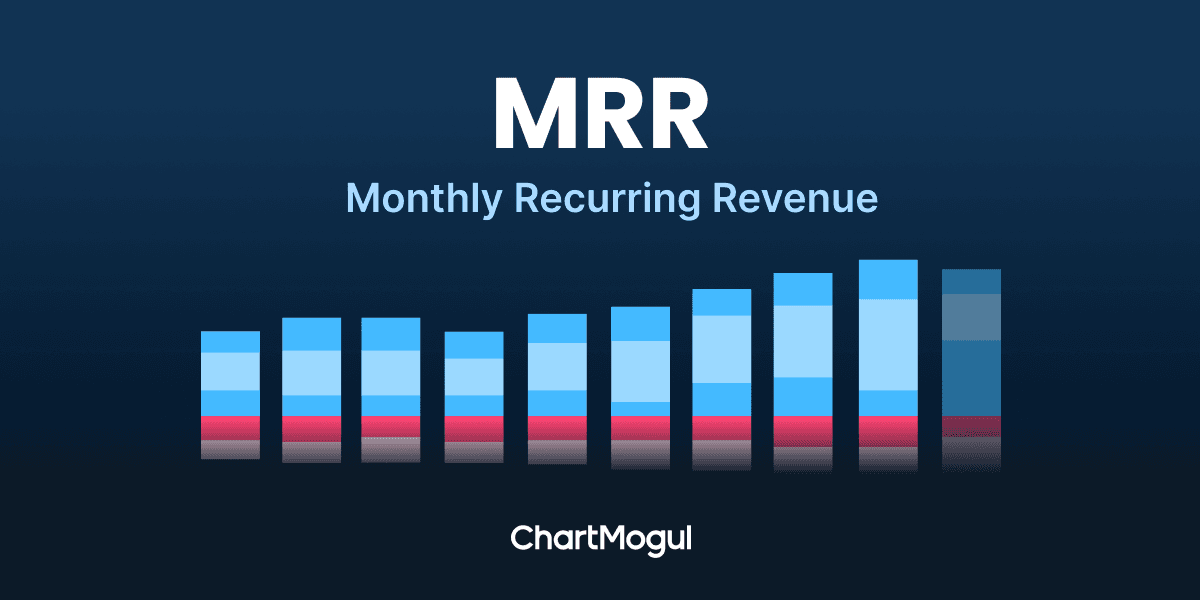
Monthly recurring revenue and annual recurring revenue are the cleanest examples of why this matters. MRR shows the monthly pulse of the business, while ARR shows the scale of that pulse over a year, which is why ARR becomes the number investors and operators keep coming back to when they ask whether growth is real. For monday.com, that lens is especially sharp because the company said it surpassed $1 billion in ARR in August 2024, just a decade after it launched Work OS in 2014.
What churn tells you before revenue starts to wobble
Churn is easy to dismiss as a finance problem until it shows up in the product itself. When customers leave, or when usage never expands beyond a narrow corner of the platform, the cause is often upstream: onboarding friction, a feature that looked promising but never fit daily work, or a sale that overpromised and underdelivered. In other words, churn is often a product and customer-experience signal long before it becomes a revenue problem.
That is why average revenue per account matters too. ARPA helps teams see whether customers are deepening their use of the platform or simply sitting in low-value seats that never turn into durable relationships. At monday.com, where the company said it had 59,214 paid customers with more than 10 users as of December 31, 2024, the question is not just how many customers sign up, but how many become meaningful, multi-user accounts that actually embed the product in their workflow.
Why NRR has become the growth metric that changes the game
Net revenue retention is where the story gets more interesting for a company like monday.com. NRR tells you whether existing customers, after churn and downgrades are accounted for, are still spending more over time through expansion. If ARR is the headline, NRR is the proof that the base is not just holding steady but growing from within.
ChartMogul’s retention research makes the shift plain: among SaaS companies with $15 million to $30 million-plus in ARR, 40% of growth now comes from expansion, up from 30% in early 2021. It also found that the median company with at least 100% NRR grows 48% year over year. That is the core lesson for monday.com teams: new-logo sales still matter, but the engine now depends just as much on whether existing customers adopt more seats, more workflows, and more products.
The company’s own numbers show why that matters. In fourth-quarter 2024, monday.com said overall net dollar retention was 112%, and it was 116% among customers with more than $100,000 in ARR. As of March 31, 2026, the company said its net dollar retention rate was 110%. Those figures suggest that expansion is doing real work inside the base, not just masking weak acquisition.
What each function should read in the same dashboard
For product managers, these metrics are a filter for discipline. A feature launch that boosts usage but complicates onboarding may look impressive in a demo and still fail the retention test, while a feature that quietly expands account usage across teams can show up later as higher NRR and better ARR quality. On monday.com, that distinction matters even more now that the company describes itself as an AI work platform with a shared AI layer across work management, CRM, service, and dev, which means cross-sell and expansion are part of the same product system rather than separate businesses.
For engineers, the connection is just as direct. Reliability, performance, and AI quality are not abstract technical virtues when a platform is trying to hold onto customers and expand their usage. If the product slows down, breaks trust, or makes AI outputs feel unreliable, churn rises and NRR suffers, which is why technical quality is part of revenue quality.
For sales and marketing, the lesson is that deal count is not the same thing as deal quality. A large pipeline can still produce weak ARR if customers never expand, and a healthy customer base can still underperform if acquisition targets the wrong segments. monday.com’s reported 4,547 customers over $50,000 in ARR as of March 31, 2026 suggests the company is leaning hard into larger accounts, where expansion economics and retention discipline matter even more.
Why monday.com’s public numbers make this more than theory
monday.com’s financial disclosures put a concrete frame around the metric stack. The company reported fourth-quarter 2024 revenue of $268.0 million, up 32% year over year, and fiscal 2024 revenue of $972.0 million, up 33% year over year. It also said 2024 brought record non-GAAP operating income, record GAAP and non-GAAP operating margins, and free cash flow, which is a reminder that efficient growth is the real prize, not growth at any cost.
That is also why the company’s public-market timeline matters. monday.com said its shares began trading on Nasdaq under the ticker MNDY on June 10, 2021, and it later filed its 2024 annual report with the Securities and Exchange Commission on March 17, 2025. For employees watching investor sentiment, hiring plans, or product priorities, the numbers are now tightly linked: the market will keep rewarding growth that comes with retention, expansion, and efficiency, not just more logos.
The bigger takeaway is that monday.com is already past the stage where raw customer count tells the whole story. With more than 250,000 customers worldwide, a growing base of larger accounts, and expansion doing more of the work that once fell to new sales, the company is living the SaaS playbook ChartMogul describes. At this scale, ARR, MRR, churn, ARPA, and NRR are not separate finance terms. They are the operational language that decides what gets built, what gets sold, and what gets fixed next.
This article was produced by Prism’s automated news system from verified source data, official records, and press releases, then run through automated quality and moderation checks before publishing. The system is built and supervised by the people who set the standards it runs under. Read our full AI policy.
Know something we missed? Have a correction or additional information?
Submit a Tip