DOL guidance shows how flexible schedules work at monday.com
Flexible schedules only work when coverage, core time, and handoffs are explicit. The Labor Department’s rules show why monday.com teams need operating discipline, not vibes.
Flexible schedules are not a perk bucket or a culture slogan. The Labor Department treats them as an agreement about how work gets done, and that is exactly why they matter for monday.com teams that have to balance coverage, response times, and cross-time-zone collaboration.
What the Labor Department actually means by flexible
The department defines a flexible work schedule as an alternative to the traditional nine-to-five, forty-hour week, with employees varying arrival and departure times and, in some cases, working around a required daily core time. That framing matters because it makes flexibility sound less like freedom in the abstract and more like a deliberately designed operating model. The Fair Labor Standards Act does not itself address flexible schedules, so the baseline is not a federal template but an arrangement between employer and employee, or the employee’s representative.
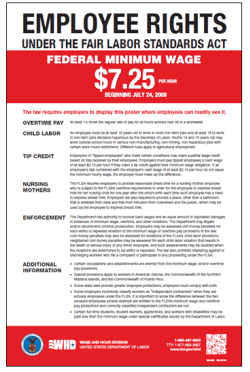
That same legal structure is a useful reality check for managers. The FLSA sets minimum wage, overtime pay, recordkeeping, and youth employment standards, but it does not require extra pay for weekend or night work. The federal minimum wage under the law is $7.25 an hour, effective July 24, 2009, and employers may generally change scheduled hours without prior notice or consent unless another agreement applies. In other words, the law creates a floor, not a playbook.
The department’s language around fluctuating workweek schedules sharpens the point further. It describes schedules in which hours may rise or fall from week to week, which is a reminder that “flexibility” can mean variable hours, not just a later start or earlier finish. For any team leader, that is the real distinction: flexible does not automatically mean predictable, and predictable does not automatically mean rigid.
Why this lands differently at monday.com
For monday.com, this is not a theoretical HR debate. The company’s remote-collaboration guidance stresses shared communication standards, clear workflows, and a central digital workspace, then pushes teams to define when to use calls versus written updates and to set response expectations that work across time zones. That is the management layer where flexible schedules either succeed or collapse.
The company’s own distributed-team coverage makes the problem concrete. One example describes a 30-person team spread across San Francisco, New York, and Ljubljana, Slovenia, which is enough geographic spread to turn a simple meeting into a scheduling puzzle. Team-calendar guidance makes the same point from another angle: coordination gets tricky when employees are scattered across home offices and time zones. If people do not know when they are expected to be available, the calendar becomes noise instead of infrastructure.
That is why flexibility inside a company like monday.com should be read as an operational choice. For a sales team, the challenge is coverage across customer hours and handoffs between regions. For a product team, it is preserving enough overlap for decisions, reviews, and debugging without forcing everyone into the same clock. For both, the point is not whether people can log in from home; it is whether the work still has a reliable rhythm.
The schedule question is really a coverage question
A good flexible schedule starts with the work, not the perk. If a team needs live customer coverage, the model has to guarantee that someone is available when the queue is active. If the work is more project-based, the model can tolerate more asynchronous execution, but only if handoffs are written down and deadlines are visible. And if the team spans the United States and Europe, the schedule has to make overlap hours explicit rather than assumed.
That is where a required core time can help. The Labor Department’s guidance makes clear that some flexible schedules still require employees to be present during a daily core window. For monday.com teams, that core window is the part of the day when decisions move, blockers surface, and cross-functional coordination happens. Outside that window, the work can stretch or compress, but the overlap has to be protected.
The other rule managers often miss is that flexibility does not erase accountability. If hours can change and the company can generally change hours as well, then the burden shifts to documentation. Who approves exceptions, who owns response times, and what happens when a handoff slips across time zones are not side issues. They are the schedule.
How support, product, and cross-time-zone work should differ
Support teams need the most explicit coverage rules. Their schedule design has to answer a simple question: who is on duty when a customer needs help? A flexible schedule can work here if the company defines shift windows, escalation paths, and response expectations with enough precision that no one is guessing who owns the next ticket.
Product teams need more collaboration design and less constant overlap. They benefit from protected core hours for planning, design reviews, and technical decisions, then more freedom outside those blocks for deep work. monday.com’s guidance on using calls versus written updates fits this model well: live conversations should be reserved for moments that need fast resolution, while status, context, and handoffs should travel in writing so people in different time zones can pick them up later.
Cross-time-zone work needs the strictest communication norms of all. A team spread across San Francisco, New York, and Ljubljana cannot survive on informal availability. It needs shared workflows, a central workspace, and clear rules for how quickly people respond, what gets escalated, and which tasks can wait until the next overlap window. Without that structure, flexibility turns into invisible overtime for one region and missed context for another.
What a durable flexible schedule looks like
- the daily or weekly core time
- which conversations require a call
- which updates belong in writing
- who handles coverage when someone is offline
- how exceptions get approved
The best flexible schedule is usually the one that makes the fewest assumptions. It specifies:
That kind of structure is not a sign that a company distrusts its people. It is the opposite. It shows that managers are designing around the fact that work now moves across home offices, time zones, and asynchronous handoffs. The Labor Department’s guidance makes clear that flexibility is an agreement, not a promise of vagueness. monday.com’s own remote-work playbook points in the same direction: if the company wants remote-friendly schedules, it has to be disciplined about time, communication, and manager expectations.
That is the real lesson for a modern software company. Flexible schedules work when they are treated as part of the operating system, not a benefit added on top of it.
This article was produced by Prism’s automated news system from verified source data, official records, and press releases, then run through automated quality and moderation checks before publishing. The system is built and supervised by the people who set the standards it runs under. Read our full AI policy.
Did this article answer your question?