Forbes pits monday.com against Asana on pricing and usability
The first 90 days decide this matchup: monday.com saves more time for cross-functional visibility, while Asana stays leaner for smaller teams and simpler setups.
The real tradeoff is speed versus simplicity
For team leads under budget pressure, the most useful question is not which platform is “better.” It is which one pays back faster in the first 90 days, when onboarding friction, seat minimums, and workflow sprawl matter more than polished feature grids. Forbes Advisor’s comparison lands in the right place because both monday.com and Asana can handle project and task management, collaboration, automation, integrations, and dashboards. The difference is how quickly each tool turns into something people actually use.

monday.com tends to win when the job is to make work visible across functions without forcing everyone into a rigid system. Asana still has the edge when a team wants a cleaner, simpler starting point and can live with a more straightforward workflow model. That is the practical tradeoff hiding inside the pricing pages and customer stories: monday.com is usually the stronger “work OS” for adoption and visibility, while Asana is often the easier fit for smaller, more contained teams.
Pricing matters, but minimums matter more
Forbes Advisor’s comparison puts monday.com at free, then $12 per user per month with a three-user minimum on paid plans, while Asana starts free and then moves to $13.49 per user per month with a two-user minimum. On paper, that is not a huge gap. In practice, the minimum seat count can decide whether a small team gets to pilot cleanly or pays for more users than it needs on day one.
monday.com’s own pricing page now says pricing starts from $9 per user per month and notes more than 250,000 customers worldwide, which shows how the company wants the market to think about entry cost and scale at the same time. Its support docs also make the packaging more nuanced: monday Work Management and monday dev offer Free, Basic, Standard, Pro, and Enterprise plans; monday CRM offers Basic, Standard, Pro, and Ultimate; and monday service starts at Standard and does not include a Basic plan. The Free plan is only available on monday Work Management. For a buyer trying to stretch budget, that means monday’s cheapest path is not uniform across products, and the “simple” answer depends on which monday module the team actually needs.
Asana’s plan structure is easier to read at a glance. Its current pricing page lists Personal, Starter, Advanced, and Enterprise, and its help center says it transitioned customers from Premium and Business to Starter and Advanced in 2025 with no price increases or loss of functionality. That clarity can matter for managers who just want a predictable path from a small pilot to a broader rollout. Asana also added features such as universal reporting on Starter and unlimited usage limits on both Starter and Advanced, which makes the lower tiers look less like a stripped-down demo and more like a real entry point.
Where monday.com wins: visibility, adoption, and cross-functional work
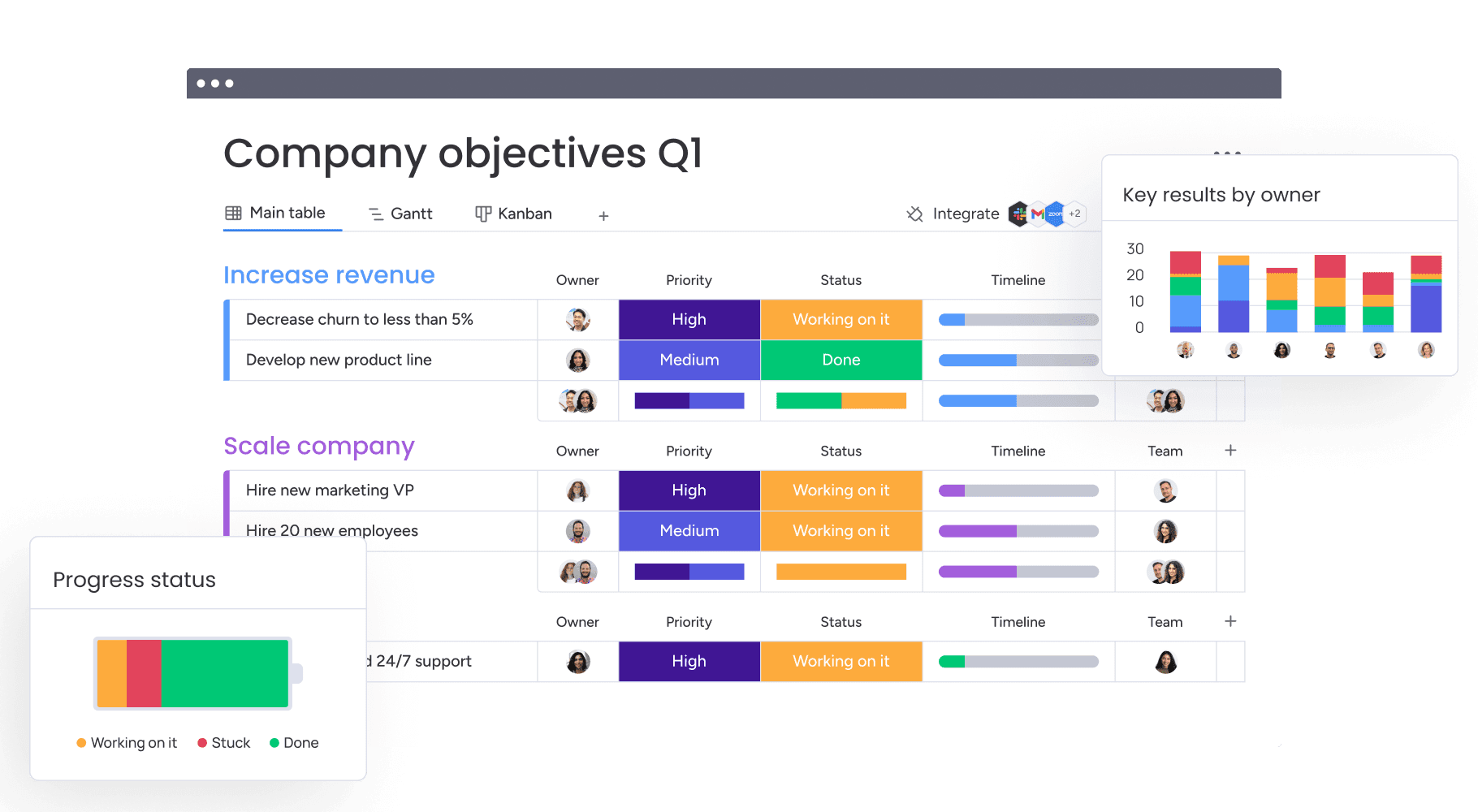
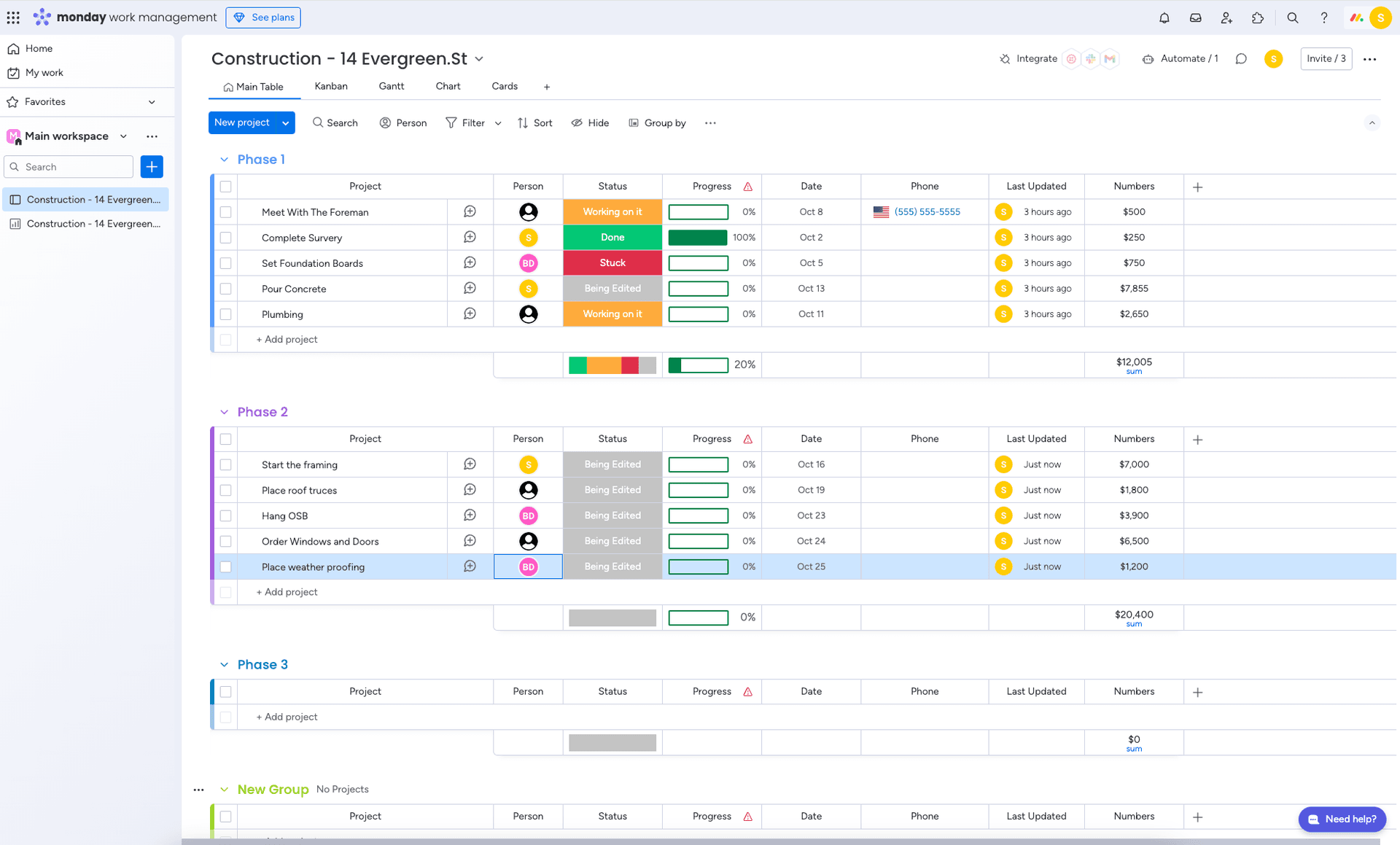
If the team’s biggest pain is scattered work, monday.com is the stronger bet. Forbes’ own review says it is highly user-friendly and especially strong for software development, sales, HR, marketing, and other functions, which is exactly the kind of broad fit that helps a platform spread beyond one department. That matters because the fastest savings usually come from replacing swivel-chair coordination, not just from tracking tasks in a prettier grid.
The customer stories back that up. ThoughtWorks said ease of use and an intuitive interface were important factors in choosing monday.com, and Cloudinary described the platform spreading organically across business development, customer success, finance, and sales. That kind of expansion is the real commercial advantage: one team starts the rollout, then adjacent teams join because the workflow is visible enough to be shared, not because they were forced into it.
monday.com also leans hard into extensibility. Its marketplace and integrations pages emphasize apps, third-party extensions, and official AI connectors, which signals a platform built to stretch as workflow needs grow. For teams dealing with software delivery, sales operations, marketing requests, or internal service work, that flexibility can save time by keeping work in one place instead of stitching together multiple point tools. A business process lead at McDonald’s Australia said monday.com “scored the winner,” which is a useful shorthand for how it often wins: not by being the cheapest, but by being the easiest tool people will actually adopt.
Where Asana still has the edge: cleaner fit and a simpler path
Asana’s advantage is not that it does more flashy things. It is that it often feels easier to explain and easier to govern. The platform’s plan ladder is simpler, its customer messaging is tightly focused on enterprise work management and AI features, and its help center changes in 2025 suggest a company trying to remove friction from the upgrade path rather than multiply packaging complexity.
That simpler fit is valuable for lean teams that do not want a highly configurable operating layer on top of their work. Asana’s pricing structure starts with Personal, then Starter, then Advanced, which makes it easier to map a team’s growth without decoding product-specific packaging. The 2025 move from Premium and Business to Starter and Advanced, with no price increase or loss of functionality, also gives budget-conscious buyers a cleaner story to tell internally: keep the same capabilities, but package them in a way that is easier to buy and manage.
Asana’s customer base reinforces that it is not just a lightweight tool. Its fiscal Q4 and FY2025 results said it had over 169,000 customers, and its AI Studio showed strong early adoption, rapidly growing credit usage, and a multi-million dollar pipeline. The customer roster also includes names like Uber, Pinterest, Airbnb, Amazon, Accenture, Morningstar, Anthropic, and Suzuki. A case study with We Are Era shows how that can scale: the company started with the freemium version and later had 240 employees across eight locations using Asana for 2,500 projects. For teams that want a familiar, centralized project system rather than a deeply customizable work OS, that is a compelling fit.
The company numbers tell you where the strategy is going
The latest performance data suggests monday.com is pushing hard into larger, more complex accounts. In its 2025 results, the company said fourth-quarter revenue was $333.9 million, up 25% year over year, and that customers with more than $50,000 in ARR represented 41% of total ARR. It also said it had record net adds of customers with more than $100,000 in ARR, which is the kind of signal that usually matters to enterprise buyers weighing long-term platform depth.
The quarterly path matters too: monday.com reported Q2 2025 revenue of $299.0 million and Q3 2025 revenue of $316.9 million. At the same time, its customer-facing pages say over 180,000 companies rely on the platform, while investor materials say more than 250,000 customers worldwide use monday.com. Those numbers are not necessarily a contradiction; they likely reflect different definitions or measurement dates, and they underscore how the company is telling two stories at once: broad adoption on the customer side, and larger-scale commercial momentum on the investor side.
Asana’s leadership story is more established and more personally tied to its co-founder, Dustin Moskovitz, who founded the company with Justin Rosenstein and has served as CEO since October 2010. Asana has previously said it empowered over 150,000 customers, millions of users in nearly 200 countries, and generated over $700 million in annual revenue. That history helps explain why Asana still reads as the more seasoned governance play, even as monday.com keeps sharpening its pitch around flexibility, AI connectors, and workflow customization.
The bottom line for team leads
If you need a tool that gets multiple functions working from the same map, monday.com is more likely to save time in the first 90 days. It is strongest when the buyer values usability, visual workflows, dashboards, and cross-team adoption, even if that means paying for higher-tier admin or security features later. If you need a simpler rollout, a smaller-seat pilot, or a cleaner path from free to paid without as much packaging complexity, Asana still has the edge.
That is what makes the comparison useful. monday.com is not just competing on being a project tool, and Asana is not just competing on being familiar. The real test is which platform shortens the distance between work starting and work becoming visible, because that is where budget pressure turns into saved time and fewer coordination failures.
This article was produced by Prism’s automated news system from verified source data, official records, and press releases, then run through automated quality and moderation checks before publishing. The system is built and supervised by the people who set the standards it runs under. Read our full AI policy.
Know something we missed? Have a correction or additional information?
Submit a Tip