Google Vault adds retention rules, litigation holds for Gemini chats
Google Vault now lets admins retain and litigation-hold Gemini chats, putting AI conversations under the same recordkeeping rules as Workspace data.
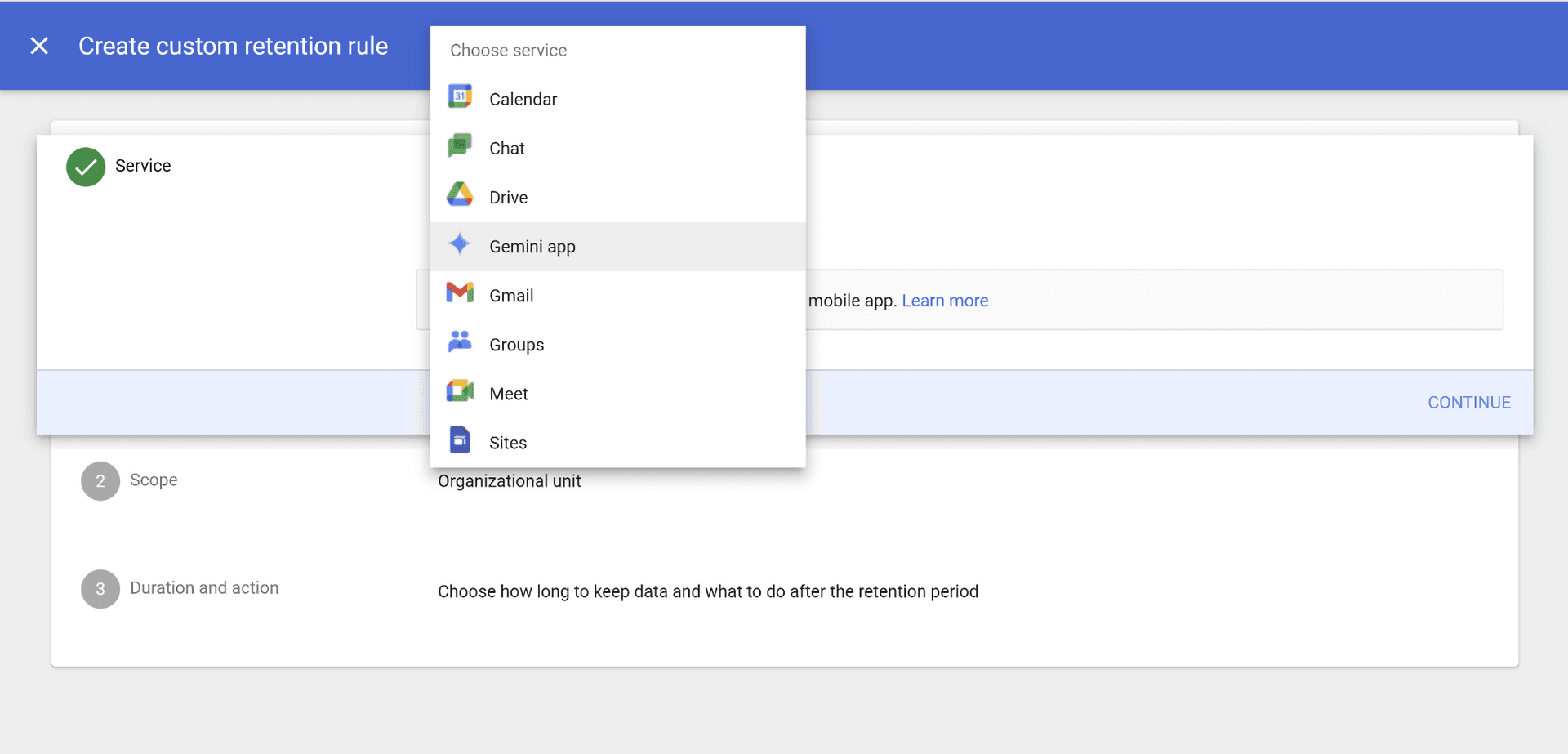
Google just made a clear enterprise statement: Gemini chats are no longer treated like disposable prompts. With its June 11 update, Vault now supports retention rules and litigation holds for Gemini app conversations on web and mobile, bringing Google’s AI assistant into the same records-management system that already handles Google Workspace data.
That matters because Vault is not a side feature. Google describes it as its eDiscovery and information governance tool for Workspace, built to retain, hold, search and export user data. The new Gemini coverage lets administrators create default retention rules, set custom rules by organizational unit or domain, and place litigation holds when legal or compliance demands it. Google had already added Vault search and export support for Gemini conversations on February 4, 2025, then extended that capability to Google Workspace Education Fundamentals customers in May 2025.

The practical hierarchy is even more important than the feature list. Google says Vault retention rules and holds take precedence over Admin console settings, including Gemini conversation history controls, and over user settings. The company also warns that when a retention rule is created or updated, it can take up to 24 hours to propagate. If a rule is set to purge messages, affected conversations may take hours to days to disappear from a user’s view and at least 30 days to be removed from all Google systems.
Google has been moving toward this kind of control for months. In May 2025, it pre-configured Gemini conversation history for admins with history on by default and retention set to 18 months. Conversation history for Gemini in the Workspace side panel began rolling out in March 2026, first to Gemini Alpha, Workspace Labs, Google AI Pro and Ultra users, then to other Workspace users starting no sooner than March 17, 2026. In April 2026, Google also said Gemini Enterprise settings were being centralized in the Workspace Admin console’s Generative AI section, reinforcing the same theme: governance is becoming part of the product surface, not an afterthought.
For monday.com employees, especially in product, security, legal and enterprise sales, that is the buying environment now. monday.com says its own AI governance section gives admins one place to manage and monitor AI across an account, including AI permissions, AI credit usage and usage limits. On the Enterprise plan, admins can use AI permissions, and they can also track credit usage by feature. That is the same market pressure Google is leaning into: enterprise customers want AI, but they also want retention, auditability, admin control and deletion rules.
The lesson is straightforward. In enterprise software, AI readiness is no longer measured only by model quality or feature velocity. It is measured by whether companies can govern the output, preserve the record and prove control when the lawyers, auditors or admins come calling.
This article was produced by Prism’s automated news system from verified source data, official records, and press releases, then run through automated quality and moderation checks before publishing. The system is built and supervised by the people who set the standards it runs under. Read our full AI policy.
Did this article answer your question?