Google Workspace adds Gemini data regions, boosting enterprise controls
Google let admins set Gemini app data regions for the EU, US, or both, pushing AI features deeper into enterprise residency and compliance controls.
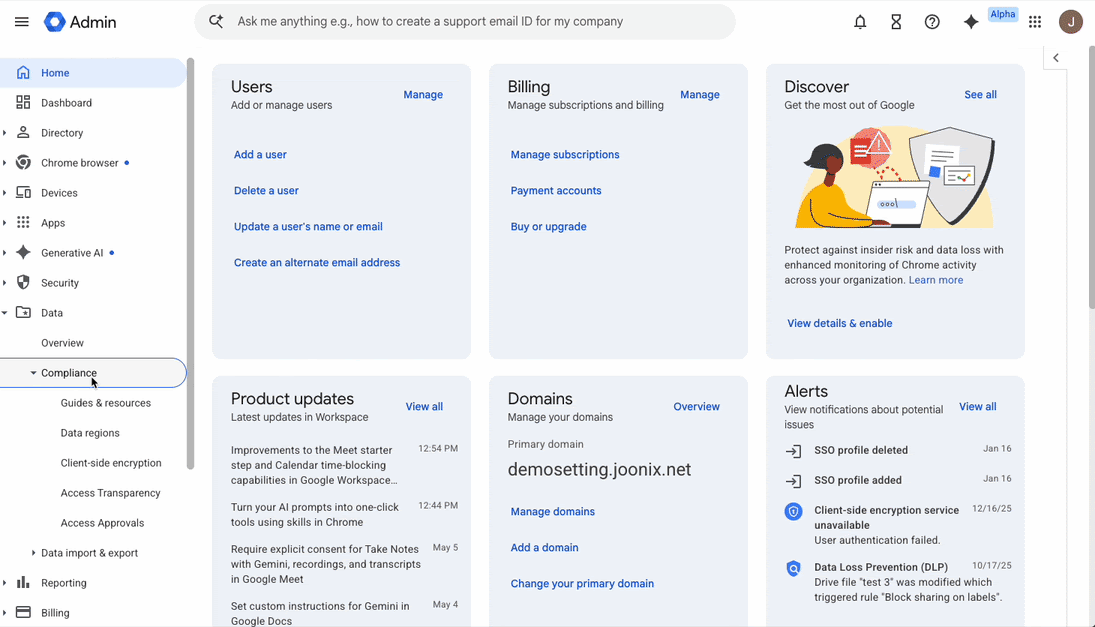
Google added data region support for the Gemini app on June 29, 2026, giving Workspace administrators a new way to control where AI data is stored and processed. The setting lets organizations choose EU storage and processing, US storage and processing, or both, with controls that can be applied down to the organizational unit level.
Google said the update matters because many customers need data regions to satisfy internal rules as well as legal, regulatory, and data-sovereignty requirements tied to data at rest. For enterprise buyers, that turns residency from a back-office trust issue into a front-line procurement requirement, especially when AI touches regulated workflows or cross-border teams that need clearer boundaries around where information moves.

For monday.com, the change lands in a market where security, legal, sales engineering, and enterprise customer success already have to answer the same question in different ways: can this feature be rolled out broadly without forcing a new review of data handling? monday.com’s AI trust materials say its AI follows the same data residency policies as the customer’s monday.com account, customer data is not used to train AI models, and admins can choose whether AI features are enabled within an account. That puts the company in line with the controls enterprise customers are increasingly asking to see before they approve new AI features.
The Gemini update also shows how quickly AI feature launches are becoming a governance conversation, not just a product conversation. If monday.com keeps expanding AI-assisted workflows across work management, CRM, service, and dev, regional data handling will shape whether large customers can move past pilot programs and standardize the tools across regions. Product teams will have to balance stronger admin controls with a user experience that does not become so fragmented that it slows adoption, while enterprise sellers will keep facing due diligence questions about residency, policy enforcement, and auditability.
For a company built on helping teams standardize work in one platform, that is the real buyer-risk issue. AI features now have to sit inside existing enterprise boundaries, not outside them, and Google’s latest Workspace change makes that expectation harder to ignore.
This article was produced by Prism’s automated news system from verified source data, official records, and press releases, then run through automated quality and moderation checks before publishing. The system is built and supervised by the people who set the standards it runs under. Read our full AI policy.
Did this article answer your question?