How monday.com RSUs work, vesting, cliffs and employee value
At monday.com, RSUs are a retention tool, not instant wealth. Vesting, taxes and the company’s growing share count decide when that paper value becomes real.
At monday.com, an RSU grant can look like a shortcut to wealth, but it is really a time lock on stock value. The shares may be promised today, yet the employee only gets them later, usually after staying employed long enough or clearing another condition. For engineers, product managers and sales professionals weighing a package at a fast-moving SaaS company, the real question is not how large the grant looks on paper, but when it turns into stock you can actually keep, sell or count on.
What an RSU really is
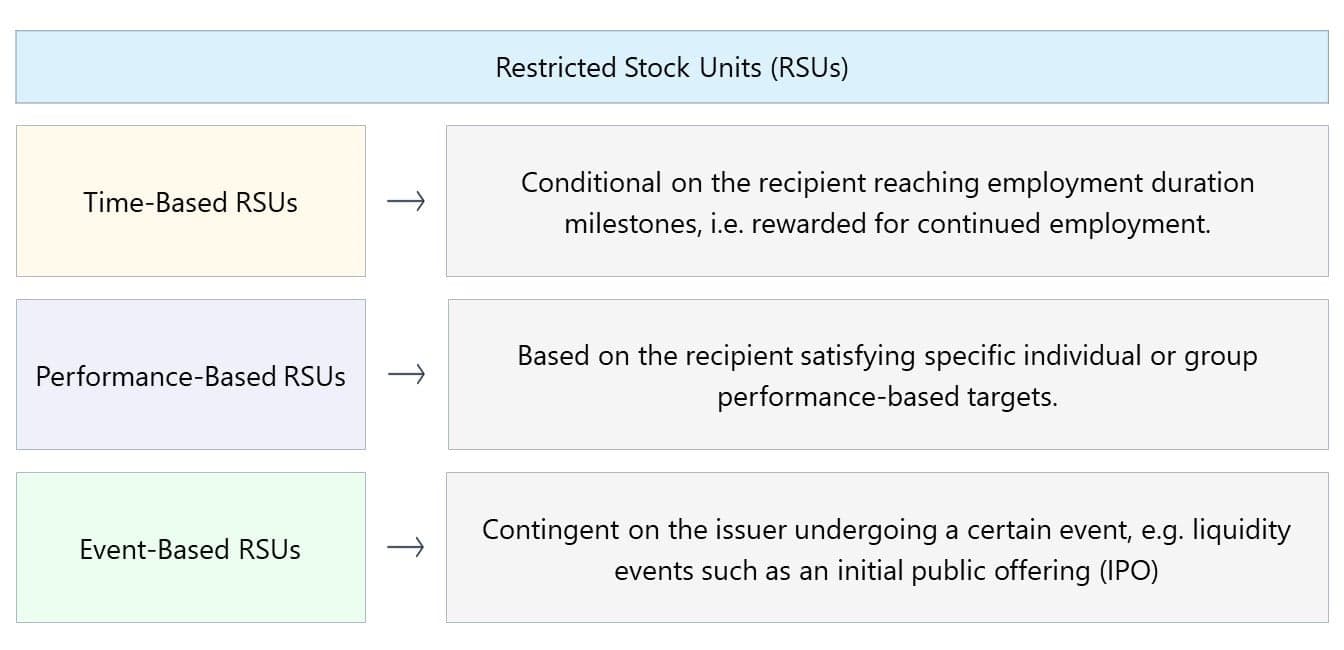
Investor.gov defines a restricted stock unit as an award tied to company stock that is granted now but delivered later, usually after continued employment or performance goals are met. That restricted nature matters. An RSU is not the same thing as owning ordinary shares on day one, and it is not cash in disguise.
That distinction is especially important at a public company like monday.com Ltd., which trades on Nasdaq under the symbol MNDY and lists its principal executive offices in Tel Aviv, Israel. The company also says it has offices in New York, Denver, London, Warsaw, Sydney, Melbourne, São Paulo and Tokyo, a footprint that reflects how global the employee base has become. In that kind of environment, equity is not a side perk. It is part of the compensation architecture.
The practical lesson is simple: the value of an RSU comes from three moving parts, vesting, the company’s stock price, and the rules in the plan. If you ignore any one of them, you can overestimate what the grant is worth.
Vesting is the real gate, and the cliff is the first test
The smartest habit is to read the grant document the way a product manager reads a spec. You need to know when vesting starts, whether there is a cliff, what the schedule looks like after that, and what happens if you leave before the next installment vests. A cliff is the first hard checkpoint, and if you depart before it, the unvested portion usually disappears.
That is why RSUs function as both compensation and retention. They reward staying power, which is useful for a company that wants to keep engineers shipping, product teams building and sellers closing through multiple planning cycles. They also create a quiet pressure point: the closer you get to a vesting date, the more likely you are to weigh loyalty against opportunity elsewhere.
For employees, that means the grant is not just a number. It is a schedule. If you are comparing offers, planning a move or deciding whether to wait for a vesting milestone, you are really deciding whether the next chunk of equity is worth the time you will spend earning it.
- Confirm the vesting start date.
- Ask whether there is a cliff.
- Understand what happens to unvested shares if you resign or are terminated.
- Check whether there are trading windows or blackout periods after vesting.
- Treat the grant as one part of total compensation, not the whole package.
A practical checklist helps:
Taxes can turn a paper gain into a cash problem
One of the biggest mistakes employees make is assuming vested stock equals spendable money. In practice, vesting is often the moment the tax bill arrives. That can create a problem if you are holding shares because you believe in the company, but the tax withholding has already reduced what you actually receive.
This is where RSUs become a financial planning issue, not just a compensation issue. If too much of your net worth sits in one employer’s stock, you are taking on concentration risk. That risk can be easy to miss at a growth-stage company, where the story feels upward and the grant looks generous. A rising stock price can make the award feel like guaranteed wealth. A falling stock price can expose how conditional it always was.
The takeaway for employees is to think in two stages: first, vesting makes the award yours, then taxes and market timing decide how much value you keep. That is a different reality from salary, and it deserves the same level of attention you would give to a bonus plan or a promotion path.
What monday.com’s filings say about the size of the equity bet
monday.com’s public filings make clear that equity is not a small footnote in the compensation mix. In its 2024 Annual Report on Form 20-F, filed on March 17, 2025, the company describes itself as a Nasdaq-listed Israeli company headquartered at 6 Yitzhak Sadeh Street in Tel Aviv. In its later disclosures, monday.com reported unamortized share-based compensation expense of $241.268 million as of June 30, 2025, expected to be recognized over a weighted average period of 1.88 years.
That number matters because it shows how much of the company’s compensation structure is still tied to stock. This is not just a perk for employees or a line item for investors. It is a retention mechanism, an accounting expense and a signal that monday.com is using equity to keep people aligned with the company’s longer-term performance.
The company’s share count also gives a sense of scale. Monday.com reported 50,773,337 ordinary shares outstanding as of December 31, 2024, and 51,160,822 ordinary shares outstanding as of December 31, 2025. That is the public pool against which employee grants are measured, and it helps explain why even a seemingly small grant can matter to the individual employee while still fitting into a much larger capital structure.
RSUs are part of the compensation strategy, not just a promise
The 2025 proxy materials show that monday.com continued using equity in multiple forms, including stock options and RSUs. The compensation committee also determined to pay 2024 annual bonuses in the form of RSUs, instead of cash, totaling approximately $6.1 million. That is a notable signal for workers: at monday.com, equity is not confined to long-term grants. It can also be used to replace money that might otherwise have shown up in a paycheck.
The same proxy materials say that since March 31, 2025, the company granted additional awards of stock options and RSUs covering 285,990 shares of common stock, and those awards were not contingent on stockholder approval. In plain English, the company continued to use equity actively and flexibly, which means employees should expect RSUs to remain part of the package rather than treat them as a one-time windfall.
That is the workplace literacy lesson here. At monday.com, RSUs can create real value, but only if you understand the clock, the tax hit and the company-specific rules that stand between a grant and actual money. The paper value is only the starting point. The real payoff depends on how long you stay, what the stock does and whether you manage the award as part of your broader financial life, not as a guarantee.
This article was produced by Prism’s automated news system from verified source data, official records, and press releases, then run through automated quality and moderation checks before publishing. The system is built and supervised by the people who set the standards it runs under. Read our full AI policy.
Did this article answer your question?