Kakao fails to reach pay deal, union plans June strike
Kakao’s pay talks collapsed over bonus design, pushing workers at five units toward a June strike as trust over shared upside broke down.

Kakao’s wage talks broke down into a strike threat after government-mediated negotiations failed over how compensation should be structured, not just over a single pay number. The Kakao labor union said workers would keep preparing for a June strike after the Gyeonggi Regional Labor Commission halted mediation, following an eight-hour session and a second round of talks that failed to produce a 2026 wage deal.
Kakao said it had negotiated sincerely but could not agree on the compensation structure. Later, the company said union demands for profit sharing were unrealistic and a "big burden" on management as it tried to focus on future business investment and investor interests. The union took the opposite view, saying management had offered "excessive bonuses" only to executives while other issues, including overtime, remained unresolved.

The dispute now reaches beyond one headquarters negotiation. Workers at five Kakao units voted to authorize a strike: Kakao headquarters, Kakao Pay, Kakao Enterprise, DK Techin and XL Games. Some coverage described it as the first companywide strike threat in Kakao’s history, a sign of how quickly compensation disputes can move from a human resources issue to a broader labor conflict when employees stop trusting the formula behind bonuses and performance pay.
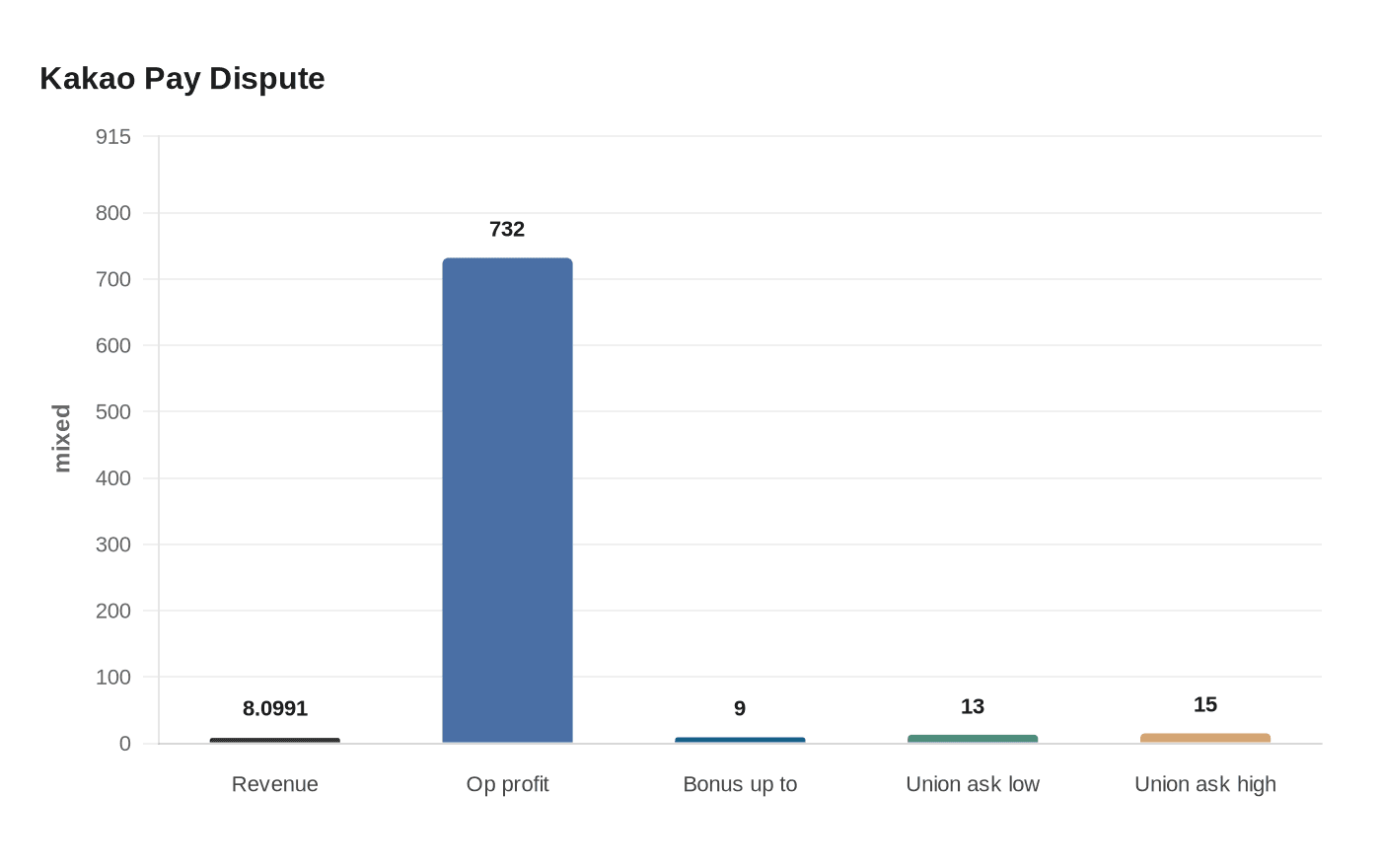
That trust problem is especially sharp because Kakao has been posting record results. The company reported 2025 revenue of 8.0991 trillion won and operating profit of 732 billion won, both all-time highs since founding. Kakao also reportedly paid employees performance bonuses of up to 9% of annual salary, while industry reporting estimated the union was seeking a bonus pool equal to roughly 13% to 15% of operating profit, or about 15 million won per employee based on a headcount near 4,000. The union said it wanted a fairer, more transparent performance-based compensation system and clearer criteria for distributing the company’s growth and achievements.
For tech companies, including SaaS businesses where bonuses, equity and profit-linked payouts are part of the total package, the Kakao fight is a warning. In slower-growth periods, or even after strong financial results, opaque metrics can turn compensation into a flashpoint if workers cannot see how their contribution connects to upside. Kakao’s dispute shows that when leaders cannot explain fairness clearly, pay design stops being a retention tool and starts becoming a labor risk.
This article was produced by Prism’s automated news system from verified source data, official records, and press releases, then run through automated quality and moderation checks before publishing. The system is built and supervised by the people who set the standards it runs under. Read our full AI policy.
Did this article answer your question?