Labor Department clarifies overtime exemptions, salary tests for salaried workers
A salaried label does not decide overtime. Duties, salary basis, and the federal threshold do, and the pay difference can quickly hit take-home pay.

A salaried label does not automatically make a worker exempt from overtime. Federal wage rules say most U.S. employees are due time-and-a-half for hours over 40 in a workweek, and the exemption question turns on what people actually do, how they are paid, and whether they clear the current salary floor.
Why the title on your badge is not the test
The Labor Department’s white-collar exemptions cover executive, administrative, professional, computer, and outside sales categories, but the legal analysis does not stop at the label. To qualify, a worker generally has to satisfy both the duties test and the salary test, and the department is explicit that job titles alone do not determine exempt status. That is the key point workers often miss when a role looks “salaried” but the day-to-day work has shifted into a different lane.
The same logic appears in the regulations themselves. Under Part 541, the exemption framework is split by category, and the salary rules for most of them sit in Subpart G. The eCFR also says exempt executive, administrative, and professional employees must generally be paid on a salary basis at a weekly rate at or above the applicable salary level. In plain English, the question is not whether a paycheck arrives every two weeks. It is whether the worker is salaried in the regulatory sense and performing exempt duties in the regulatory sense.
What the current threshold means right now
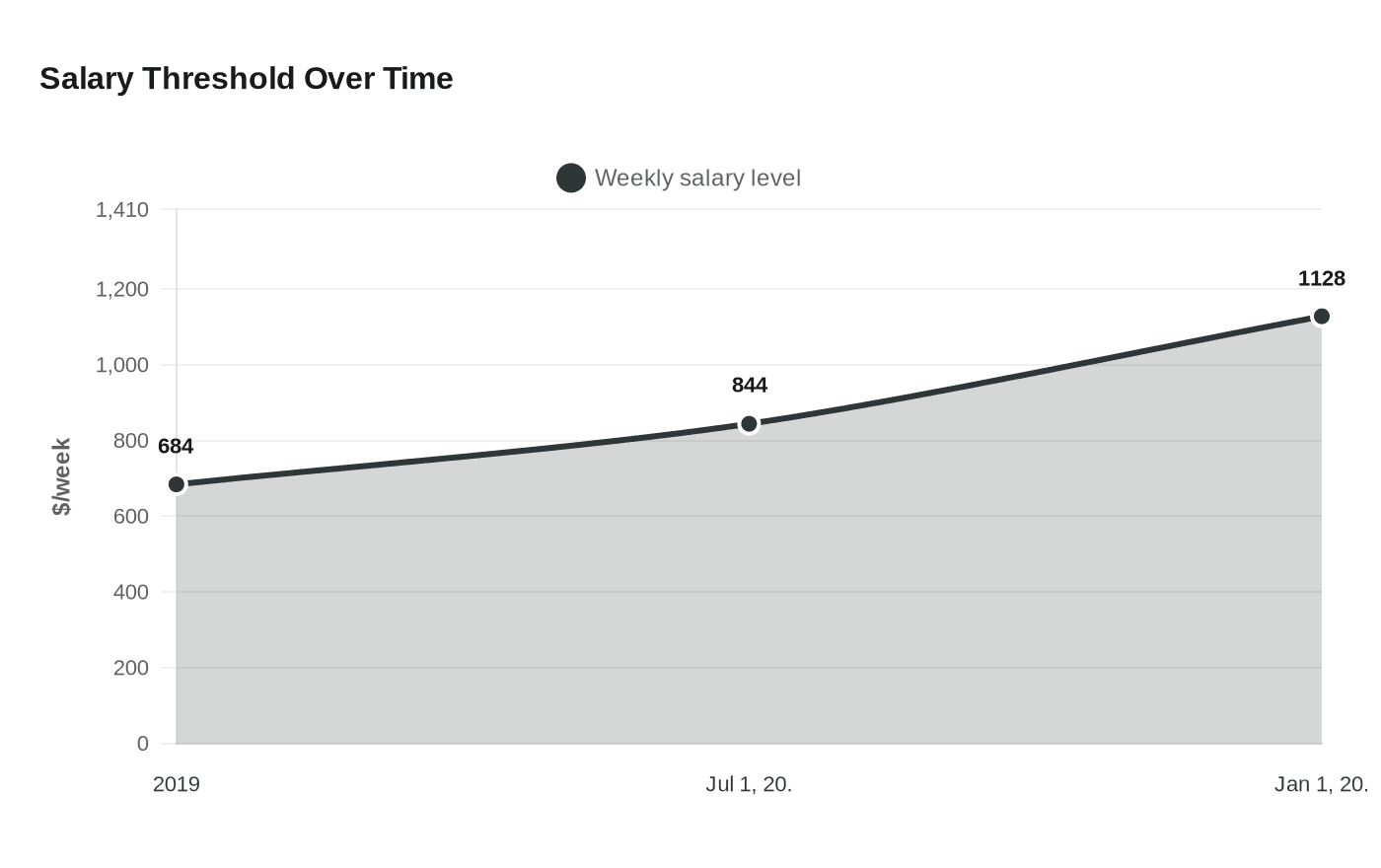
The Department is currently enforcing the 2019 rule’s minimum salary level of $684 per week, along with a total annual compensation requirement of $107,432 for highly compensated employees. That matters because a worker who clears a salary title but not the threshold may still be entitled to overtime, especially if the actual duties do not fit one of the exempt categories. For workers and managers alike, this is the practical test: duties first, pay structure second, title last.
The law also allows a limited amount of flexibility in how pay counts toward the standard salary level. Nondiscretionary bonuses and incentive payments, including commissions, can satisfy up to 10 percent of the standard salary level if they are paid on an annual or more frequent basis. That is useful for compensation planning, but it does not erase the need to check the underlying duties test or to assume a bonus makes a role exempt by itself.
Why the 2024 rule still matters to salaried workers
The reason this topic keeps coming back is that the threshold has been in motion. The Department’s April 2024 final rule would have raised the standard salary level to $844 a week beginning July 1, 2024, and to $1,128 a week beginning January 1, 2025. Labor advocates at the National Employment Law Project said the change would expand overtime protections for millions of workers and help address inflation and stagnant salary thresholds, which is why the legal fight over the rule mattered far beyond Washington.
That rule did not survive intact. On November 15, 2024, the U.S. District Court for the Eastern District of Texas vacated the Department’s 2024 final rule, and the Department says lawsuits over the rule are still pending in two other federal district courts while the United States has filed a notice of appeal. The practical result is that employers are being told to follow the $684 weekly level for enforcement, and the department says it will update its notice if the legal situation changes.
What this means inside monday.com
For a fast-moving SaaS company like monday.com, the risk is role drift. Engineers get pulled into customer escalations, product managers step deeper into cross-functional execution, and sales leaders can spend more time managing process than pure selling. The rule to remember is that exemption follows substance, not seniority, so a role that looked exempt when it was mostly strategic can start to look different if the actual job becomes more operational, more supervised, or more time-tracked.
That makes classification a live management issue, not a one-time HR form. If your scope has changed, if your compensation is partly tied to bonuses or commissions, or if your week regularly runs past 40 hours, the questions worth asking are simple: Am I paid on a true salary basis, does my weekly pay clear the applicable threshold, and do my actual duties fit one of the exempt categories? Those three checks are the difference between assuming overtime is off the table and discovering that take-home pay should look very different.
A quick self-check for salaried workers
- If your title sounds senior but your work is mostly execution, the duties test deserves a close look.
- If your weekly salary is near the federal floor, the exemption may be fragile, especially if your role changes or you move into more hourly-like work.
- If bonuses or commissions make up part of your pay, remember that they can cover only part of the salary requirement, not the whole test.
- If your team expects you to work well past 40 hours during launches, escalations, or customer fire drills, overtime eligibility can have a direct effect on take-home pay.
The bottom line is simple: salary by itself does not settle overtime status. In today’s enforcement environment, the real question is whether the work, the pay basis, and the threshold all line up, and that is a distinction every salaried employee should know before assuming extra hours come free.
This article was produced by Prism’s automated news system from verified source data, official records, and press releases, then run through automated quality and moderation checks before publishing. The system is built and supervised by the people who set the standards it runs under. Read our full AI policy.
Did this article answer your question?