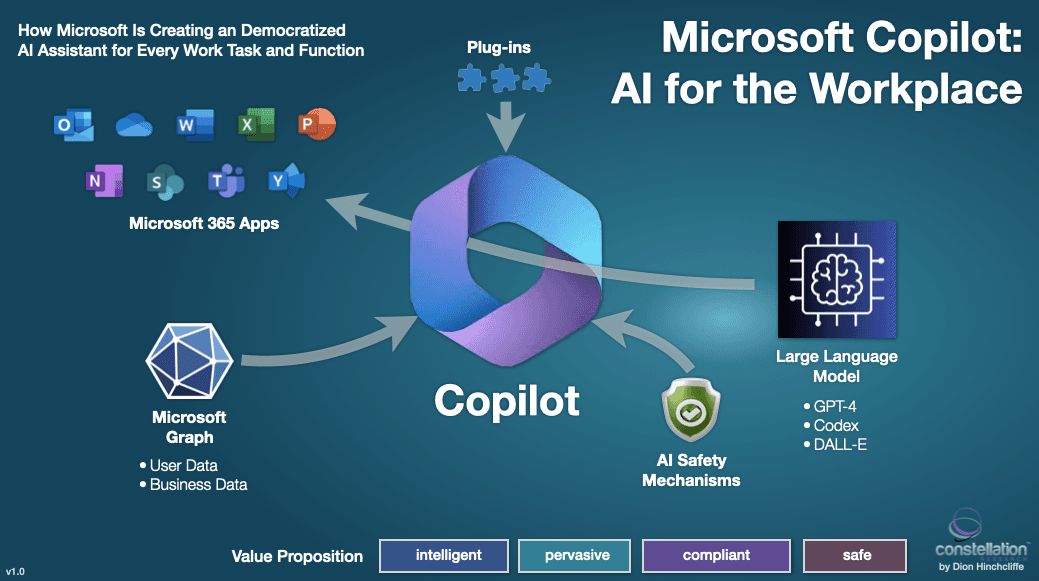
Microsoft shows AI adoption works best with training and clear use cases
Microsoft’s Thailand push shows AI adoption sticks when people get training, clear use cases, and confidence. The real advantage is workflow change, not the tool alone.
The most useful part of Microsoft’s Thailand story is not the education branding. It is the adoption pattern: AI only starts to matter when people can see exactly what it removes from the day, why it is trustworthy, and how to use it without extra friction.
For monday.com, that is the real takeaway. New AI features can look impressive in a launch deck, but they become valuable only when teams have a clear reason to reach for them, a little training to lower the learning curve, and enough confidence to fold them into real work. That is true in a classroom, and it is just as true in a SaaS product org.

AI adoption starts with a workflow problem
In Microsoft’s Thailand example, the clearest value of AI is practical. Tools like Microsoft Immersive Reader are helping students focus and read more confidently, while teachers spend less time on routine tasks and more time on student growth. That is a clean use case, and it is why the story travels well beyond education.
The same logic applies inside monday.com. Engineers do not need another abstract promise that AI will transform work. They need to know which repetitive steps it removes, which users it helps first, and what success looks like when the feature lands in a live workflow. Product managers need the same clarity, because a feature with no obvious job to do usually becomes a pilot, then a slide, then a memory.
Why Wattana Wittaya Academy matters
Wattana Wittaya Academy has joined Microsoft’s Showcase School program under Microsoft Elevate for Educators, which gives teachers and school leaders access to a wider global community, professional development, and resources for integrating AI into teaching and learning. That matters because the school is not presenting AI as a bonus add-on. It is treating AI fluency as part of how learning and leadership now work.
The school’s own identity adds weight to that shift. Wattana Wittaya Academy describes itself as Thailand’s first boarding school for girls, and it operates under the Office of the Private Education Commission. In other words, this is a school with history, not a startup-style lab environment, which makes its willingness to lean into AI much more telling. Traditional institutions are often where new tools either get normalized or quietly stalled.
At the school’s Microsoft Showcase School and AI-for-educator-related events at Microsoft Thailand headquarters in Bangkok’s One Bangkok Tower 4, leaders talked through school development and participation in the 2025 to 2026 Showcase School program. That kind of ongoing relationship matters because it signals implementation, not symbolism. AI adoption usually fails when it is treated as a one-time announcement instead of a repeated habit.
Digital fluency is becoming a leadership skill
The quote that should catch every workplace reader is the one from school leader Lantip Dvadasin: “In today’s world, leadership requires digital fluency and adaptability.”
That sentence lands because it is no longer just an education slogan. It describes what managers, sellers, and builders are being asked to do in every AI-enabled organization. Leaders are not only expected to understand the tools. They are expected to explain them, model them, and help people trust them enough to change behavior.
Microsoft’s Elevate for Educators program is built around that idea. Microsoft describes it as a global community with professional development and resources meant to help educators and school leaders integrate AI into teaching and learning. Its school pathway also makes the ladder explicit: schools can advance to Showcase by demonstrating excellence in technology integration, then reach Beacon, where they lead at scale through strategic AI and technology planning and implementation. That progression is useful because it recognizes that maturity is not binary. Most organizations are not either “AI-ready” or “not ready”; they are somewhere between curiosity and institutional habit.
Thailand’s broader push makes the lesson bigger
The story does not sit in isolation. On June 9, 2025, Microsoft, Thailand’s Ministry of Education, and MHESI launched the THAI Academy - AI in Education project, a national effort to build AI capability across the system. Later reporting said the AI for Teachers project had upskilled more than 160,000 Thai educators and reached more than 3.3 million students nationwide by April 24, 2026.
That scale matters because it shows what happens when AI training moves from isolated pilots to public infrastructure. The point is not that every teacher becomes an AI specialist. The point is that AI literacy becomes common enough to change expectations across the system. Once that happens, “I don’t know how to use this” stops being a neutral excuse and starts looking like a gap in basic professional readiness.
What monday.com teams should take from this now
The lesson for monday.com is not simply “add more AI.” It is to design AI features as habits, not demos. If an internal tool or customer-facing feature needs three extra explanations before it feels useful, adoption will lag no matter how capable the model is.
Product and engineering teams should think about the support layer as part of the product itself. Clear onboarding, plain-language examples, and accessible defaults are not nice-to-haves when AI is involved. They are the difference between a feature people experiment with once and a feature that becomes part of their workday.
Sales teams should take the same cue. Microsoft’s Thailand story works because the value proposition is concrete: help with reading, less routine work, better focus, stronger growth. That is much easier to sell than vague productivity claims. Buyers remember outcomes, not model names, and workers adopt tools that solve a visible problem in front of them.
The accessibility angle is just as important. Immersive Reader is a reminder that AI can broaden participation when it reduces cognitive load, supports different comfort levels, and gives people more confidence with the same task. In any AI rollout, there will be employees who move quickly and others who hesitate because they do not yet feel fluent. Training, mentorship, and accessible design decide whether that gap narrows or hardens into a divide.
The deeper message from Microsoft’s Thailand push is simple: AI adoption is a people system before it is a technology system. The companies that understand that will get more than usage metrics. They will get real behavior change, and that is the only kind that lasts.
Know something we missed? Have a correction or additional information?
Submit a Tip