Monday.com engineers turn to OWASP for stronger API security
monday.com builders can use OWASP’s API checklist to catch auth and data-leak mistakes before integrations reach customers.
The pre-ship check that matters most
Before a partner-facing integration leaves the build queue, monday.com engineers need to answer a harder question than whether the feature works: can it be trusted once it starts moving customer data across systems? In a platform built around workflows, APIs, and connected tools, the most expensive mistakes usually happen at the seams, not in the core product. That is why OWASP’s API Security Top 10 belongs on the desk of anyone shipping authentication flows, permission logic, or new data exchange surfaces.
The appeal of OWASP’s list is that it treats API security as a working discipline, not a branding exercise. The project exists because organizations are deploying sensitive APIs for internal tasks and for third-party connections, yet many of those APIs do not get the rigorous security testing they need. For monday.com, that warning lands with particular force: the company’s value depends on extensibility, and extensibility multiplies the places where something can go wrong.
Why this is a monday.com issue, not just a security issue
In a collaborative work platform, APIs are not an add-on tucked away from the user experience. They are the connective tissue that makes automations, integrations, partner tools, and future AI features feel native to the product. That means a weakness in API design can quickly become more than a backend bug. It can become a trust problem for customers and a delivery problem for internal teams who have to explain why data moved where it should not have moved.
That is also why the OWASP project remains useful beyond the security team. It gives builders, reviewers, and go-to-market teams a shared vocabulary for what safe integration design should look like. A sales engineer talking to an enterprise buyer can point to a real framework, not just a promise, and say that authentication, object-level access control, and data exposure are being treated as design concerns from the start.
What the OWASP Top 10 actually gives builders
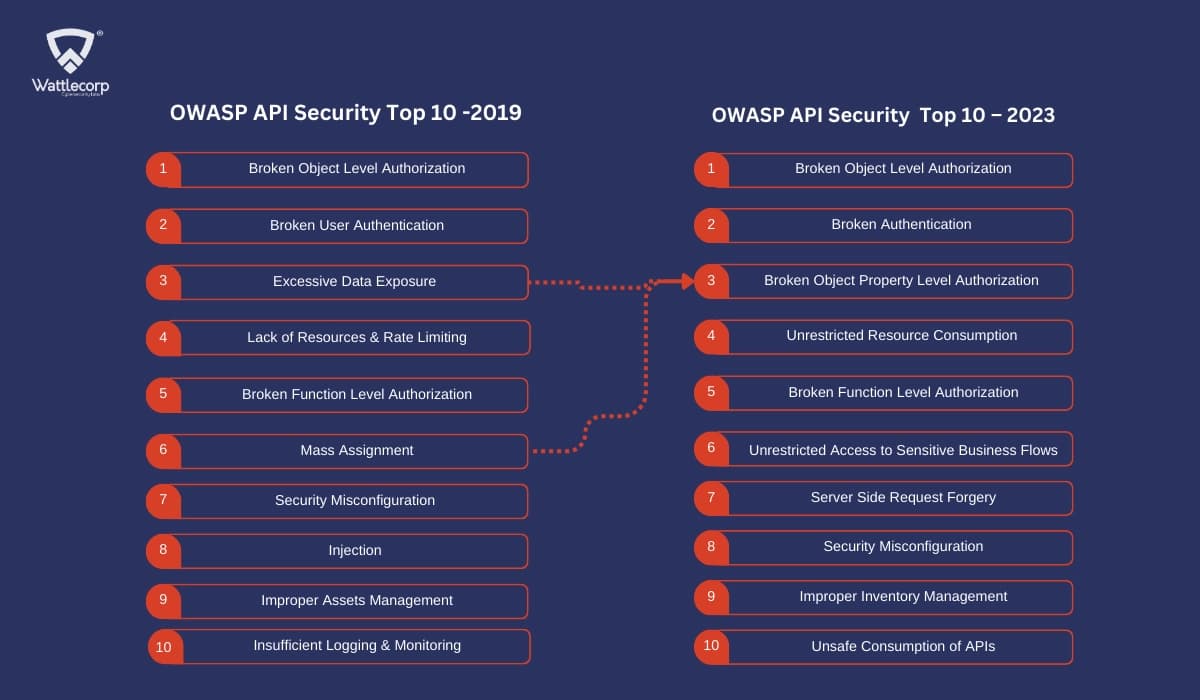
The project is more than a list of bad outcomes. OWASP describes it as a living documentation portal for best practices in building and assessing APIs, with goals that include maintaining the Top 10 API risks, helping developers build APIs securely, and working with the security community as threats evolve. That matters because API risk is not static. The patterns that cause trouble today may not be the same ones that dominated a year ago, especially as products add more automation, more connected apps, and more AI-enabled surfaces.
For monday.com engineers, the practical value is straightforward: the Top 10 can serve as a pre-release checklist during design review, implementation, and testing. If a new integration touches customer records, the team can use the OWASP guidance to ask whether the right user is being authenticated, whether object-level access controls are actually enforced, and whether the interface reveals more data than the workflow needs. Those are the kinds of checks that are easy to postpone and expensive to fix after launch.
The three risk areas monday.com teams should treat as non-negotiable
The notes behind OWASP’s framework point to three especially relevant concerns for a work-OS platform: authentication, authorization, and data exposure. Those are not abstract security terms. They determine whether a token belongs to the right user, whether an API call can see only the data it is supposed to see, and whether a workflow accidentally leaks information into a connected tool.
Authentication is the first gate, but it is not the last one. A valid login or token does not mean every request should be allowed, which is why object-level access control matters so much in collaborative software. Data exposure is the final test: even when access seems legitimate, teams still need to ask whether the API returns unnecessary fields, over-shares metadata, or leaves room for one connector to see more than another should.
For monday.com, these are not theoretical edge cases. A platform that relies on integrations and an expanding ecosystem of connected tools has more entry points, more credentials in motion, and more chances for a small misconfiguration to become a customer-facing incident. The lesson is simple: build the workflow, then challenge the assumptions behind every request that touches it.
A practical before-you-ship checklist for product and engineering
Teams shipping a new API or integration can use the OWASP approach as a concrete review tool rather than a box-ticking exercise. The most useful questions are the ones that force a team to prove its assumptions before customers do.
- Who is authenticated, and what proves that identity end to end?
- What object-level access rules are enforced on every request, not just in the UI?
- Does the API expose only the fields and records the workflow truly needs?
- Could a partner integration infer or retrieve data it was never meant to see?
- Have agent, connector, and integration surfaces been reviewed separately from the core app?
- Would the failure mode be a safe denial, or a silent over-share?
That kind of checklist slows teams down just enough to avoid the worst class of mistakes: the ones that look fine in staging and turn into support tickets, customer escalations, or security reviews once the integration reaches real users.
Why sales and solutions teams should care too
The guidance is not only for engineers writing code. Solution engineers and account teams can use the OWASP list to explain why monday.com’s approach to APIs matters in enterprise conversations. When a customer asks how the platform handles connected tools, the answer should not be a vague assurance that everything is secure. It should show that the company understands the specific failure points that come with workflows, integrations, and external connectivity.
That framing matters because enterprise buyers are not just purchasing features. They are buying confidence that a platform can grow without becoming harder to govern. If monday.com keeps adding AI features, connectors, and extensibility, the security story has to scale with it. The more the platform can do, the more carefully it has to define what each part is allowed to see and do.
The bottom line for monday.com builders
OWASP’s API Security Top 10 stays relevant because it matches the way modern work platforms actually fail: through rushed assumptions, loose permissions, and data that crosses one boundary too many. For monday.com engineers, it offers a shared standard before shipping. For product leaders, it is a reminder that speed and safety are not competing goals. The strongest platform is the one that knows exactly where it can break, and checks those points before customers find them.
This article was produced by Prism’s automated news system from verified source data, official records, and press releases, then run through automated quality and moderation checks before publishing. The system is built and supervised by the people who set the standards it runs under. Read our full AI policy.
Did this article answer your question?