Monday.com explains how sales plans turn targets into revenue
Monday.com’s sales-planning playbook treats the plan as a revenue operating system, not a forecast sheet. That shift matches a market where AI, automation, and handoffs matter as much as quota.
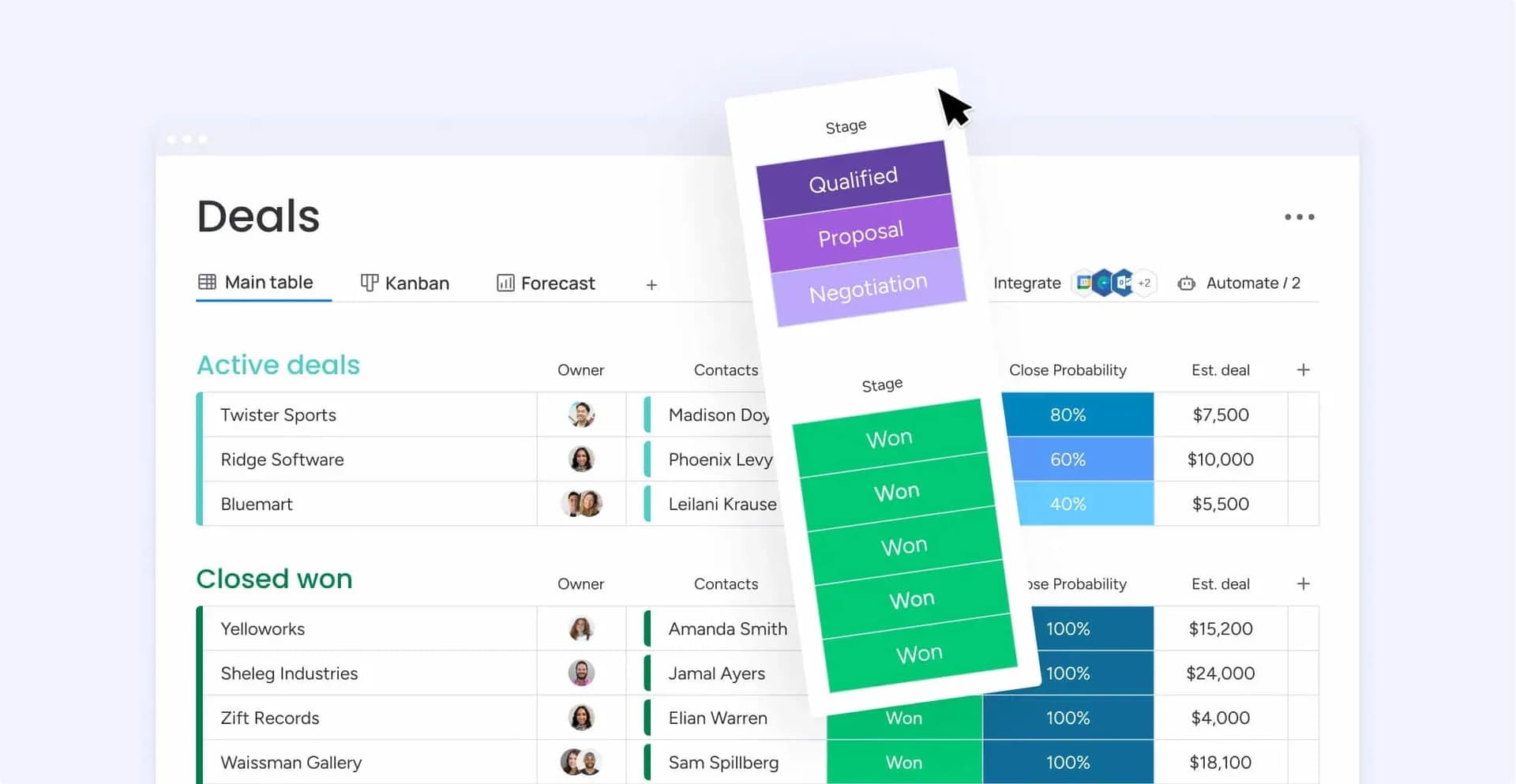
On Jan. 19, 2026, monday.com cast the sales plan as the link between targets and revenue, not just a spreadsheet of expectations. The point is to connect daily selling work to predictable revenue so forecasts stay accurate and performance can be repeated across teams and quarters. That reset is useful for anyone building revenue motions at a company that sells work management software, because the same logic used to organize pipeline is what monday.com asks customers to apply across their own businesses.
Sales planning has become an operating system
A strong plan aligns eight core pieces: market analysis, goals, territories, quotas, processes, compensation, and technology. Revenue performance sits outside the rep’s individual effort, from territory design to the systems that track the work.
The broader sales-plan template casts the plan as a source of truth. It should cover sales goals, tactics, roles and responsibilities, target audience or target markets, and how leads will be handled. That makes it a working operating model, not just a quota sheet, because it assigns responsibility for each handoff.
What the template actually asks teams to decide
monday.com’s 2026 sales-planning material treats the plan as a strategic document that usually spans 12 months, long enough to force tradeoffs. If a team is chasing growth, it has to decide where to focus, what to ignore, and how to divide labor across segments and accounts. The plan should include goals, territory or segment focus, resource allocation, account strategy, messaging, and metrics, making it useful for both internal planning and customer conversations.
Many pipeline problems are really planning problems. If a prospect is missing forecast accuracy, ownership clarity, or visibility into the next step, the conversation is not just about more activity. It is about whether the company has a usable workflow for lead handling, account ownership, and responsibility across sales, rev ops, marketing, and customer success.
Why AI, automation, and collaboration belong in the same plan
In monday.com’s sales-strategy guide, the most effective strategies go beyond quotas and pipelines and are powered by AI insights, automation, and collaborative tools. That is a shift from the old model, where the sales plan was mostly a target-setting exercise and the tooling conversation happened later. In 2026, the tooling is part of the strategy because it shapes whether the team can move quickly enough to stay on plan.
A static forecast-only approach breaks down in a volatile pipeline environment. Deals slip, buying committees expand, and managers need to see where capacity is being used before the quarter is over. A plan that includes processes, technology, and compensation gives leadership more levers to adjust, while AI-driven insights and automation help teams spot risk earlier and reduce the amount of manual reconciliation that slows execution.
What this means for product and engineering teams
For product managers, the sales-plan framing is about coordination. Product, marketing, sales, and customer success cannot operate from different assumptions and still expect the number to land cleanly. A plan that names roles and responsibilities makes those assumptions visible across teams.
For engineers, the relevance is less direct but just as real. When customers repeatedly ask for lead tracking, pipeline automation, reporting, and clearer handoffs, those requests become signals about how revenue teams actually work. That feedback can shape prioritization for monday CRM and for the core platform, especially when the company is selling the idea that work itself should be organized in one system rather than scattered across disconnected tools.
The company’s own numbers show why the framing matters
monday.com reported $1.23 billion in revenue for fiscal 2025, up 27% year over year, and fourth-quarter revenue of $333.9 million, up 25% from a year earlier. Customers with more than $50,000 in ARR represented 41% of total ARR.
In the second quarter of 2025, monday.com reported 3,702 paid customers with more than $50,000 in ARR and 1,472 customers with more than $100,000 in ARR. Net dollar retention was 111% overall and 117% for customers above $100,000 in ARR. By fiscal 2025 year-end, customers above $500,000 in ARR had grown 74% year over year.
Why this story fits monday.com’s product trajectory
monday.com said monday vibe was the fastest product in its history to surpass $1 million in ARR. That kind of launch depends on whether the company can coordinate demand, pipeline, enablement, and post-sale usage around the same plan.
This article was produced by Prism’s automated news system from verified source data, official records, and press releases, then run through automated quality and moderation checks before publishing. The system is built and supervised by the people who set the standards it runs under. Read our full AI policy.
Did this article answer your question?