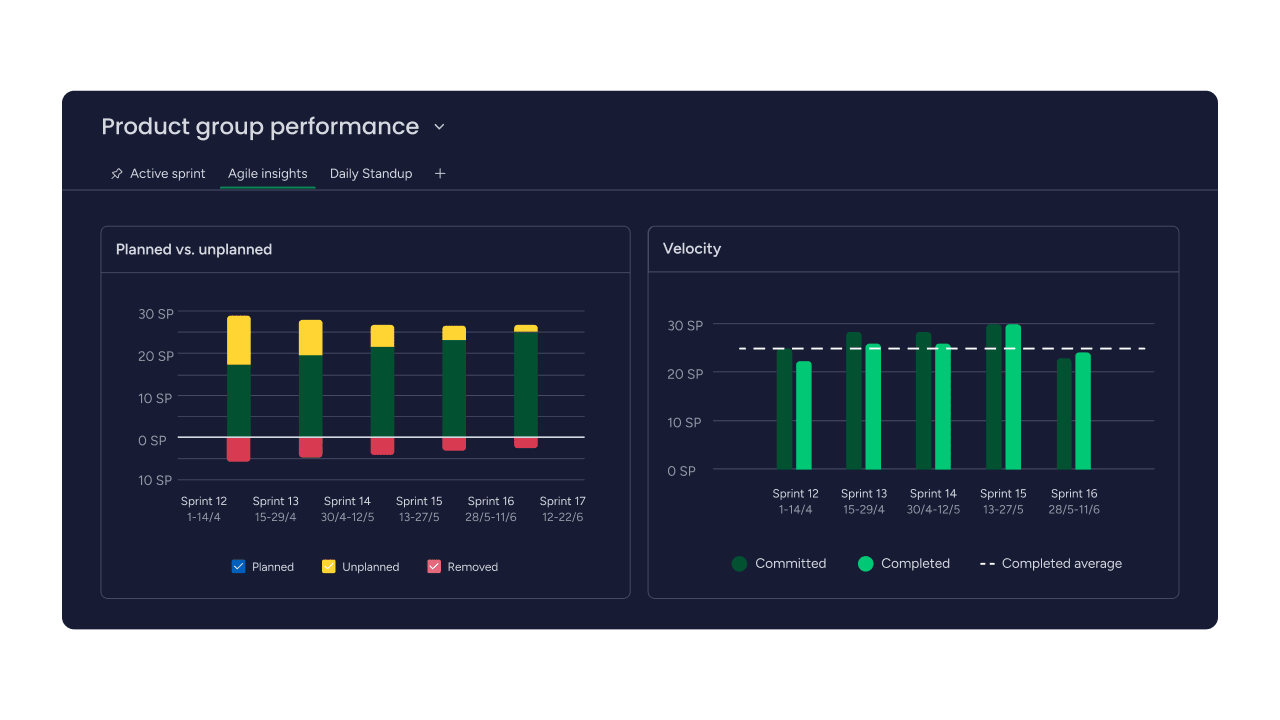
Monday.com guide explains how OKRs turn goals into business impact
OKRs only matter when they leave the slide deck. monday.com’s guide says teams need weekly work, named owners, and measurable checkpoints to turn goals into impact.

An OKR system only changes performance when it changes what teams do on Monday morning. monday.com’s guide makes that case clearly: finishing projects on time is not the same as creating business impact, and the gap between the two is where most goal-setting programs break down.
Why OKRs matter when execution is the real test
The guide frames OKRs as a way to move teams from output thinking to outcome thinking. Output is the easy part to count, because it shows up as completed tasks, shipped features, and closed tickets. Outcome is the harder part, because it asks whether that work actually lifted revenue growth, customer satisfaction, or market expansion.
That distinction matters inside a company like monday.com, where a lot of work can look busy without necessarily moving the business. An engineering sprint can finish cleanly and still miss the point if it does not improve reliability or reduce customer friction. A product launch can ship on schedule and still fail if it does not drive adoption or open a new use case. A sales team can log plenty of activity and still fall short if that activity does not support expansion, retention, or deeper market penetration.
OKRs are built to solve that problem by cascading through the organization. Company-level priorities translate into team goals, and team goals translate into individual work. In practice, that creates a chain of accountability from leadership intent all the way down to the tasks on the board, which is exactly where strategy often falls apart in a scaled software company.
How OKRs differ from the KPIs already on the dashboard
The guide also draws a line between OKRs and KPIs, and that distinction is central to using the framework well. KPIs measure ongoing health, so they tell teams whether the business is functioning as expected. OKRs set stretch targets, so they push the company toward something new.
That separation matters because teams can become very efficient at the wrong things if they only track activity or steady-state metrics. A KPI might show that a process is stable, but an OKR asks whether the team is actually changing the business in a meaningful way. In a SaaS company balancing current execution with transformation, that difference keeps people focused on a small number of outcomes that matter.
monday.com’s emphasis on 90-day cycles reinforces that point. Quarterly horizons are short enough to force review and correction, but long enough to pursue a real business change. They are also far more practical than an annual planning ritual, because they let teams inspect progress before a miss becomes a year-long drift.
Why the framework fits monday.com’s scale
The company behind the guide has outgrown the startup phase where goals can be explained in a single all-hands meeting and then left alone. monday.com says over 250,000 customers worldwide use its platform, and as of March 31, 2026 it reported 3,211 employees, 4,547 customers over $50,000 in annual recurring revenue, and a 110% net dollar retention rate. It also said it surpassed $1 billion in annual recurring revenue in 2024.
Those numbers help explain why OKRs matter so much there. At that scale, every team is working inside a business that has to keep expanding without losing control of the product, the customer experience, or the sales engine. monday.com reported fourth-quarter 2024 revenue of $268.0 million, up 32% year over year, and full-year 2024 revenue of $972.0 million, up 33% year over year. That kind of growth is impressive, but it also raises the bar for alignment because the company cannot rely on informal coordination forever.
The company also describes itself as an AI work platform, with work management, CRM, service, and dev products running on the same AI layer. That product mix makes execution even more complex. Engineering teams need to understand how platform reliability affects adoption across product lines. Product managers need to tie roadmap decisions to the business outcomes those products are meant to unlock. Sales teams need a clear line from account work to expansion and retention. OKRs are useful precisely because they force those links into the open.
The Intel origin story still explains why OKRs work
The history behind OKRs helps explain why monday.com treats them as more than management theater. OKRs originated at Intel under Andy Grove, who developed the system after earlier management approaches failed to emphasize execution strongly enough. What Matters says Grove’s approach helped Intel shift from memory chips to microprocessors, and that Intel’s revenues grew from $1.9 billion to $26 billion under his leadership.
That origin story matters because it shows OKRs were built for strategic change, not for administrative tidiness. John Doerr learned about OKRs while interning at Intel in the 1970s, then later helped popularize them at companies including Google and Amazon. What Matters describes five superpowers built into the system: focus, alignment, commitment, tracking, and stretching goals. Taken together, those are less about paperwork than about making sure a company’s ambitions survive contact with the calendar, the backlog, and the sales funnel.
For a fast-growing SaaS company, that heritage is especially relevant. The hard part is rarely writing a good-sounding objective. The hard part is creating a discipline that forces every team to show how this quarter’s work actually advances the business.
What this means for teams inside monday.com
Inside monday.com, the best use of OKRs is not as quarterly leadership language that lives above the work. It is as a practical system for connecting the strategy deck to the weekly plan. That means each objective needs a visible owner, each key result needs a real measure, and each team needs checkpoints that reveal whether the work is changing the business or merely filling time.
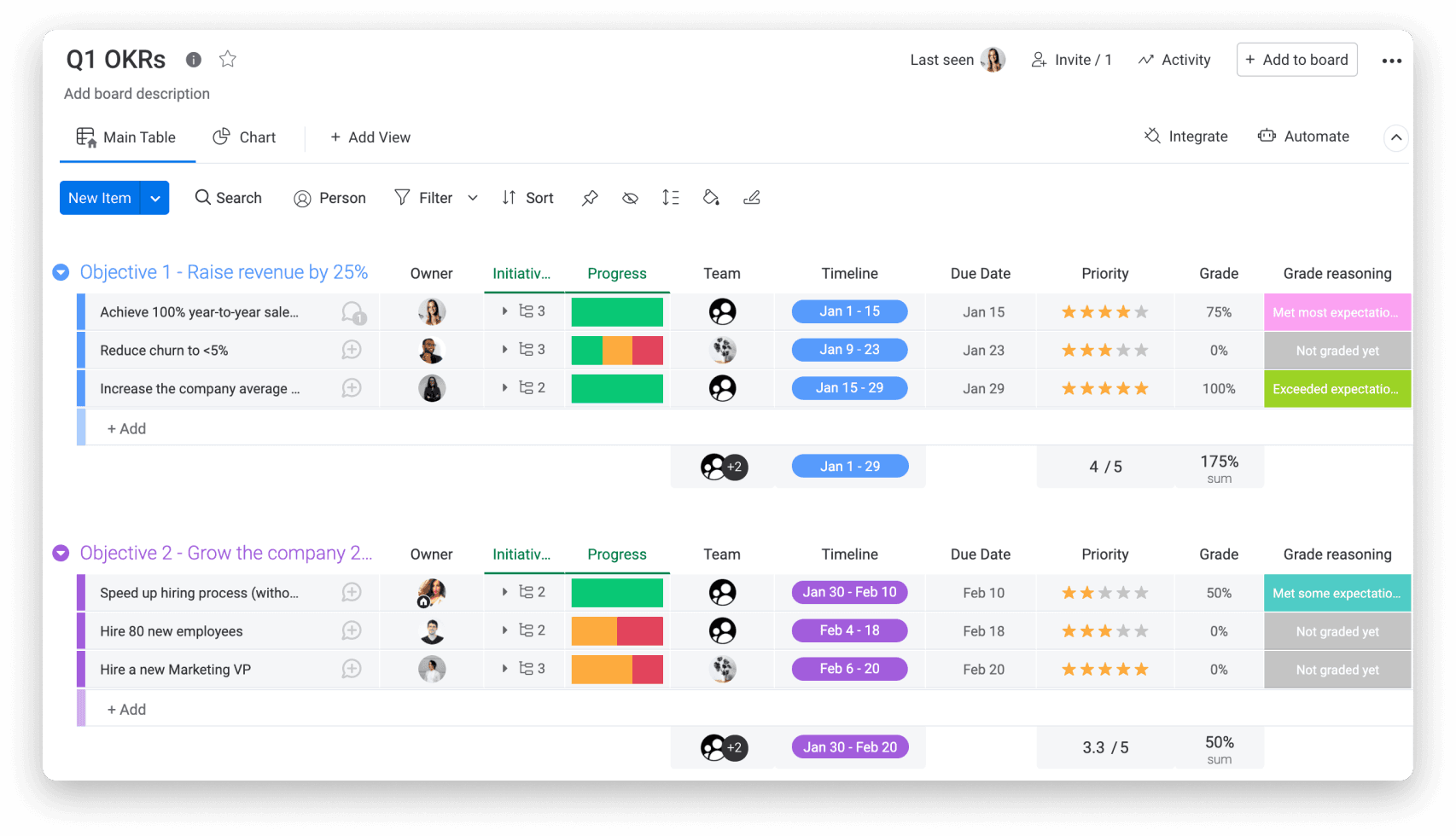
For engineers, that often means linking a sprint goal to reliability, performance, or customer friction. For product managers, it means translating roadmap choices into outcomes such as activation, retention, or expansion. For sales professionals, it means connecting activity to account growth, market penetration, and customer value that lasts beyond the quarter.
The most useful OKR rhythm is simple to describe and hard to fake:
- Pick a small number of outcomes that matter more than raw output.
- Assign an owner who is responsible for the result, not just the activity.
- Review progress weekly, not only at quarter end.
- Use KPIs to monitor health, but reserve OKRs for stretch change.
- Adjust fast when the work stops matching the goal.
That is the real lesson in monday.com’s guide. OKRs do not create impact because they sound disciplined. They create impact when they force teams to turn strategy into visible work, measurable checkpoints, and clear accountability. At monday.com’s scale, that is the difference between a company that keeps shipping and a company that actually moves.
This article was produced by Prism’s automated news system from verified source data, official records, and press releases, then run through automated quality and moderation checks before publishing. The system is built and supervised by the people who set the standards it runs under. Read our full AI policy.
Did this article answer your question?