Monday.com guide frames project management as strategy-to-delivery connector
Project management breaks cross-functional chaos only when it owns dependencies, deadlines and accountability, not just task lists. monday.com’s guide treats software as the delivery layer, not a nice-to-have.
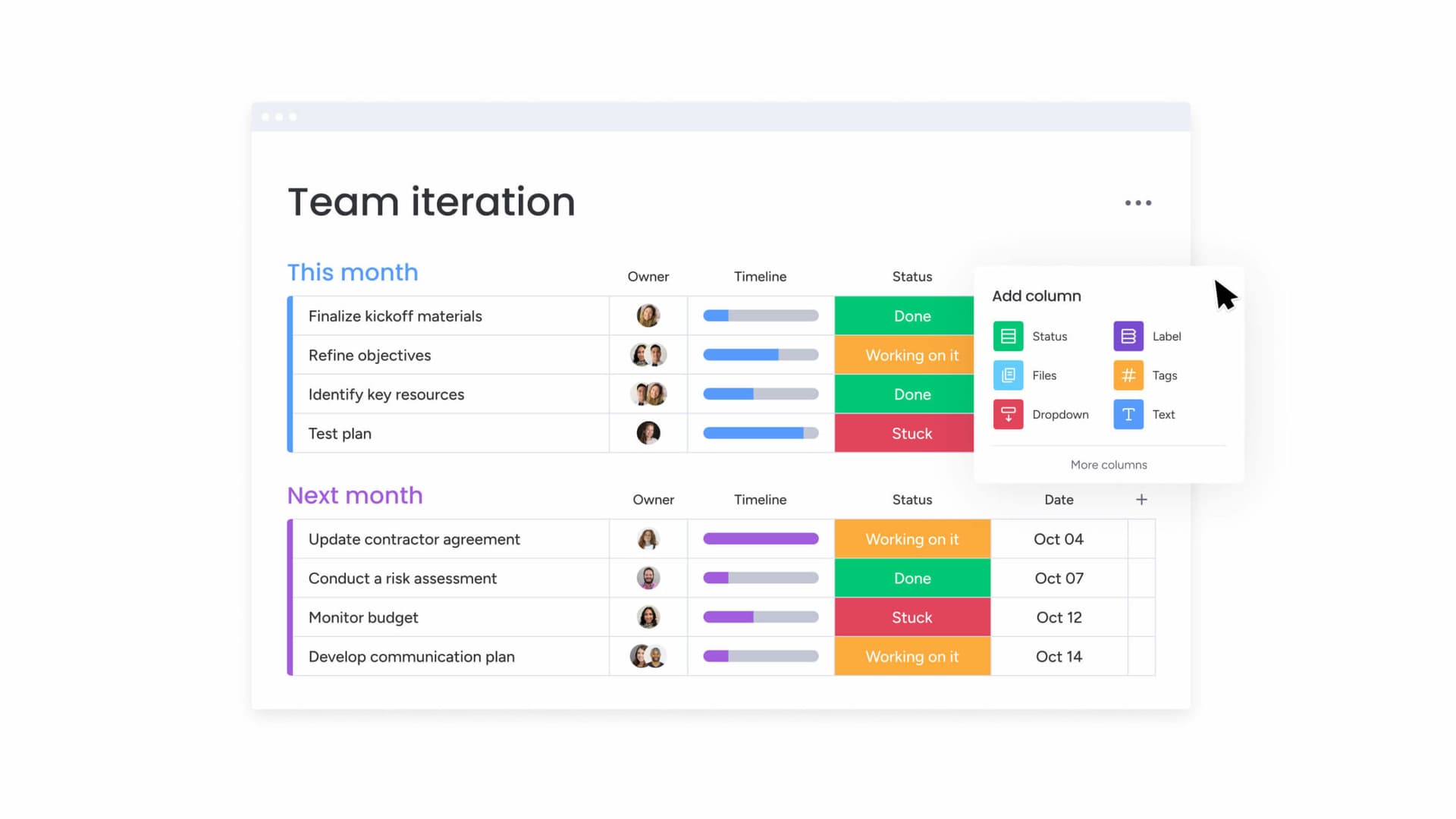
The failure point is usually simple: teams confuse project management with task tracking. A board full of assignments can still leave engineers waiting on dependencies, product managers guessing whether milestones are real, and sales teams promising dates that operations cannot actually hit. monday.com’s guide pushes the stronger view: project management is the discipline of delivering work on time, within budget and with stakeholders satisfied, while making execution repeatable enough that the whole company can act on the same plan.
Why this matters across the org chart
For engineers, project management is what keeps hidden blockers from turning into surprise delays. For product managers, it is the bridge that turns priorities into milestones and keeps scope from drifting after the sprint planning meeting is over. For sales, it is the difference between coordinating launches, implementations and customer commitments in one system and chasing updates across inboxes, spreadsheets and Slack threads until the thread snaps. That is why monday.com frames the right software as central to execution, not a back-office afterthought.
The research says performance is about capabilities, not office posture
PMI’s 2024 Pulse of the Profession survey, which covered 2,246 project professionals and 342 senior leaders worldwide, found that work location itself did not determine project performance. PMI said the stronger drivers were enablers such as coaching, mentoring, training and communities of practice, a point that cuts against the lazy assumption that bringing people back to a desk automatically improves delivery. PMI president and CEO Pierre Le Manh has argued that organizations should focus on empowering flexibility that improves collaboration, innovation, agility and efficiency, which is another way of saying that hybrid work succeeds when the operating model is strong enough to support it.
That is an important lens for monday.com employees and customers alike. If the platform is supposed to make work visible, then the value is not just in tracking who did what. The value is in giving distributed teams a shared operating rhythm, so a hybrid or remote-first company can still align around scope, timing and risk without pretending everyone is in the same room.
Project success is no longer just scope, schedule and budget
PMI’s 2024 Maximizing Project Success research used more than 10,000 project professionals and more than 150 interviews to make a broader case: a successful project is one that delivers value worth the effort and expense. That definition matters because it shifts project management away from a narrow scoreboard and toward business impact, stakeholder value and the ability to justify the work itself. In other words, finishing on time is not enough if the work lands with the wrong outcome.
The same research direction shows why managers need a common language for delivery trade-offs. When teams understand how scope, people, timing, risk and visibility fit together, they can make better calls about what to cut, what to sequence and what to protect. That is the connective tissue monday.com is selling when it talks about turning work visions into reality.
The talent gap makes this a business-resilience issue
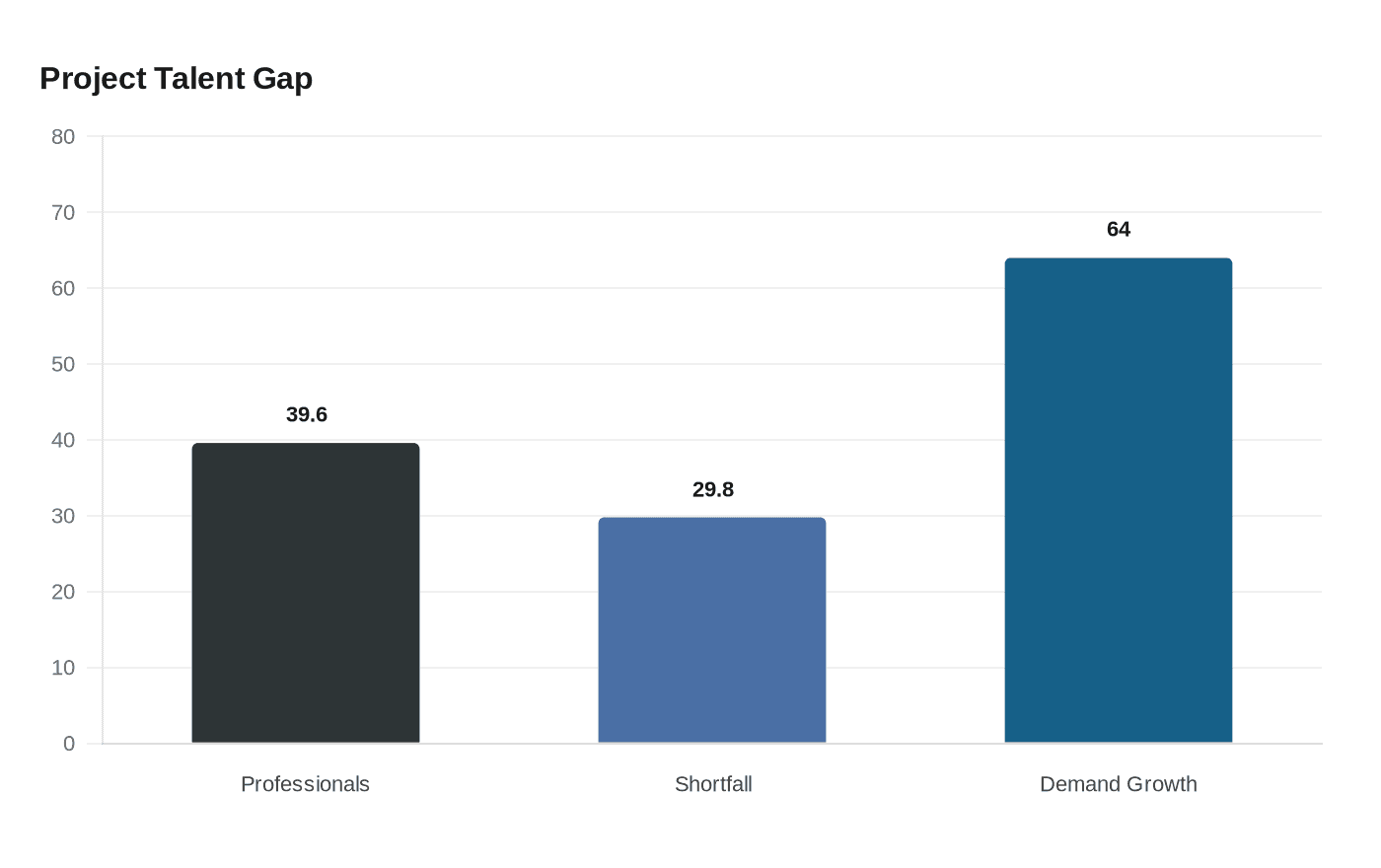
PMI’s 2025 Global Project Management Talent Gap report says there were 39.6 million project professionals worldwide and warns of a possible shortfall of up to 29.8 million qualified project professionals by 2035, with demand projected to grow 64% from 2025 to 2035. That is not just an HR headline. It means every company that depends on coordinated launches, cross-functional rollouts or large-scale change will have to do more with less managerial slack.
For monday.com, that backdrop is commercially relevant. The more scarce project talent becomes, the more valuable it is to give teams systems that reduce coordination overhead, surface dependencies early and keep work moving without requiring every manager to be a human routing engine.
Why the software layer is becoming the real battleground
Gartner’s September 4, 2024 Magic Quadrant for Adaptive Project Management and Reporting evaluated 13 vendors and defined the category as tools that automate continuous delivery to support data-driven decisions. That definition is a good fit for how modern teams actually work: work shifts fast, delivery is continuous and decision-making has to be based on live signals rather than stale status decks.
This is where monday.com’s own positioning lines up with the market. The company describes itself as an AI work platform, says more than 250,000 customers worldwide use it to bring people, workflows and AI agents together, and says its platform is designed to help manage and orchestrate work, not just record it. monday.com also says it went public on Nasdaq on June 10, 2021 and now operates as a multi-product company.
What monday.com’s scale says about the product problem it is trying to solve
In its 2024 annual report, monday.com said it had approximately 245,000 customers across more than 200 industries and over 200 countries and territories, with offices in Tel Aviv, New York, Denver, London, Warsaw, Sydney, Melbourne, São Paulo and Tokyo. That footprint matters because it suggests the company is not just building for one workflow or one geography. It is trying to sell a coordination layer for global organizations that need the same system to support product, sales, operations and services at once.
The customer story hub reinforces that message, saying more than 250,000 customers worldwide rely on monday.com to unite cross-functional teams and deliver their best work. Among those stories, the outcomes are practical rather than abstract: one company reported 85% on-time project delivery after rollout, while another said 50% of time was reclaimed for higher-value work. Those are the kinds of numbers that matter to managers who are trying to decide whether a platform actually reduces friction or just renames it.
What managers should take from the guide
- Treat every initiative as a delivery system, not a to-do list. If ownership, dependencies and deadlines are not visible in one place, the work is already at risk.
- Use hybrid methods deliberately. PMI’s research points to flexible management paired with coaching, training and shared practice, not a one-size-fits-all return-to-office rule.
- Measure success by value delivered, not just whether the project closed. If the outcome does not justify the effort and expense, the schedule was never the whole story.
- Choose software that makes cross-functional work legible. Gartner’s category definition makes clear that modern project systems should support continuous delivery and data-driven decisions across changing teams and workloads.
That is the real lesson hidden inside monday.com’s project-management guide. The companies that win are not the ones with the most task lists. They are the ones that can turn strategy into delivery without losing ownership, context or trust along the way.
Know something we missed? Have a correction or additional information?
Submit a Tip