Monday.com guide reframes resource management as continuous capacity planning
monday.com is recasting resource management as a daily discipline of capacity, tradeoffs, and burnout prevention, not just task assignment.
Resource management is really about saying no on time
At monday.com, resource management is not a spreadsheet chore. It is the ongoing judgment call that decides which work gets done now, which work waits, and which teams need protection before overload turns into missed deadlines or burnout. The company’s own guidance defines the discipline as planning, scheduling, and allocating people, budgets, and tools so projects land on time, then adds the crucial wrinkle: you have to forecast ahead, but you also have to keep adjusting when priorities move.
That framing matters inside a company like monday.com because every allocation decision is a tradeoff. Speed often comes at the expense of flexibility. Cost pressure can squeeze capacity. Overcommitting a strong team member may look efficient in the short run, but it creates hidden delivery debt that shows up later as slippage, context switching, and frustration. The guide treats capacity planning, workload balancing, and reallocation as one continuous process because modern work does not stay still long enough for static plans to survive.
What the guide is really saying
The simplest way to read monday.com’s definition is this: resource management is not just assigning tasks. It is connecting business goals to the work people do every day, then revisiting that connection as reality changes. That distinction is especially useful in distributed teams, where visibility matters as much as raw headcount and where a person’s true capacity can shift quickly depending on meetings, dependencies, or competing priorities.
For product managers, that means deciding what ships now versus later with a clear view of who is already stretched thin. For engineers, it explains why a few extra parallel priorities can quietly drain velocity long before anyone says the team is overloaded. For sales and customer-facing teams, it offers a useful diagnostic: sometimes the issue is not software at all, but a missing picture of who is overbooked, where the bottlenecks are, and what has to move to make room.
From theory to product workflow
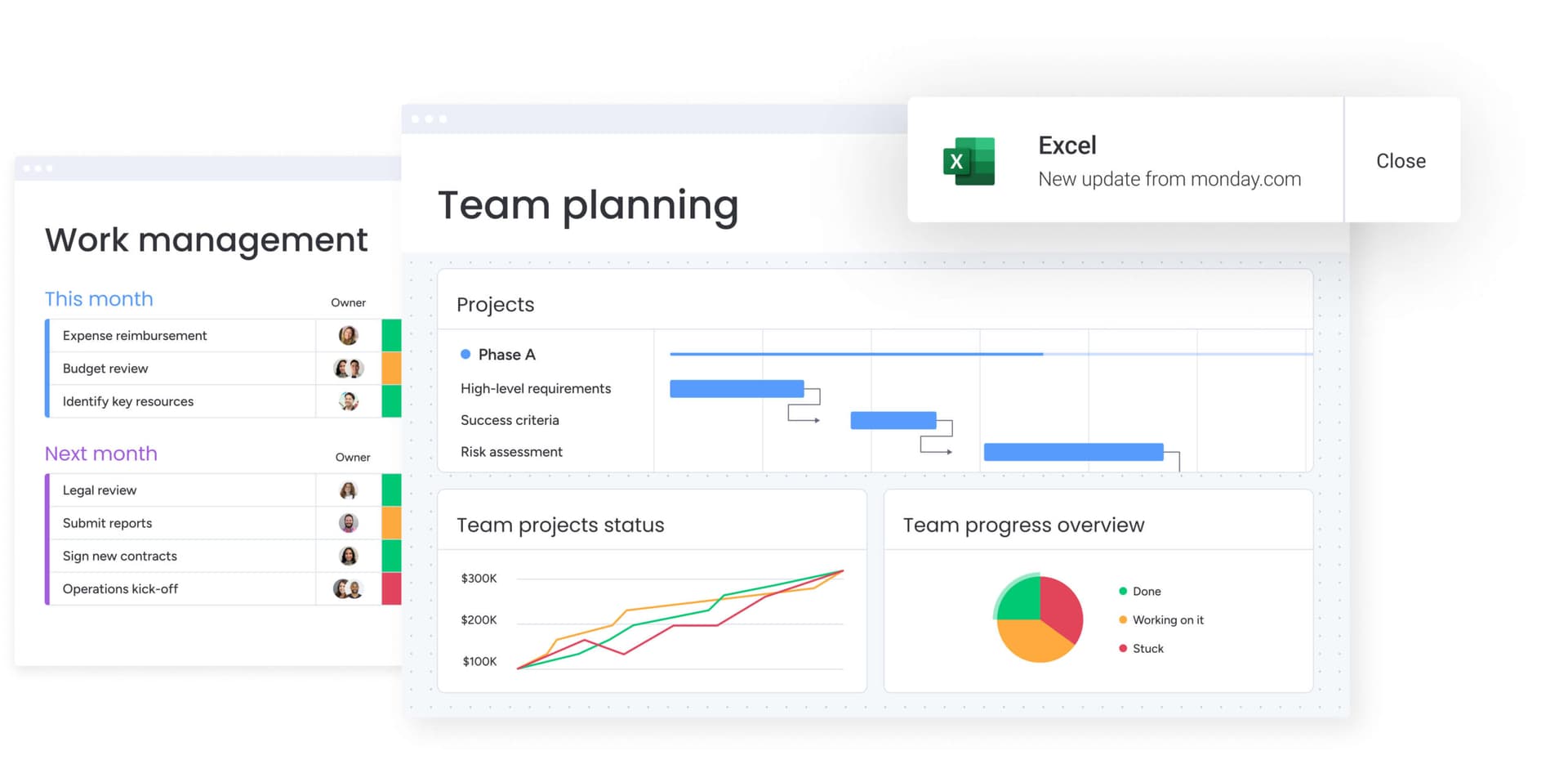
monday.com has turned that idea into a concrete enterprise feature set. Its support materials now name a Resource Directory, Resource planner, and Capacity manager, each aimed at defining resource attributes, allocating resources, and tracking utilization across multiple projects. That is a meaningful shift from abstract advice to operational tooling, because it gives managers a place to see capacity before the team starts missing commitments.
The company also says its Workload view and Workload widget can be customized to each team’s work schedule. That detail matters more than it may sound. A workload chart is only useful if it reflects the real calendar, real working patterns, and real constraints of the group using it. monday.com’s approach suggests it wants resource management to be dynamic, not ceremonial: the system should reflect how the team actually works, not how a planning template wishes it did.
Why capacity planning now sits at the center of the story
monday.com’s newer product guidance pushes the same point even harder. Its capacity-planning material says the goal is to keep sprint workloads achievable, align goals with timelines, and prevent overcommitment and burnout by distributing work based on capacity, skills, and priorities rather than simply loading up the top performers.
That line should resonate with anyone who has watched the same reliable people become the default landing zone for every urgent request. It is a familiar failure mode in SaaS organizations, especially ones growing fast: the best people are the most available in theory and the least available in practice. When teams ignore capacity, the company does not just lose efficiency. It also teaches employees that saying yes is rewarded more than making tradeoffs honestly, which is how burnout becomes normalized.
What this means for monday.com employees
For monday.com’s own teams, resource management is more than a customer use case. It is an execution skill. The company serves more than 250,000 customers worldwide and positions its platform as a place where work management, CRM, service, software development, HR, IT, marketing, operations, and AI agents all sit in one flexible environment. That breadth makes internal prioritization harder, not easier. The more surfaces the platform covers, the more important it becomes to know which bets are getting real staffing and which ones are quietly being stretched thin.
The company’s growth makes that discipline even more important. In the fourth quarter of 2025, monday.com reported revenue of $333.9 million, up 25% year over year. Full-year 2025 revenue rose 27%, and non-GAAP operating margin reached 14%. Customers with more than $50,000 in ARR represented 41% of total ARR, and the company reported record net adds among customers with more than $100,000 in ARR. Those numbers point to a business moving deeper into enterprise accounts, where resource planning, cross-functional coordination, and service reliability become central to retention.
AI changes the coordination problem, not just the software stack
monday.com’s press-release archive shows how fast the platform is widening the scope of work management. The company logged a March 23, 2026 launch of Agentalent.ai and a March 11, 2026 announcement about AI agents on the platform. That matters because resource management is no longer only about people and projects. It is increasingly about humans, workflows, and AI agents sharing the same operational environment.
That evolution makes the resource-management lens more important, not less. AI can speed up routine work, but it also adds new questions about supervision, handoffs, and where human review is still required. If a team assumes AI removes the need for capacity planning, it usually creates a new kind of overload instead: more output, more coordination, and less clarity about who owns the final call.
The practical lesson for managers
The strongest takeaway from monday.com’s guide is that resource management is a daily discipline, not a quarterly planning ritual. It works best when managers keep three questions in view at the same time: what is the business trying to deliver, what capacity does the team actually have, and what should move when priorities collide?
- If the plan does not account for actual workload, it is not a plan.
- If the team cannot reallocate quickly when priorities change, the system is brittle.
- If the same people keep absorbing every urgent request, the organization is treating capacity as infinite when it is not.
That is the quiet power of monday.com’s framing. It strips away the buzzwords and shows resource management for what it is: the everyday practice of protecting time, money, and people from avoidable overload. In a company built to organize work, that is not a side topic. It is the operating system underneath the operating system.
Know something we missed? Have a correction or additional information?
Submit a Tip