Monday.com guide shows how AI can free sales teams from busywork
Monday.com’s sales-AI playbook is blunt: let software clear the admin pile, but keep humans on the relationship work that closes deals.
The useful line between automation and trust
Monday.com’s business development guide gets one thing right that many AI pitches still miss: in sales, the point is not to replace reps, but to remove the work that keeps them from selling. The guide frames AI as a force multiplier for top performers, not a substitute for judgment, and that is the boundary line revenue teams need to hold onto. If AI is taking over repetitive qualification, data entry, and follow-up, it is doing the job that usually drains time without deepening trust.

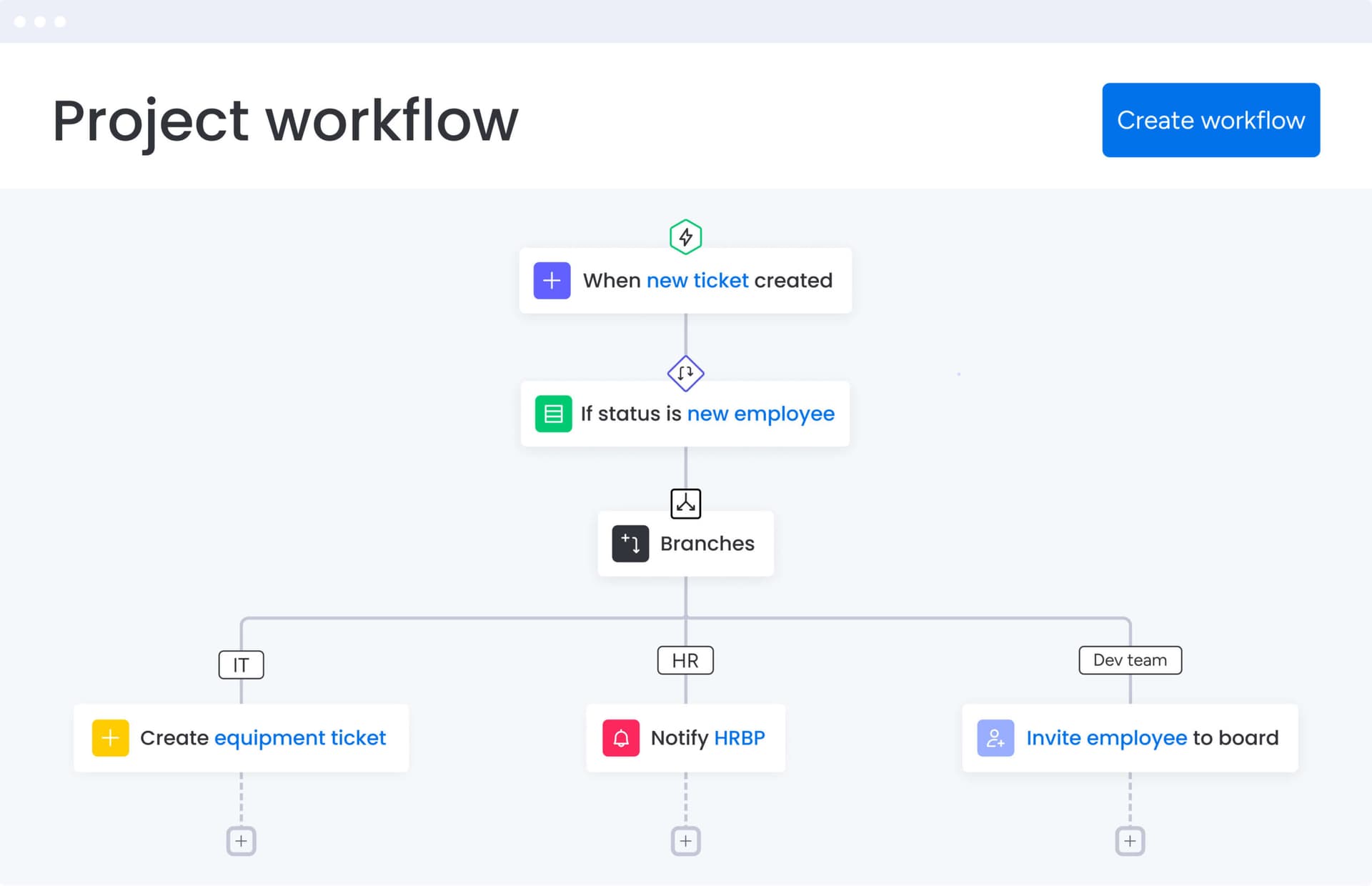
That distinction matters inside a company like monday.com, where the product is built around workflow visibility and handoffs, not just standalone features. The real promise of AI here is not novelty. It is whether the platform can make pipeline cleaner, handoffs from marketing to sales more reliable, and day-to-day execution less scattered. When that happens, AI stops being another layer of clutter and starts looking like infrastructure.
What AI should absorb first
The most practical place to start is with the tasks sales teams repeat every day. Lead qualification is one of the clearest candidates because it is structured, high-volume, and easy to slow down with manual triage. Data entry is another obvious target, especially when reps are copying notes, updating records, and chasing fields after every call. Follow-up work, which often piles up after meetings and demos, is also ripe for automation when the message is routine and the next step is obvious.
That is where monday.com’s own framework is useful. It separates the market into lead generation, AI-powered CRM, conversation intelligence, and sales analytics, which helps teams think in systems instead of slogans. Lead generation tools should surface better prospects faster. AI-powered CRM tools should reduce the time spent updating records. Conversation intelligence should capture what happened in the call. Sales analytics should turn that activity into visibility on pipeline health and revenue impact.
For revenue operations, that stack matters because each layer should feed the next. A lead does not just get found, then vanish into a dashboard. It should be qualified, logged, routed, and tracked in a way that helps managers see where deals are getting stuck. That is the difference between automation that saves minutes and automation that changes throughput.
Where humans still have to stay in the room
The guide’s strongest message is also its restraint: strong sales systems are built around relationships, not just activity. AI can sort, summarize, and prompt, but it cannot build credibility with a buyer who is weighing risk, timing, and budget. It cannot read the hesitation behind a polite objection or decide when a longer conversation is worth the extra patience.
That is why the human boundary should be clear. Let AI handle the administrative grind, but keep people on the moments that depend on context and trust: discovery calls, negotiation, escalation handling, and the final close. If automation starts sounding too polished or too eager, it can erode the very thing sales depends on, which is a buyer feeling understood rather than processed.
This is the anti-hype lesson for revenue teams. Useful AI should make a rep more available, not more mechanical. It should free up attention for conversations, judgment, and timing. Once it starts replacing those, it is no longer helping the team sell. It is helping the team sound like software.
Why monday.com is pushing this inside the platform
Monday.com is not treating this as a side experiment. In 2025, the company said its AI Vision would rest on three pillars: AI Blocks, Product Power-ups, and the Digital Workforce. It later expanded that roadmap with monday agents, monday magic, monday vibe, monday sidekick, and monday campaigns, signaling a broader shift from feature-by-feature AI to platform-wide automation.
The sales angle is especially telling. monday.com said its first agents would focus on sales development use cases, including a Lead Agent and an SDR Agent. The Lead Agent identifies and qualifies leads, while the SDR Agent calls warm leads, conducts initial conversations, and captures interactions in monday CRM. That is a direct embodiment of the guide’s thesis: machine work should clear the runway so humans can spend more time on the relationship layer.
The company has also said its AI tools are being built in response to customer needs, which is an important distinction in a crowded SaaS market. The point is not to bolt AI onto every workflow and call it strategy. It is to tie the automation to actual revenue motion, where time saved can be measured in faster follow-up, cleaner records, and fewer opportunities slipping through the cracks.
What the numbers say about the stakes
The scale behind this push is not small. Monday.com says it serves more than 250,000 customers worldwide, which means even small gains in sales efficiency can matter across a large base. Its 2025 annual report said enterprise customers with more than $50,000 in ARR grew 34% year over year, rising from 3,201 on December 31, 2024 to 4,281 on December 31, 2025. That kind of enterprise growth puts a premium on consistency, pipeline discipline, and tools that do not slow sellers down.
The latest earnings also show why the company is leaning hard into product expansion. In the fourth quarter of 2025, monday.com reported revenue of $333.9 million, up 25% year over year. It also said monday vibe was the fastest product to surpass $1 million in ARR in company history, a sign that new AI products are already getting traction inside a broader platform strategy.
That growth sits alongside outside validation. Monday.com was named a Leader in the 2025 Gartner Magic Quadrant for Collaborative Work Management for the third consecutive year. For employees inside the company, that matters because it frames AI not as a speculative add-on, but as part of a platform that is already competing at enterprise scale.
The boundary line monday.com needs to keep proving
The cleanest lesson from this guide is not that AI should be everywhere. It is that AI should be where work is repetitive, rules-based, and easy to standardize, while humans stay where nuance and trust decide the outcome. That is a useful rule for sales teams, but it is also a test for monday.com itself.
If the company keeps embedding AI into workflows in a way that reduces friction without flattening the human part of selling, it strengthens the platform’s core promise. If it pushes automation past that line, it risks turning a productivity story into another layer of noise. For a company built around how work gets done, that is the difference between an AI feature and an AI strategy.
Know something we missed? Have a correction or additional information?
Submit a Tip