Monday.com guide shows how to build trustworthy AI agents
Monday.com’s AI play is really a governance story: agents only earn trust when workflow structure, permissions, and oversight are built in from day one.

Governance comes before intelligence
The hardest part of AI agents is not making them smarter. It is making them governable inside a real company, where work crosses product, engineering, sales, IT, and compliance at once. Monday.com’s own architecture guide lands on that point fast: an agent is not just a chatbot with better answers, it is software that can observe work, prioritize it, and act on it inside rules that the business can defend.
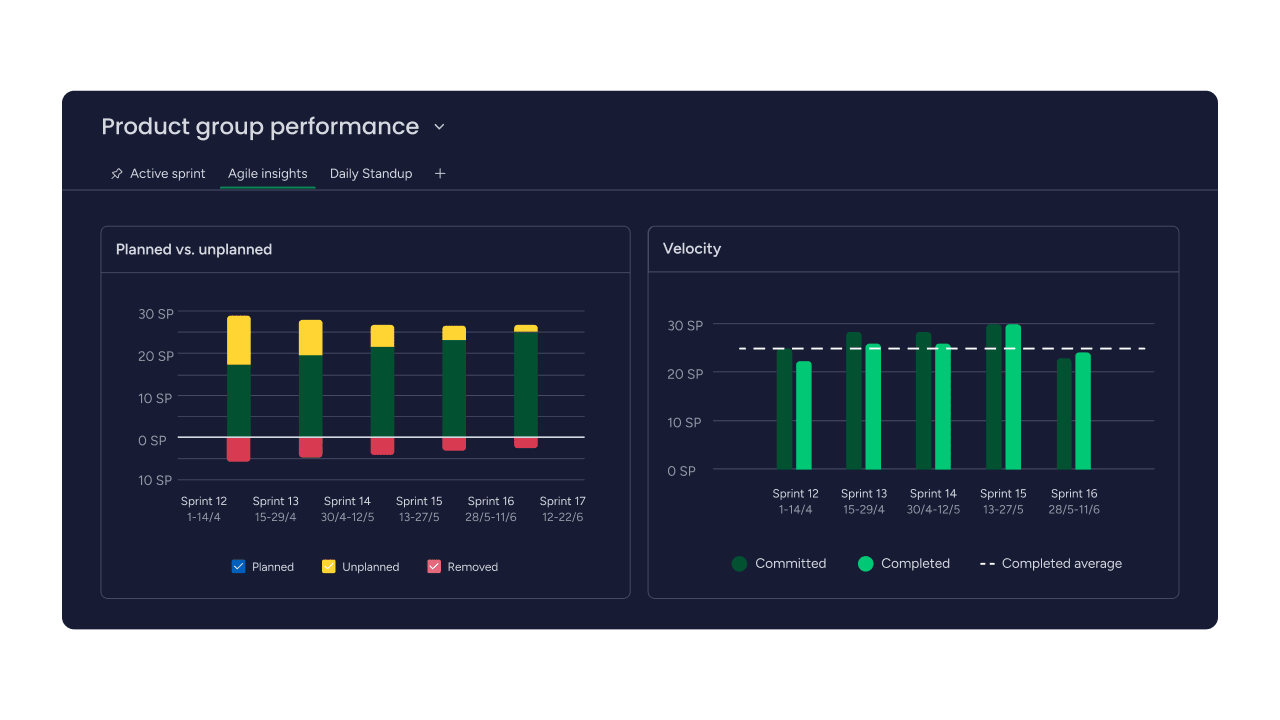
That distinction matters inside monday.com because the company sits at the center of workflow execution for more than 250,000 customers worldwide. A tool that can move tasks, surface bottlenecks, or trigger actions has real value, but only if the system knows who owns what, which data matters, and which actions require approval. In that sense, the guide reads less like an AI trend piece and more like a blueprint for how a work platform becomes a controlled operating layer for the enterprise.
What an agent actually needs
Monday.com’s framing is useful because it strips the agent conversation down to fundamentals. A useful agent needs memory, reasoning, tools, orchestration, and governance from the start. Without those pieces, the system can answer questions but cannot reliably complete work, which is the real dividing line between a conversational assistant and an operational agent.
The guide also makes a practical point that should resonate with teams building or buying AI inside a SaaS stack: structured work data beats messy unstructured content. If the underlying work model is clear, an agent can follow dependencies, understand ownership, and act with more confidence. If the data is scattered or the permissions are fuzzy, the agent becomes less trustworthy and less useful, no matter how capable the model behind it may be.
Monday.com’s product strategy makes the case
This is not an abstract argument for monday.com. The company said its 2025 AI strategy would rest on three pillars: AI Blocks, Product Power-ups, and the Digital Workforce. That was already a signal that the company sees AI as something embedded in workflows, not bolted on as a feature demo.
The pace picked up quickly after that. On July 10, 2025, monday.com introduced monday magic, monday vibe, and monday sidekick. Later, at Elevate 2025, it introduced monday agents, its new agent builder. By March 2026, monday.com said it was enabling external AI agents to access the platform through dedicated onboarding and purpose-built infrastructure. That sequence shows a shift from AI features to AI systems, and then to governed agent access across the platform itself.
Why controls have to come early
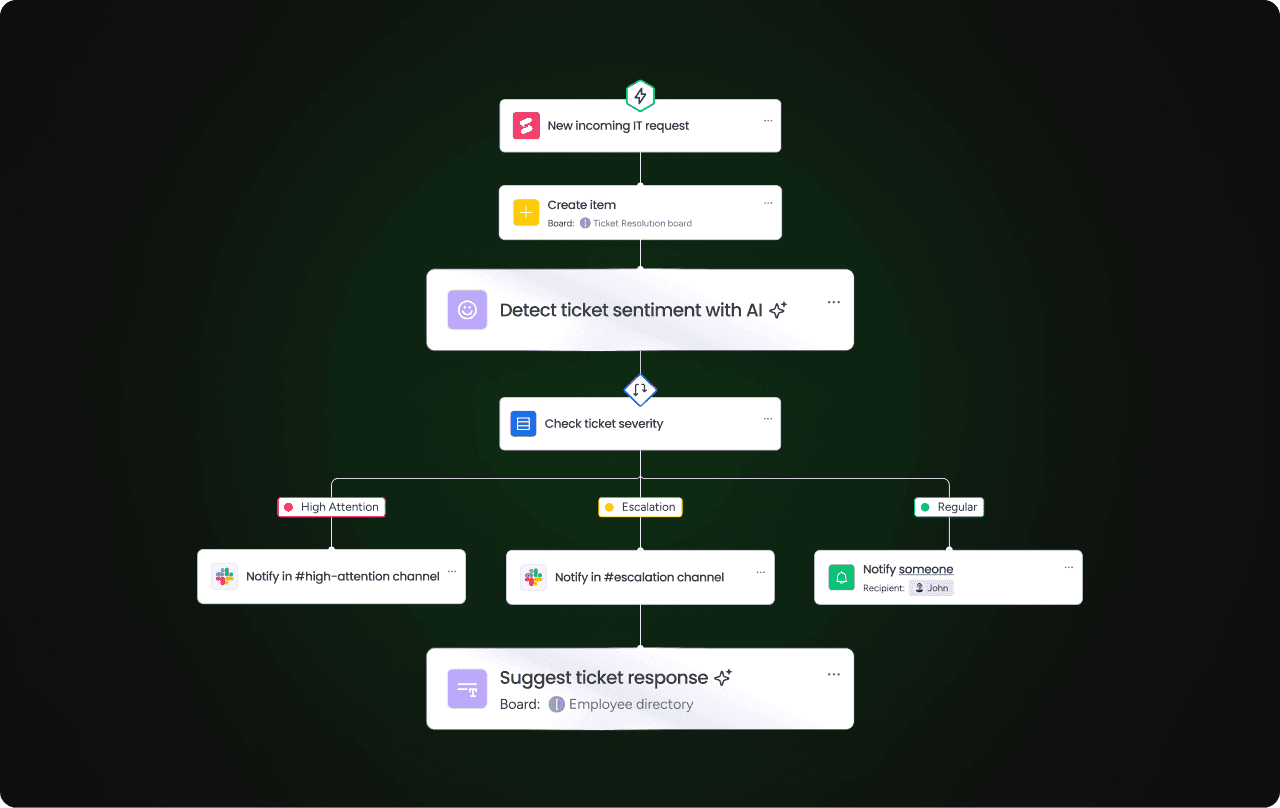
For workers inside a product company, the temptation is to treat governance as a cleanup job after a pilot succeeds. Monday.com’s guidance pushes hard against that habit. Access controls, approval workflows, and activity logs are not extras to add later. They are the only way an agent can operate at scale without creating noise, risk, or confusion.
The company’s support documentation makes that logic concrete for enterprise admins. It now describes centralized AI governance, AI permissions, usage limits, and an agent directory. That directory includes the agent’s name, owner, sharing status, current status, asset access, creation date, and model used. Those details matter because they give product, engineering, and IT leaders a shared view of what the agent is doing and who is responsible when it does it.
What this means for product, engineering, and sales teams
For product managers, this is a reminder that agent design starts with workflow design. If ownership is vague or priorities are not encoded in the system, an agent cannot make good decisions on behalf of the business. The better the work model, the more the agent can redistribute tasks, identify bottlenecks, and expose strategic patterns across teams.
For engineers, the guide points to a familiar but unforgiving truth: architecture shapes trust. A system that can act needs permissions, auditability, and clear boundaries, especially when it touches data from multiple teams. That is why monday.com’s emphasis on governance is so important for a platform built to sit at the center of work execution.
For sales teams and sales engineers, the story is about buyer confidence. Enterprise customers do not want a clever demo that breaks the first time it touches real permissions or sensitive workflow data. They want to know that an agent can scale from one team to the whole organization without forcing a rebuild of the stack. Monday.com’s message is that customization should be strategic, not total, which is exactly the kind of language large buyers need when they are deciding whether to trust an AI layer with real work.
The business case is already visible
The company’s financial results suggest this is not just product positioning. Monday.com reported 2025 revenue growth of 27% and said monday vibe was the fastest product to surpass $1 million in ARR in company history. In first-quarter 2026 results, it reported $351.3 million in revenue and said it launched an AI work platform with native agents. That combination tells investors that AI is no longer a side experiment at monday.com, but part of the company’s core growth story.
For a public company with the MNDY ticker, the strategic stakes are obvious. AI can expand the platform’s value only if customers trust it enough to let it act inside operational systems. The company’s own product narrative now ties that trust directly to governance, permissions, and workflow structure, which is a more durable moat than another round of model buzz.
The real lesson for monday.com
The larger message is simple: the future of AI agents at monday.com will not be won by the flashiest model, but by the cleanest operating rules. That is a powerful fit for a company built around work management, because it treats AI as part of execution, not theater.
In a platform used by hundreds of thousands of customers, the most valuable agent is the one that can move work forward without losing accountability. Monday.com’s guide makes that case clearly: if the work is structured well, the agent can become a trusted part of the system. If it is not, the agent is just another source of friction.
This article was produced by Prism’s automated news system from verified source data, official records, and press releases, then run through automated quality and moderation checks before publishing. The system is built and supervised by the people who set the standards it runs under. Read our full AI policy.
Did this article answer your question?