monday.com guide shows how automation speeds new hire onboarding
The first week tells new hires whether monday.com runs on systems or improvisation. When HR, IT, and managers are wired together, onboarding becomes a credibility test, not admin busywork.
monday.com runs a global operation with more than 250,000 customers and more than 2,500 employees. A new hire’s first day quickly shows whether HR, IT, facilities, and managers can actually execute before that person has written a line of code, opened a pipeline, or taken a customer call. That first-day signal matters even more because the company sells workflow orchestration.
Onboarding is a credibility test
A smooth start creates the kind of connection Gartner says onboarding should build, the moments that anchor role commitment, trust, and confidence. Gallup is starker: the employee value proposition sets expectations, and onboarding either confirms those expectations or breaks them. A messy first week leaves a mark quickly, especially in a SaaS company where every team is judged on speed, clarity, and whether handoffs actually happen.
For engineers, product managers, and sales teams, the practical issue is not whether the welcome email arrived. It is whether access, equipment, training, and introductions were already in motion before day one. If the laptop is late, a policy acknowledgment is buried in someone’s inbox, or the team buddy has not been assigned, the new hire starts learning the wrong lesson: the company is harder to operate than it looks from the outside.
Treat onboarding as one workflow, not a stack of tasks
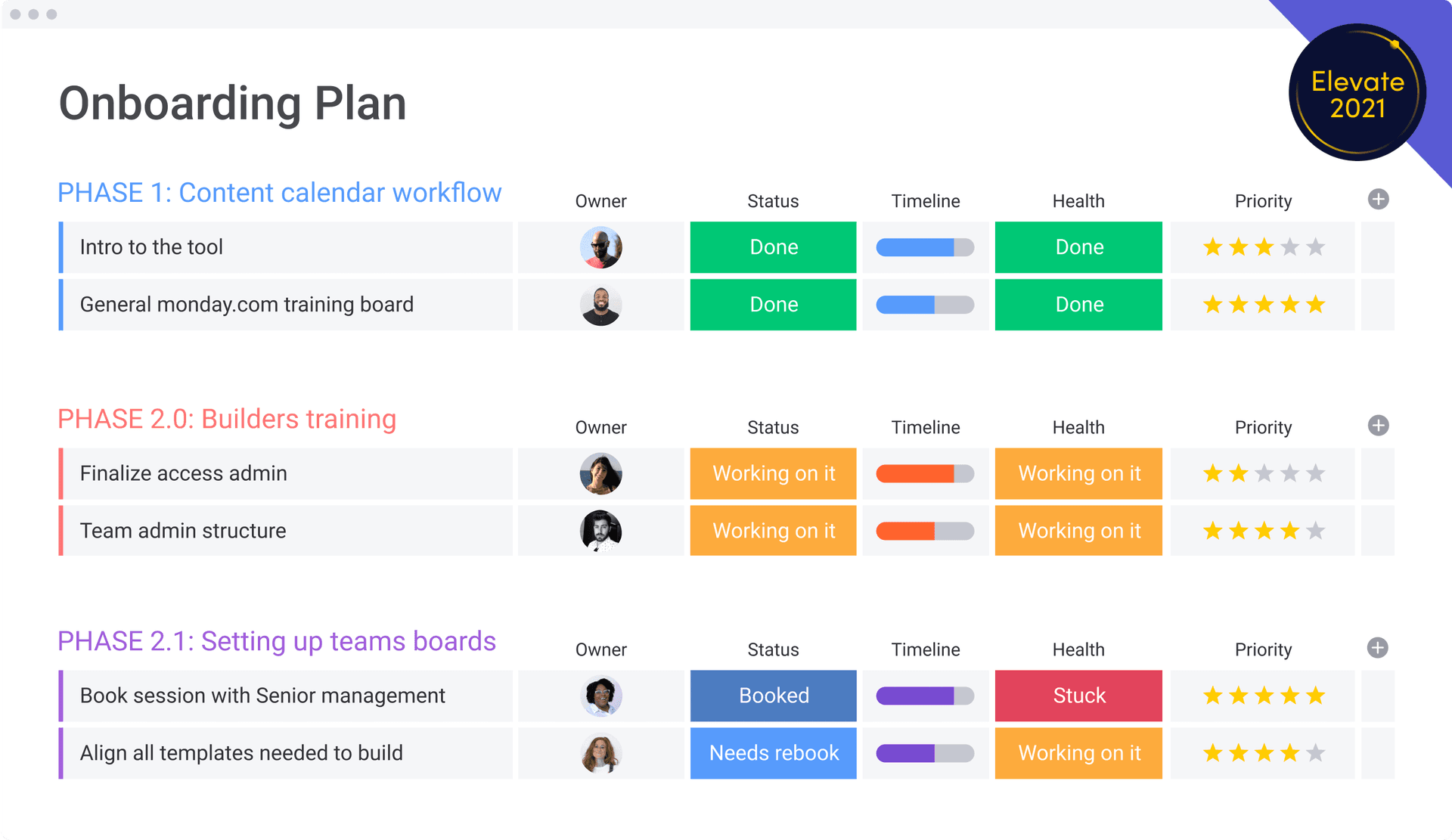
The strongest onboarding systems do not depend on someone remembering to chase five different people. They connect HR, IT, facilities, and the hiring manager in one workflow, then route each task to the right owner automatically. At monday.com, that structure includes centralized workflows, automated assignments, and 30-60-90 day plans that extend beyond the first morning.
Onboarding breaks down fastest at the handoff points. HR may collect paperwork, but IT controls provisioning, facilities handles space or equipment logistics, and managers need to line up the actual work. If those groups operate in separate threads, the new hire experiences the company as fragments. If they share one system, the experience feels coordinated even when multiple teams are involved behind the scenes.
For monday.com, the company’s platform is built around cross-functional work, and onboarding is one of the clearest internal examples of the same logic customers buy externally.
The steps worth automating first
Not every piece of onboarding needs AI, but the repetitive, approval-heavy parts do. The most obvious candidates are the steps that usually stall in email chains or spreadsheet trackers:
- document collection, so forms and signatures are gathered before the first day
- IT provisioning, so accounts, permissions, and devices are ready when the hire logs in
- policy acknowledgments, so compliance does not depend on reminders
- training assignment, so role-specific learning starts immediately
- equipment requests, so desks, laptops, and accessories do not lag behind the start date
- buddy assignments, so social onboarding does not rely on last-minute improvisation
The point of automating those steps is not to remove human involvement. It is to remove the waiting. monday.com says connecting HR, IT, and facilities on one platform with intelligent workflows and AI-powered routing can drop time-to-productivity from weeks to days. That only works if the routing is role-specific and the process is self-service, so new hires are not stuck waiting for someone to approve a form or forward a request.
Role-specific routing is especially useful in a company with multiple functions and multiple kinds of new hires. An engineer, a solutions consultant, and a customer success manager do not need the same workflow, but they do need the same reliability. Self-service does the rest by letting new hires complete tasks, find materials, and surface blockers without turning every small issue into a manual chase.
Measure the process like a product team would
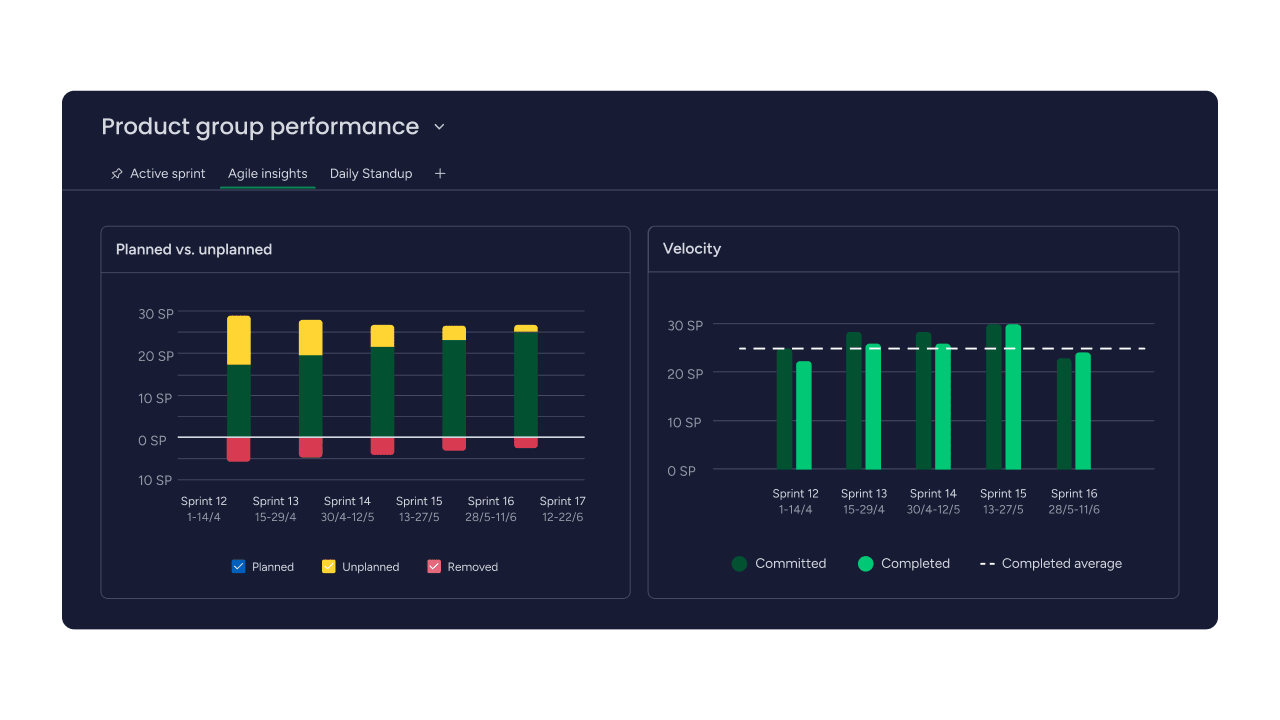
If onboarding is a system, it should have metrics. SHRM recommends tracking time-to-productivity, turnover and retention rates, new-hire surveys, employee satisfaction and engagement, performance measures, and informal feedback.
Time-to-productivity is the cleanest signal for a SaaS company. If automation works, new hires spend less time waiting for access and more time contributing to code, pipeline, roadmap work, or customer conversations. Retention metrics matter just as much, because a rough start can create early doubts that affect whether someone stays long enough to become effective.
Gallup says replacing an employee can cost six to nine months of salary, making onboarding one of the earliest defenses against a costly failure mode.
Why this lands hard inside monday.com
monday.com’s scale makes onboarding feel less like an administrative detail and more like operational infrastructure. The company reported fourth-quarter 2024 revenue of $268.0 million, up 32% year over year, and monday service was available to all customers as of February 10, 2025.
A company that helps customers coordinate cross-functional work has to do that work internally as the employee base grows across geographies and functions. The same system assigns a new hire’s device, training, and manager check-ins.
This article was produced by Prism’s automated news system from verified source data, official records, and press releases, then run through automated quality and moderation checks before publishing. The system is built and supervised by the people who set the standards it runs under. Read our full AI policy.
Did this article answer your question?