Monday.com guide shows how onboarding automation streamlines cross-team work
Monday.com’s onboarding playbook says automate the paperwork, not the welcome. The best workflows clear handoffs without making new hires feel processed.
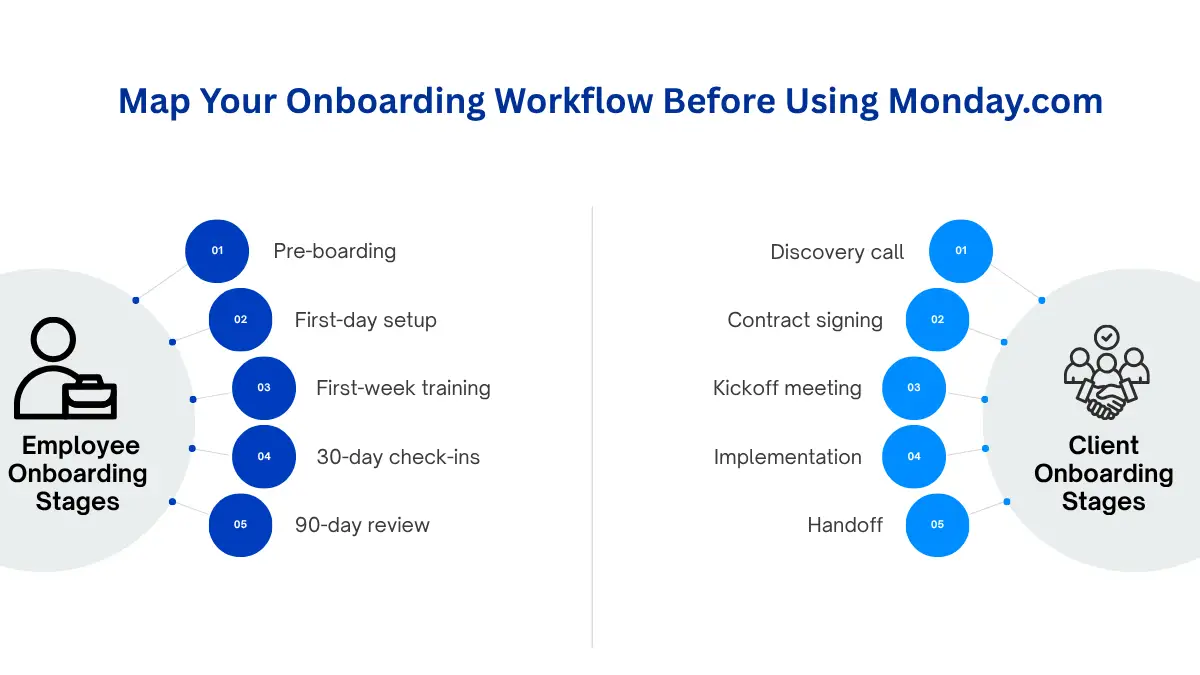
Why onboarding automation matters beyond HR
Monday.com’s own guidance treats onboarding as a cross-team coordination problem, not a paperwork problem. The software is designed to take repetitive tasks off people’s plates by triggering the right work at the right time, so when HR marks a candidate as hired, the system can create IT requests, send forms, schedule badge creation, and assign training modules without manual chasing.
That matters inside a company like monday.com because a new hire does not experience the organization as a chart of departments. They experience it through day one: whether a laptop is ready, whether access works, whether the manager shows up with context, and whether the team feels prepared. In that sense, onboarding automation is a culture signal as much as an efficiency play.
What monday.com says the workflow should do
The strongest version of onboarding automation, according to monday.com, is not a fully hands-off process. It is a workflow that handles the coordination layer so HR and managers can spend more time on the human side of the transition. The company’s guide frames the goal clearly: automate the repetitive steps, but preserve the moments that require empathy, context, and coaching.
That is why the sequence matters. A hired candidate should not trigger an email scramble across HR, IT, facilities, and the team lead. Instead, the workflow should set off the right actions automatically, from equipment provisioning to badge creation to training assignments, while leaving room for manager check-ins, team introductions, and early belonging signals that shape retention.
How monday.com’s product design reinforces the point
The onboarding advice lines up with how monday.com talks about its broader HR tooling. Its onboarding templates describe a centralized process that runs from A to Z, with responsibilities assigned across the team and progress tracked in one workflow. Its HR workflow materials say processes stay visible through triggers, actions, stakeholders, dashboards, and integrations.
That is the real product story underneath the guide. monday.com is not presenting onboarding as a one-off checklist hidden in HR. It is presenting it as structured work that cuts across recruitment, employee management, internal requests, and team readiness. For engineers, product managers, and sales teams inside the company, the lesson is obvious: if the handoff is messy, the experience is messy.
The retention case is bigger than convenience
The stakes go far beyond saving HR a few hours. SHRM says quality onboarding is crucial for long-term success and organizational productivity, and its onboarding guidance treats the process as strategic work that lasts at least one year, not just a first day or first week exercise. That changes the frame completely. Onboarding is not a welcome packet. It is a long runway that affects whether people get productive, stay engaged, and stick around.
The same SHRM material recommends tracking time-to-productivity, turnover and retention rates, retention thresholds, new-hire surveys, employee satisfaction and engagement, performance measures, and informal feedback. Those metrics matter because they show where the process breaks down. If a company automates the checklist but still sees new hires flounder, the problem is not the software. It is the handoff between systems and people.
Why the first 18 months matter
The retention risk is not theoretical. SHRM Foundation material says more than 25 percent of the U.S. population experiences some kind of career transition each year. It also says half of hourly workers leave new jobs in the first four months, and half of senior outside hires fail within 18 months. Those numbers are a reminder that onboarding is not a ceremonial phase. It is one of the highest-leverage moments in the employment relationship.
For a distributed company, that reality should sharpen the design brief. A scattered process creates avoidable delay, and delay can quickly become doubt. If a new hire spends the first week waiting on access, forms, or equipment, the company is not just being inefficient. It is signaling that coordination is an afterthought.
What outside research says good onboarding technology should do
Gartner’s July 15, 2024 onboarding technology research supports the same basic thesis. It says onboarding technology streamlines the prehire process by automating tasks such as provisioning, while also affirming the new hire’s decision to join through personalized content. That combination is important. Automation should reduce the administrative drag, but it should also create a more confident and human experience.
That is the balance monday.com is pointing toward: use software for the repetitive, rules-based work, and use people for the relational work. A system can create a ticket, but it cannot explain team norms, coach someone through first-week ambiguity, or make a new hire feel expected.
What this means for product, engineering, and sales teams
For monday.com employees, the lesson extends well beyond HR onboarding. Product and engineering teams can apply the same logic to internal enablement, access provisioning, tool setup, and release readiness. If work crosses teams, the workflow should be visible, accountable, and measurable. If it depends on judgment, context, or trust, it should stay human.
Sales and customer success teams can read the guide as a reminder that structured onboarding affects time-to-productivity and early churn, both for employees and for customers. A good onboarding system does not just move tasks forward. It shortens the distance between joining and contributing.
The balance point monday.com is really arguing for
The clearest insight in monday.com’s guide is that automation is most valuable when it handles the coordination layer. That frees HR and managers to focus on the parts of onboarding that actually shape loyalty: the first manager conversation, the team context, the expectations around the role, and the sense that someone is ready for the new hire to arrive.
For a company built around work management, that is a revealing standard. The goal is not to remove the human side of onboarding. The goal is to remove the friction that gets in the way of it. In a company where remote and hybrid work can make people feel disconnected fast, that distinction is not cosmetic. It is the difference between a process that processes people and one that brings them in.
Know something we missed? Have a correction or additional information?
Submit a Tip